
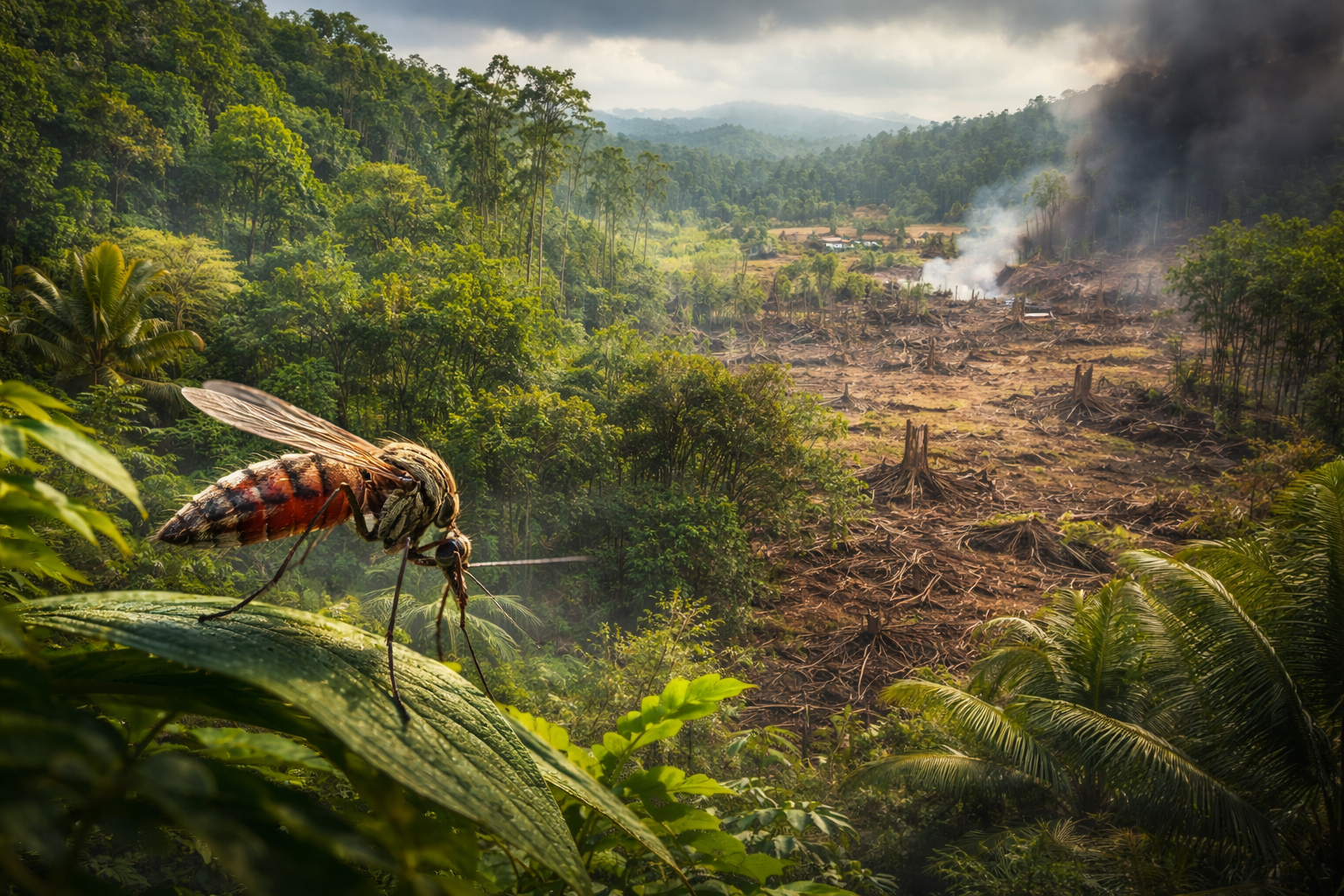
How Deforestation in Brazil’s Atlantic Forest Is Increasing Mosquito-Borne Disease Risk
The lush Atlantic Forest of Brazil, once stretching across much of the coastline, has long been recognized for its extraordinary biodiversity. This forest was home to hundreds of animal species, from exotic birds to small mammals. Over time, however, human activity, particularly farming and urban development, has reduced this forest to only about one-third of its original size. As the forest disappears, the natural dynamics between animals and insects are disrupted, with mosquitoes increasingly turning to humans as their primary source of blood.
Recent research highlights this troubling shift, revealing that deforestation is not only a threat to wildlife but also a public health concern. This blog will explore the findings of a study conducted in the Atlantic Forest, the implications for disease transmission, and the urgent need for awareness and prevention measures.
Mosquito Behavior and Human Risk
A study published on January 15, 2026, in the journal Frontiers in Ecology and Evolution examined the feeding patterns of mosquitoes in remnants of the Atlantic Forest in Rio de Janeiro. Scientists set up mosquito traps in two protected forest areas and collected 1,714 mosquitoes belonging to 52 species. Among these, 145 female mosquitoes had recently fed. Researchers were able to determine the blood source for 24 of these mosquitoes, uncovering a striking pattern: 18 of the 24 mosquitoes had fed on humans.
Other identified hosts included six bird species, one amphibian, one rodent, and a mammal from the dog family. Some mosquitoes were found to have fed on more than one host, including both humans and animals. The results indicate that mosquitoes are increasingly relying on humans for blood meals as their natural animal hosts disappear due to deforestation.
According to Jeronimo Alencar, a researcher at the Oswaldo Cruz Institute and senior author of the study, mosquito behavior is complex. While some species may have natural preferences, host availability and proximity play significant roles in determining feeding patterns. With fewer animals available, humans become the easiest and most abundant option.
The Role of Deforestation
Deforestation in the Atlantic Forest has been extensive, driven by agriculture, urbanization, and logging. As forests shrink, wildlife populations decline, leaving mosquitoes with fewer natural hosts. This environmental change directly affects mosquito feeding behavior and, by extension, human health.
Sergio Machado, co-author and researcher at the Federal University of Rio de Janeiro, emphasizes that mosquitoes are adaptable. "With fewer natural options available, mosquitoes are forced to seek new, alternative blood sources," he explained. "They end up feeding more on humans out of convenience, as we are the most prevalent host in these areas."
This shift in feeding patterns has significant implications. Mosquitoes are vectors for a variety of diseases, including yellow fever, dengue, Zika, chikungunya, Mayaro, and Sabiá viruses. The closer mosquitoes live to human populations and the more they feed on humans, the higher the risk for these diseases to spread.
Disease Transmission and Public Health Concerns
Mosquito-borne diseases are a major public health concern worldwide. Brazil has experienced outbreaks of diseases such as dengue and Zika in recent years, both of which are transmitted by mosquitoes. When mosquitoes feed on infected hosts and then bite humans, they can transmit viruses rapidly, creating cycles of infection that are difficult to control.
The recent study provides clear evidence that deforestation may exacerbate this risk. Mosquitoes in the Atlantic Forest now have a noticeable preference for feeding on humans. This behavior increases the potential for disease outbreaks, especially in communities located near forest fragments. Even small forest patches can become hotspots for mosquito-human interactions if wildlife populations are reduced.
It is important to understand that not all mosquito species behave the same way. Some have strong preferences for specific animals, while others are generalists, feeding on whatever hosts are available. However, in areas where humans are the most abundant or accessible host, even species that normally feed on wildlife will switch to humans. This ecological flexibility makes mosquitoes highly effective vectors for disease transmission.
Identifying Blood Meals and Study Methodology
In the study, researchers collected a total of 1,714 mosquitoes from two protected forest areas. Of these, only 145 female mosquitoes had visible blood meals. Scientists were able to identify the blood source in about 38 percent of these cases. This suggests that while blood meal analysis is challenging, the data collected provides a clear pattern of increased human feeding.
Blood meal analysis involves detecting host DNA in a mosquito’s gut. By comparing the DNA with known reference sequences, scientists can determine which species the mosquito has bitten. This method provides valuable information about mosquito behavior and disease risk.
Although only a small percentage of blood meals were successfully identified, the study still highlights an important trend. The data indicates that mosquitoes are adapting to environmental changes by feeding more frequently on humans. This finding underscores the importance of monitoring mosquito populations and their feeding patterns to anticipate and prevent disease outbreaks.
Implications for Disease Prevention
Understanding mosquito feeding behavior is critical for public health planning. Communities near forested areas, especially in regions undergoing deforestation, need to be aware of the increased risk of mosquito-borne diseases. Preventive measures can reduce the likelihood of infection. Some key strategies include:
- Mosquito control programs: Implementing measures such as insecticide spraying, larvicide treatment of standing water, and environmental management to reduce mosquito breeding sites.
- Personal protection: Using insect repellent, wearing long clothing, and installing screens on windows to minimize mosquito bites.
- Vaccination: For diseases like yellow fever, vaccination is an effective method to protect vulnerable populations.
- Community education: Raising awareness about mosquito behavior and disease transmission helps communities take proactive steps to protect themselves.
In addition to these measures, researchers stress the importance of conserving forest ecosystems. Maintaining wildlife populations helps reduce human-mosquito interactions and lowers disease transmission risk. By preserving natural habitats, we can protect both biodiversity and public health.
The Bigger Picture: Human Impact on Nature
The study from Rio de Janeiro provides a clear example of how human activity can alter natural systems in ways that directly impact health. Deforestation not only threatens wildlife but also shifts the behavior of disease vectors. Mosquitoes, in adapting to these changes, become more likely to feed on humans, increasing the spread of dangerous viruses.
This phenomenon is not unique to Brazil. Globally, human-driven habitat loss has been linked to emerging infectious diseases. As humans encroach on natural ecosystems, wildlife populations decline, and animals that survive may live closer to human settlements. This proximity allows pathogens and vectors to jump from wildlife to humans more easily, creating new public health challenges.
The link between environmental change and disease risk underscores the importance of integrated approaches to health, often referred to as One Health. This approach recognizes that human health, animal health, and ecosystem health are interconnected. Protecting forests and wildlife is not only a matter of conservation but also a critical step in preventing disease outbreaks.
Research Limitations and Future Directions
While the study provides important insights, researchers note that larger studies are needed to fully understand mosquito feeding patterns in forested regions. Identifying mixed blood meals, which occur when mosquitoes feed on multiple hosts, remains a challenge. Further research can help determine the extent to which mosquitoes rely on humans in different environmental contexts.
Additionally, monitoring mosquito populations over time can reveal how their behavior changes in response to ongoing deforestation and climate change. Understanding these patterns can inform more effective public health strategies and vector control programs.
The study’s findings should serve as an early warning for communities and policymakers. As mosquitoes increasingly feed on humans, proactive measures are necessary to prevent disease outbreaks and protect public health.
Conclusion
Deforestation in Brazil’s Atlantic Forest is creating a new public health challenge. As wildlife populations decline, mosquitoes adapt by feeding more frequently on humans. This shift increases the risk of transmitting mosquito-borne diseases such as yellow fever, dengue, Zika, chikungunya, Mayaro, and Sabiá viruses.
The study conducted in Rio de Janeiro demonstrates that even small forest fragments can become hotspots for mosquito-human interactions. Conservation efforts, public education, mosquito control programs, and personal protective measures are all essential to reducing disease risk.
The link between environmental change and disease transmission highlights the need for integrated approaches that consider human, animal, and ecosystem health. By protecting natural habitats and understanding mosquito behavior, we can safeguard both biodiversity and human health.
Source
- Frontiers in Ecology and Evolution, news release, Jan. 15, 2026
Disclaimer
Statistical data in medical and ecological studies provide general trends and do not pertain to individual cases. Individual health outcomes can vary greatly based on numerous factors. Always seek personalized medical or environmental advice from qualified professionals.