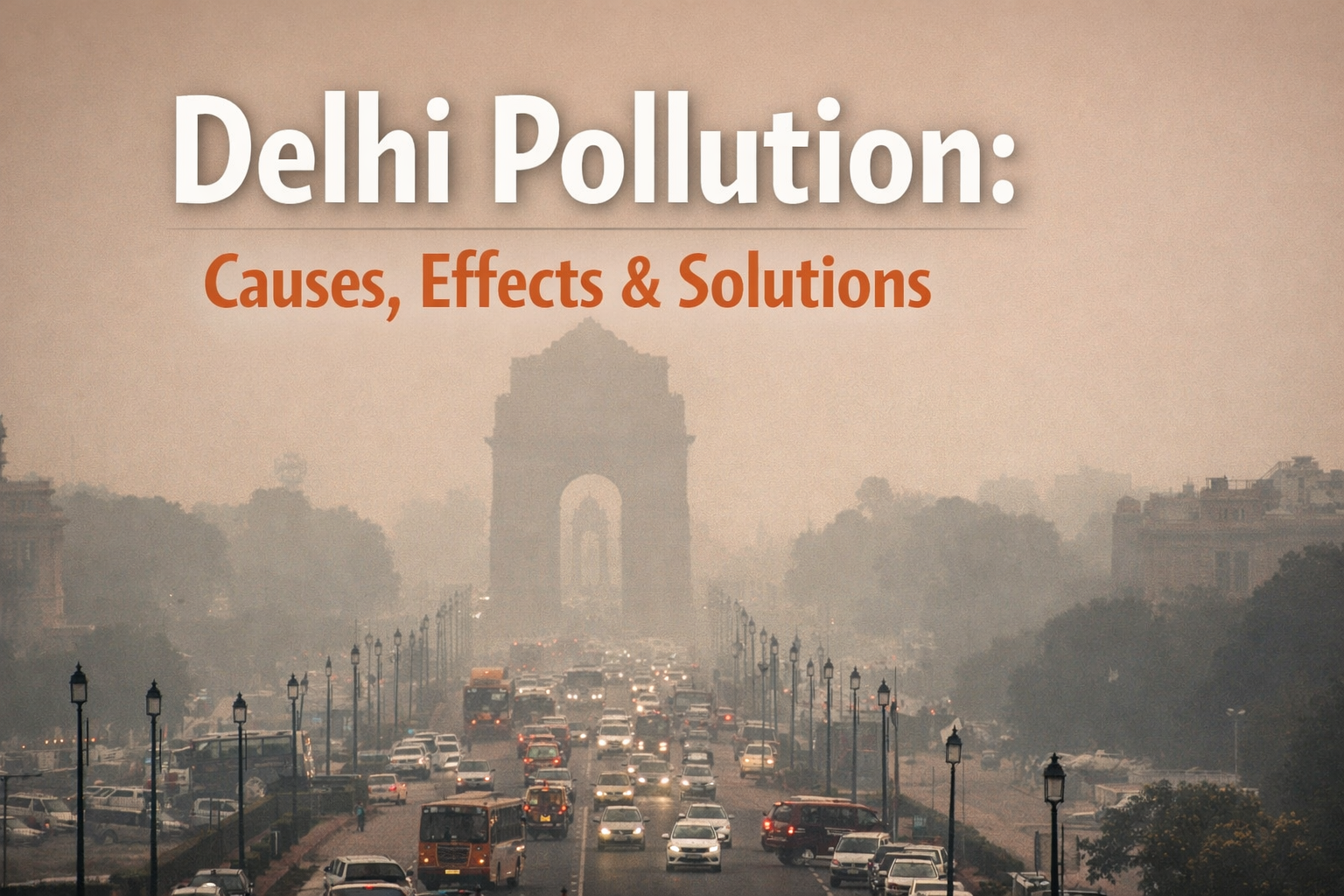
Delhi is one of the most populous cities in the world and also one of the most polluted. Air pollution in Delhi has become a serious environmental and public health concern over the last few decades. Every year, especially during winter, the city experiences dense smog, poor visibility, and hazardous air quality levels. Schools close, hospitals see a rise in respiratory cases, and daily life is disrupted. Delhi pollution is no longer a seasonal issue but a year-round problem that demands long-term solutions.
This SEO-optimized blog explains the main causes of air pollution in Delhi, its harmful effects on health and the environment, government initiatives, and practical solutions for a cleaner future.
Air pollution refers to the presence of harmful gases and particles in the air that negatively affect human health and the environment. In Delhi, the most dangerous pollutants include PM2.5, PM10, nitrogen dioxide, sulfur dioxide, ozone, and carbon monoxide. Among these, PM2.5 is the most harmful because the particles are small enough to enter the lungs and bloodstream.
Delhi’s location and climate worsen pollution levels. Low wind speed, high population density, and temperature inversion during winter trap pollutants close to the ground. As a result, air quality index levels often reach the poor, very poor, or severe category.
Vehicular emissions are one of the leading causes of air pollution in Delhi. The city has millions of vehicles on the road, including cars, buses, trucks, two-wheelers, and auto-rickshaws. Traffic congestion and frequent idling increase fuel consumption and emissions. Older vehicles and diesel-powered engines release high levels of nitrogen oxides and particulate matter.
Although Bharat Stage VI emission standards have improved fuel quality, the growing number of private vehicles continues to add pressure on air quality.
Industrial pollution also contributes significantly to Delhi air pollution. Factories, brick kilns, power plants, and small manufacturing units release harmful gases and fine particles into the atmosphere. Many industrial units in nearby areas use coal and furnace oil, which produce high emissions.
Thermal power plants located around Delhi emit sulfur dioxide and fly ash, which travel long distances and worsen air quality in the city.
Construction activities are another major source of pollution in Delhi. Rapid urban development has led to constant construction of buildings, roads, flyovers, and metro lines. These activities generate large amounts of dust that remain suspended in the air.
Poorly maintained roads and uncovered soil contribute to road dust, which increases PM10 levels. Lack of strict enforcement of dust control measures further intensifies the problem.
Stubble burning in neighboring states such as Punjab and Haryana plays a major role in Delhi pollution during October and November. Farmers burn leftover crop residue to prepare fields for the next sowing season. The smoke produced travels to Delhi and combines with local pollutants, causing a sharp rise in PM2.5 levels.
Although stubble burning is not the only cause of pollution in Delhi, it significantly worsens air quality during winter.
Open burning of garbage, leaves, and plastic waste releases toxic chemicals into the air. In some households, biomass and coal are still used for cooking and heating, especially in low-income areas. These domestic sources add to indoor and outdoor air pollution.
Firecrackers during festivals like Diwali also cause sudden spikes in air pollution levels, pushing the air quality index into the severe category.
Air pollution in Delhi has serious health consequences. Long-term exposure can cause asthma, bronchitis, chronic obstructive pulmonary disease, lung cancer, and heart diseases. Children, elderly people, and those with existing health conditions are at higher risk.
Short-term exposure leads to eye irritation, coughing, breathing difficulty, headaches, and fatigue. Medical studies suggest that prolonged exposure to polluted air can reduce life expectancy for Delhi residents.
Pollution affects plants, animals, and natural ecosystems. Reduced sunlight due to smog harms plant growth and agricultural productivity. Pollutants also contaminate soil and water bodies. Black carbon emissions contribute to climate change and accelerate glacier melting in the Himalayan region.
Poor visibility caused by air pollution disrupts air, rail, and road transport, leading to economic losses.
Several steps have been taken by the central and Delhi government to reduce air pollution.
The odd-even traffic scheme limits the number of vehicles on the road. The Graded Response Action Plan introduces emergency measures during high pollution periods. Bharat Stage VI fuel norms aim to reduce vehicular emissions. Expansion of the Delhi Metro and introduction of electric buses promote public transport. Restrictions and bans on firecrackers are imposed during peak pollution months.
While these steps have shown partial success, inconsistent enforcement and lack of coordination between states reduce their effectiveness.
Long-term solutions require regional cooperation between Delhi and neighboring states. Farmers should be supported with affordable alternatives to stubble burning, such as crop residue management machines and bioenergy projects.
Public transport must be made more accessible, affordable, and reliable. Electric vehicles, cycling lanes, and pedestrian-friendly infrastructure should be promoted. Strict monitoring of construction sites and industries is essential. Heavy penalties for pollution violations can improve compliance.
Citizens also play a vital role. Using public transport, carpooling, conserving energy, avoiding waste burning, and planting trees can collectively reduce pollution levels.
Delhi pollution is a complex issue caused by rapid urbanization, population growth, and unsustainable practices. The effects on health, environment, and quality of life are severe. However, with strong policies, regional cooperation, technological innovation, and responsible citizen behavior, air pollution in Delhi can be controlled.
Clean air is a basic right. Protecting it is a shared responsibility of the government, industries, and citizens. With consistent efforts and long-term planning, Delhi can move towards a healthier and more sustainable future.

Most Accurate Healthcare AI designed for everything from admin workflows to clinical decision support.