Your Mouth Could Reveal Your Risk for Pancreatic Cancer: What the Latest Research Shows
Pancreatic cancer is one of the deadliest forms of cancer, often called a “silent killer” because symptoms usually appear late in the disease, making early detection difficult. With a five-year survival rate of just 13%, researchers are urgently seeking ways to identify high-risk individuals before the disease takes hold. Surprisingly, one potential clue may come from an unexpected source: the microbes living in our mouths.
A recent groundbreaking study by Meng, Wu, Kwak, and colleagues, published in JAMA Oncology, explored the relationship between oral bacteria and fungi, the oral microbiome, and the risk of developing pancreatic cancer. The findings suggest that the balance of microorganisms in your mouth could serve as a powerful predictor of disease, offering new possibilities for early detection and prevention.
Understanding the Oral Microbiome
The oral microbiome is a complex ecosystem of bacteria and fungi that naturally inhabit the mouth. Most of these microbes are harmless or even beneficial, helping to digest food and protecting against infections. However, certain microbes can cause inflammation, gum disease, or other oral health problems.
While the link between oral health and systemic diseases like diabetes and heart disease has been well documented, the connection to pancreatic cancer is a newer area of study. Poor oral health and gum disease have been previously associated with increased pancreatic cancer risk, but the precise role of oral bacteria and fungi remained unclear until now.
How the Study Was Conducted
This research analyzed oral samples from over 120,000 participants in two large U.S. cohorts:
- The American Cancer Society Cancer Prevention Study-II Nutrition Cohort (CPS-II): A long-term study of more than 184,000 adults aged 50 to 74 across 21 states.
- The Prostate, Lung, Colorectal, and Ovarian Cancer Screening Trial (PLCO): A population-based study of around 155,000 participants aged 55 to 74.
From these participants, 445 individuals who developed pancreatic cancer over the follow-up period were matched with 445 similar individuals who remained cancer-free. Researchers then analyzed the oral microbiome in these samples using advanced techniques: whole-genome shotgun sequencing to study bacteria and internal transcribed spacer (ITS) sequencing to examine fungi.
This allowed scientists to identify not just broad bacterial or fungal groups, but specific species that may influence pancreatic cancer risk.
Key Findings
1. Certain Oral Bacteria Increase Risk
The study identified three bacterial species linked to gum disease, Porphyromonas gingivalis, Eubacterium nodatum, and Parvimonas micra, as strongly associated with a higher risk of pancreatic cancer.
Beyond these three, the researchers performed a broad survey of the oral bacteriome and found 20 additional bacterial species linked to pancreatic cancer. Some bacteria appeared to protect against the disease, while others increased the risk. The risk appeared consistent across both study populations and was not influenced by factors like age, body mass index, smoking, or diabetes.
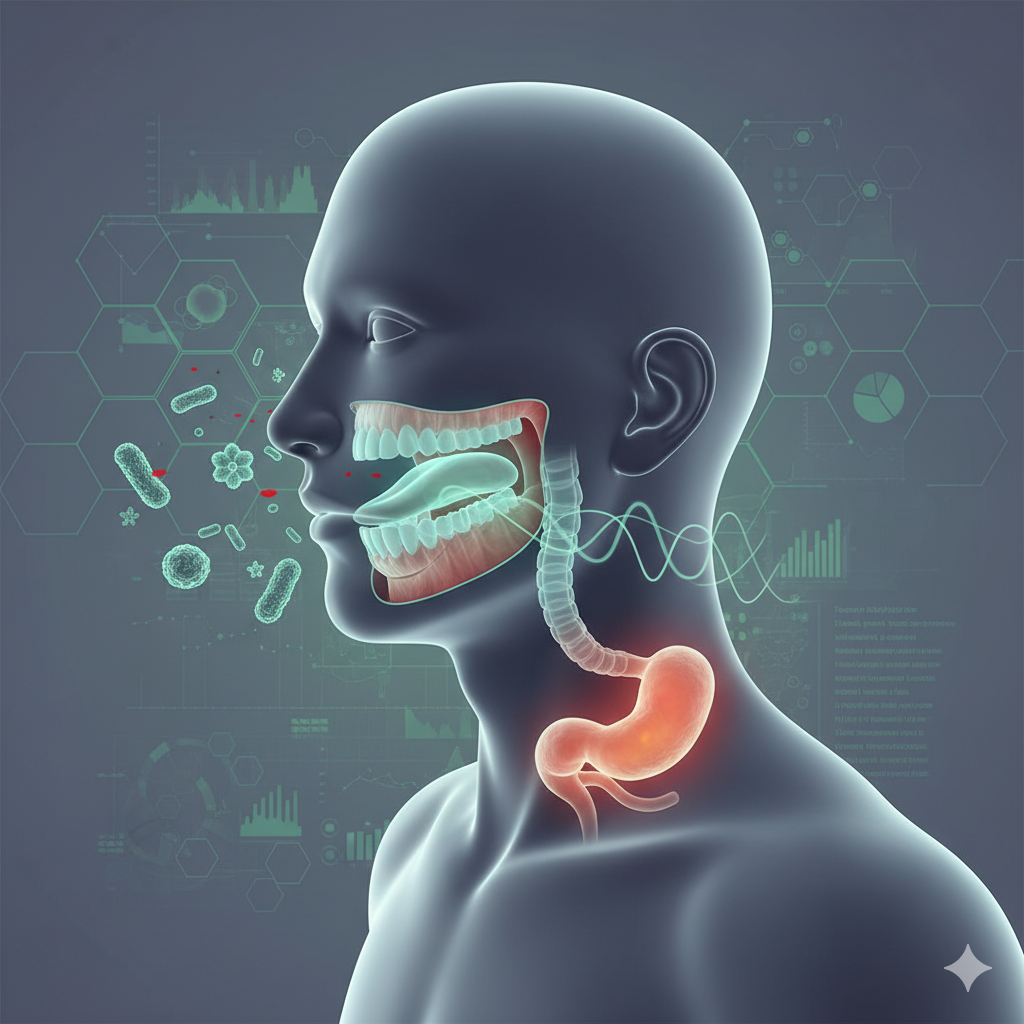
These findings suggest that oral bacteria, particularly those linked to periodontal disease, may play a direct role in pancreatic carcinogenesis. Some bacteria may travel from the mouth to the pancreas, contributing to inflammation, metabolic changes, and tumor growth.
2. Fungi Are Also Important
While bacteria have been the main focus of previous studies, this research also examined fungi, the oral mycobiome. The genus Candida, commonly found in the mouth, was associated with increased pancreatic cancer risk. Specifically:
- Candida tropicalis was linked to a higher risk.
- Interestingly, Candida albicans, the most common Candida species in the mouth, showed a potential protective effect.
Other fungal genera, like Malassezia, showed no significant association overall. Importantly, the study confirmed that Candida species present in the mouth were also found in pancreatic tumor tissue, supporting the idea that oral fungi could contribute to disease development.
3. A Microbial Risk Score Predicts Cancer Risk
To simplify the complex data from 27 bacteria and fungi, researchers created a “Microbial Risk Score” (MRS). This score summarizes the combined impact of high-risk and low-risk microbes on pancreatic cancer development.
The results were striking: a one standard deviation increase in MRS corresponded to a more than threefold increase in pancreatic cancer risk. This strong association suggests that oral microbiome profiles could serve as a noninvasive biomarker for identifying individuals at high risk.
4. How Oral Microbes May Influence Cancer
The study also explored how oral microbes might contribute to pancreatic cancer. Chronic inflammation from bacteria and fungi could create an environment that promotes tumor growth. Some oral bacteria are linked to carbohydrate and lipid metabolism pathways that may influence pancreatic cells’ behavior, potentially driving cancer development.
Additionally, translocation of oral pathogens from the mouth to the pancreas could trigger immune responses, release microbial toxins, and alter the pancreatic microbiome, further contributing to disease.
Implications for Health and Prevention
This research has several important implications:
- Early Detection: Oral microbiome analysis could become a noninvasive tool to identify people at higher risk for pancreatic cancer, allowing for closer monitoring or preventive interventions.
- Oral Health Matters: Maintaining good oral hygiene and managing gum disease may reduce systemic inflammation and potentially lower cancer risk.
- New Research Directions: Understanding how oral bacteria and fungi influence pancreatic cancer could lead to targeted therapies or microbiome-based interventions.
Limitations of the Study
While the findings are compelling, the study has some limitations:
- Most participants were White, limiting generalizability to other racial or ethnic groups.
- The study design was observational, so it cannot prove causation.
- Oral samples were collected only once, so long-term microbiome changes were not captured.
- Fungal identification is still limited by incomplete reference databases, so some species-level findings require caution.
Despite these limitations, the study’s strengths, including its large sample size, prediagnostic oral samples, and comprehensive sequencing methods, make its findings highly robust.
The Bottom Line
Your mouth may hold more clues about your health than you realize. This study shows that the balance of bacteria and fungi in the oral cavity can predict the risk of developing pancreatic cancer years before diagnosis.
While brushing and flossing alone won’t prevent cancer, this research underscores the importance of oral health as part of overall wellness. It also opens the door for exciting new possibilities: noninvasive screening tools based on oral microbes, personalized prevention strategies, and a better understanding of how the microbiome interacts with cancer development.
In short, taking care of your teeth and gums may be more important than you ever imagined—not just for a bright smile, but potentially for your long-term health and even cancer prevention.