
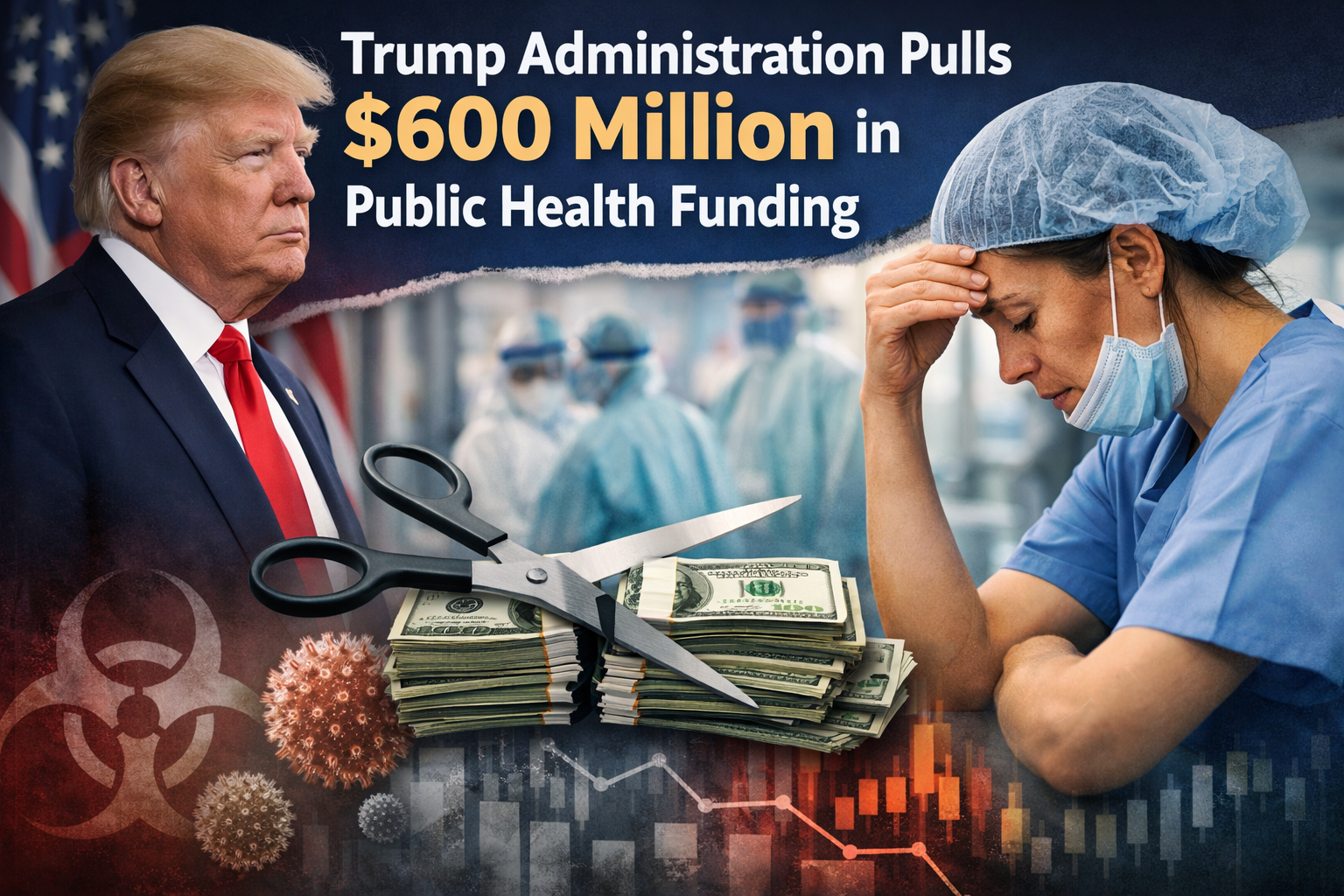
Trump Administration Pulls $600 Million in Public Health Funding, Raising Concerns Over Disease Preparedness
Public health funding plays a critical role in disease prevention, outbreak response, and community health programs across the United States. In February 2026, a major funding shift sparked national debate after the Trump administration announced plans to reclaim roughly $600 million in public health grants from four states. The decision has raised concerns among health officials, nonprofit organizations, and medical professionals, particularly as the nation continues to face active infectious disease threats.
This article explores what happened, which states are affected, why the funding is being pulled, and what the potential consequences may be for public health infrastructure, vulnerable populations, and disease prevention efforts.
Overview of the Funding Cuts
The U.S. Department of Health and Human Services confirmed that approximately $600 million in public health funding will be withdrawn from California, Colorado, Illinois, and Minnesota. According to federal documents reviewed by The New York Times, the funding was originally distributed through the U.S. Centers for Disease Control and Prevention.
The grants supported a wide range of public health initiatives, including staffing state health departments, improving public health data systems, responding to disease outbreaks, and funding nonprofit organizations that serve specific communities. Some of the grant terminations are set to take effect immediately, while additional cuts are scheduled to roll out over the coming weeks.
An HHS spokesperson stated that the grants are being terminated because they no longer align with current agency priorities.
States Impacted by the Decision
All four states affected by the funding rollback are led by Democratic administrations.
California is expected to experience the largest impact. Nearly two thirds of the funding being pulled back from the state consists of unspent allocations intended for state and local health departments. These funds were designated for long term public health infrastructure improvements and emergency preparedness.
Illinois, Colorado, and Minnesota are also facing substantial losses that affect both state agencies and nonprofit partner organizations operating within their borders.
Public Health Programs Affected
The withdrawn funding supported dozens of public health programs across the four states. These initiatives addressed a wide range of health needs, including:
- Disease surveillance and outbreak response
- Hiring and retaining public health staff
- Modernizing public health data systems
- HIV and sexually transmitted infection prevention
- Community based outreach and education programs
Approximately two dozen of the canceled grants were focused on HIV and other sexually transmitted infections. These programs often targeted populations with historically higher infection rates and barriers to healthcare access.
Health experts warn that disruptions to these programs could lead to delayed diagnoses, reduced prevention efforts, and increased long term healthcare costs.
Impact on Partner Organizations
Beyond state health departments, the funding cuts significantly affect partner organizations, including hospitals, universities, and national medical associations.
Among the organizations listed in the planned cuts are:
- The American Medical Association in Illinois, losing $7.2 million in funding for programs that support gender related healthcare for minors
- Lurie Children’s Hospital of Chicago, losing $5.2 million designated for HIV prevention work among Black women
- The University of California, San Francisco, losing $876,000 for a project aimed at reducing social isolation among older LGBTQ adults
- The Colorado Health Network, losing $371,000 for outreach to Latino and African American men who have sex with men
Many of these organizations rely on federal grants to sustain specialized programs that are not easily replaced by private funding or state budgets.
CDC Priority Shift Explained
In September 2025, the CDC updated its public facing priorities, signaling a shift away from programs focused on diseases that primarily affect specific populations. According to the agency, this approach had not resulted in measurable improvements in minority health outcomes and, in some cases, conflicted with what it described as core American values.
This philosophical shift appears to be a major driver behind the grant terminations. Programs centered on population specific interventions, including those focused on race, sexual orientation, or gender identity, were more likely to be flagged for cancellation.
Supporters of the decision argue that public health funding should focus on broader population wide initiatives. Critics counter that targeted programs are essential for addressing health disparities and preventing outbreaks in high risk communities.
Concerns From Public Health Experts
The announcement has drawn sharp criticism from former and current public health leaders. Dr. Deb Houry, who resigned as the CDC’s chief medical officer in August 2025, expressed concern over the timing of the cuts.
She warned that reducing public health funding while the country is facing ongoing threats, including a measles outbreak, could leave communities dangerously underprepared. Dr. Houry also noted that the funding cuts come alongside significant staffing reductions at the federal level, compounding the strain on public health systems.
Public health professionals emphasize that infrastructure investments often take years to show measurable results and that sudden funding reversals can undo progress quickly.
Relationship to the $5 Billion Grant Pause
The $600 million funding rollback follows a separate but related action by HHS earlier this year. In January 2026, the department briefly paused $5 billion in public health infrastructure grants nationwide to review whether they aligned with administration goals.
That pause was lifted within 24 hours after widespread concern from lawmakers, health officials, and advocacy groups. While the infrastructure funding was ultimately released, the episode signaled increased scrutiny of public health spending and foreshadowed the targeted cuts announced in February.
Potential Public Health Consequences
Experts warn that the funding cuts could have several downstream effects, including:
- Slower detection and response to disease outbreaks
- Reduced access to preventive services for high risk populations
- Loss of trained public health workers
- Increased strain on emergency healthcare systems
- Higher long term healthcare costs due to preventable illness
Public health infrastructure is often described as invisible when it works well. Funding reductions may not be immediately noticeable to the public but can significantly weaken preparedness over time.
Political and Ethical Debate
The decision to pull funding from Democratic led states has also fueled political debate. Critics argue that the move may politicize public health funding and undermine trust in federal health agencies.
Supporters of the administration’s approach contend that taxpayer dollars should be redirected toward initiatives that demonstrate measurable outcomes and align with federal policy priorities.
The ethical debate centers on whether population specific health programs are essential tools for equity or whether they unfairly prioritize certain groups over others.
What Happens Next
State health departments and affected organizations may appeal the funding decisions or seek alternative funding sources. However, replacing federal grants of this magnitude is challenging, particularly for nonprofit organizations.
Congressional oversight committees are expected to review the funding changes, and legal challenges remain a possibility depending on how the grant terminations are implemented.
For now, many public health leaders are urging policymakers to consider the long term consequences of reducing preventive health investments during a period of ongoing public health risk.
Conclusion
The Trump administration’s decision to reclaim $600 million in public health funding marks a significant shift in federal health policy. By targeting grants that no longer align with revised CDC priorities, the administration has reshaped the landscape of public health funding in four major states.
While supporters view the move as a necessary realignment of resources, critics warn that the cuts could weaken disease prevention efforts, disrupt essential programs, and leave communities less prepared for future health threats.
As the situation develops, the long term impact on public health infrastructure and population health outcomes will be closely watched by policymakers, medical professionals, and the public alike.
Source
The New York Times, February 9, 2026
Disclaimer
This article is for informational and educational purposes only. It does not provide medical advice, diagnosis, or treatment. Statistical and public health data reflect general trends and may not apply to individual circumstances. Always consult qualified healthcare professionals or public health authorities for guidance specific to your situation.