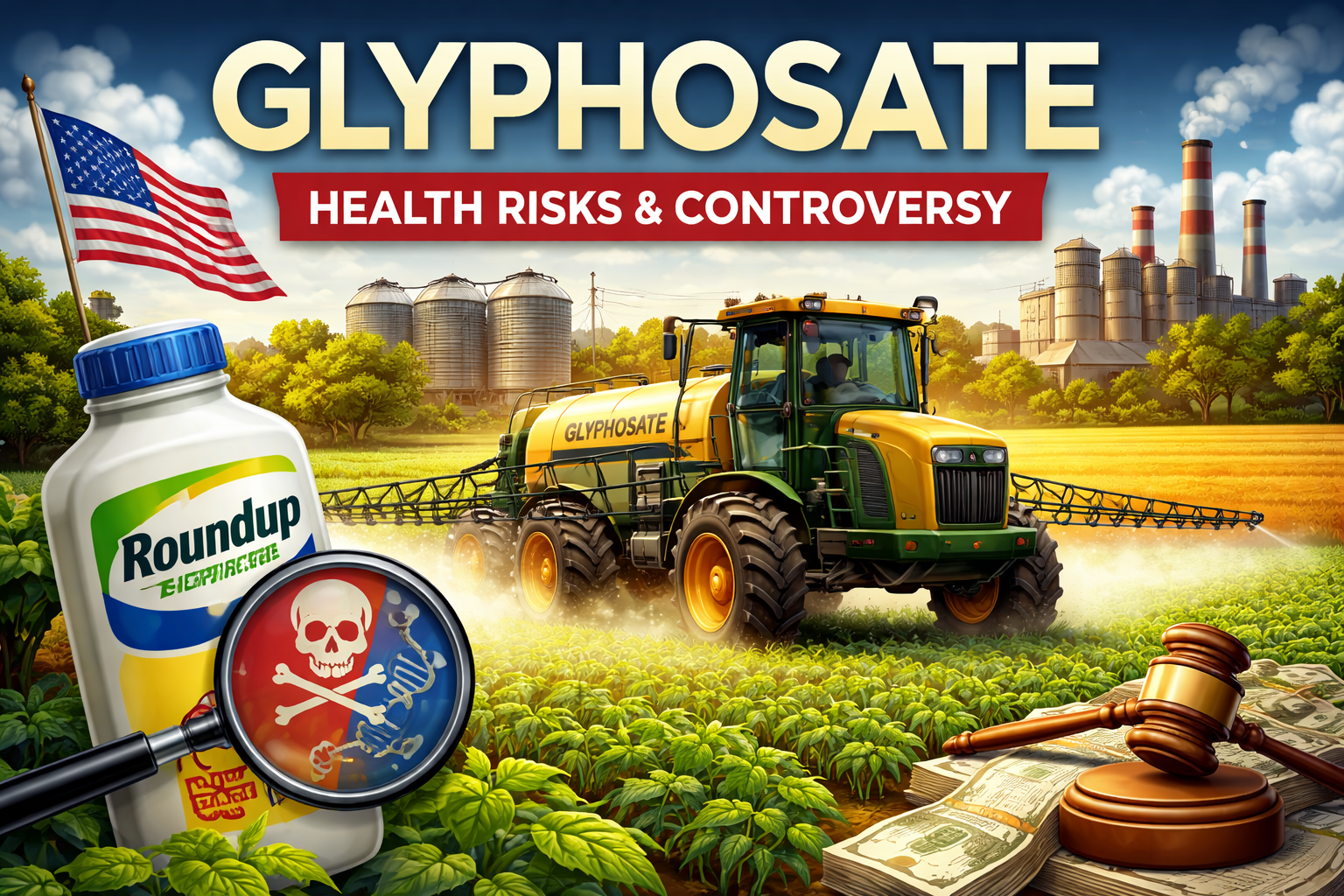
In February 2026, the United States government issued an executive order to promote the production of glyphosate, a chemical widely used in weedkiller products such as Roundup. The order invokes the Defense Production Act to treat glyphosate as essential to national food supply and security. This decision has sparked significant debate among environmental activists, scientific experts, farmers, and political groups.
Glyphosate is one of the most widely used herbicides in modern agriculture. Supporters of the order say it protects farmers and food production, while critics raise serious concerns about potential health risks and environmental effects. To understand the full picture, this article breaks down the controversy, scientific evidence, legal implications, and what it could mean for public health and policy.
Add Hirecade Free ATS to streamline candidate tracking, automate workflows, and manage hiring in one place.
President Donald Trump signed an executive order in February 2026 calling glyphosate and the mineral phosphorus that helps make it critical to agricultural and national security. The order directs federal agencies to prioritize production of these materials under the Defense Production Act, a law originally designed to secure resources during times of war or national emergency.
The administration says glyphosate plays a vital role in crop yields, food supply, and economic stability, and that ensuring a domestic supply is necessary for both farmers and national defense. Glyphosate’s defenders argue that without it, farmers might struggle to control weeds effectively, which could lead to higher food prices and supply issues.
However, critics argue that this decision goes beyond agricultural support and prioritizes chemical producers over public health. They point out that the order may grant legal protections to companies, potentially shielding them from lawsuits linked to health claims.
Glyphosate is a broad‑spectrum herbicide widely used by farmers, landscapers, and gardeners to kill broadleaf weeds and grasses. It is the active ingredient in many commercial weedkillers, most famously Roundup, originally developed by Monsanto and now produced by Bayer.
Because of its effectiveness and low cost, glyphosate became popular in the 1970s and remains one of the most widely used agricultural chemicals worldwide. Farmers rely on it for weed control in crops such as corn, soybeans, and cotton.
Build your standout resume — free with Hirecade! https://www.hirecade.com/resume-builder
One of the most contentious issues surrounding glyphosate is its potential link to cancer, particularly non‑Hodgkin lymphoma (NHL). In 2015, the International Agency for Research on Cancer (IARC), part of the World Health Organization, classified glyphosate as “probably carcinogenic to humans.”
This classification was based on evidence from animal studies, mechanistic data showing DNA damage, and some human epidemiological evidence. A recent scientific review and update found new evidence linking glyphosate exposure to non‑Hodgkin lymphoma, including animal research showing tumor development and mechanisms that may explain this risk.
Another major meta‑analysis reported that people with high exposure to glyphosate‑based herbicides had a 41 percent higher risk of developing NHL compared with those with lower exposure levels.
Despite these findings, regulatory agencies in multiple countries have concluded that glyphosate is not likely to be carcinogenic when used as labeled. The United States Environmental Protection Agency (EPA), European pesticide regulators, and others maintain that there is no clear evidence of cancer risk from normal use.
These differing conclusions highlight a major point of controversy: scientific assessments do not unanimously agree on the cancer risk. Some researchers emphasize links to cancer, while regulatory agencies argue that the evidence is inconclusive or not sufficient to support a carcinogenic classification.
Legal battles over glyphosate have been intense. Tens of thousands of plaintiffs in the United States have filed lawsuits claiming exposure to glyphosate‑based products caused cancer, particularly NHL. Bayer, the owner of Roundup’s manufacturer, announced a proposed $7.25 billion settlement to resolve many of these claims, although the company does not admit that glyphosate causes cancer.
The executive order’s use of the Defense Production Act has raised concern because it could potentially limit liability for manufacturers if they are producing glyphosate at the direction of the government. Some lawmakers have reacted by proposing legislation aimed at preventing companies from claiming immunity from civil liability even under federal directives.
Politically, the order has strained alliances within movements that supported the president’s agenda. Activists rooted in the Make America Healthy Again (MAHA) movement have criticized the decision, saying it contradicts earlier promises to reduce harmful chemicals in the environment. Some MAHA supporters have warned that the order could cost political support ahead of upcoming elections.
Beyond cancer debates, some scientists and environmental groups express broader concerns about glyphosate’s effects on wildlife, soil health, and ecosystems. Glyphosate residues are commonly found on crops and in soil and water, raising questions about long-term ecological impacts.
Although the primary focus for many regulatory reviews has been cancer risk, research also explores whether glyphosate might affect gut bacteria or endocrine systems, although these claims remain under study. These concerns have led some countries and jurisdictions to restrict or rethink glyphosate use in agriculture.
Current scientific understanding of glyphosate and health risks is complex and evolving. Many regulatory bodies continue to assert that glyphosate, when used according to labeled instructions, does not pose a clear cancer risk to humans.
At the same time, independent researchers have identified associations between glyphosate exposure and cancer risk, particularly in high exposure settings such as agricultural workers. The IARC classification reflects a cautious interpretation of limited evidence that cannot rule out a potential link.
This contrast means that public debate and scientific inquiry are likely to continue. More research is needed, particularly long-term studies that can clarify the risk profile of glyphosate in both occupational and general population settings.
For farmers and agricultural producers, this order may offer some reassurance that glyphosate supplies will remain stable and that domestic production will be supported. Farmers argue that glyphosate is a valuable tool for weed control and crop production efficiency.
For consumers and health advocates, the executive order raises questions about how chemical risk is balanced against agricultural productivity. Some consumers may choose products grown without glyphosate or look for organic alternatives to reduce exposure.
Understanding these options and the science behind glyphosate can help individuals make informed choices about food, farming practices, and health priorities.
The 2026 executive order regarding glyphosate production has sparked fierce debate over the role of widely used herbicides in agriculture, public health, and national policy. While federal agencies maintain glyphosate is safe when used properly, independent research suggests a possible link to cancer at high exposure levels.
This controversy underscores the need for ongoing scientific research, transparent regulatory review, and informed public discourse. As policymakers, scientists, and communities continue to evaluate glyphosate’s role in modern agriculture, individuals can take steps to stay informed and make choices consistent with their values and health priorities.
This article is intended for informational and educational purposes only. It does not constitute medical, legal, or professional advice. Scientific understanding of chemicals such as glyphosate evolves over time, and individual circumstances may vary. Always consult qualified professionals for decisions regarding health, legal issues, agricultural practices, or chemical safety.

Most Accurate Healthcare AI designed for everything from admin workflows to clinical decision support.