
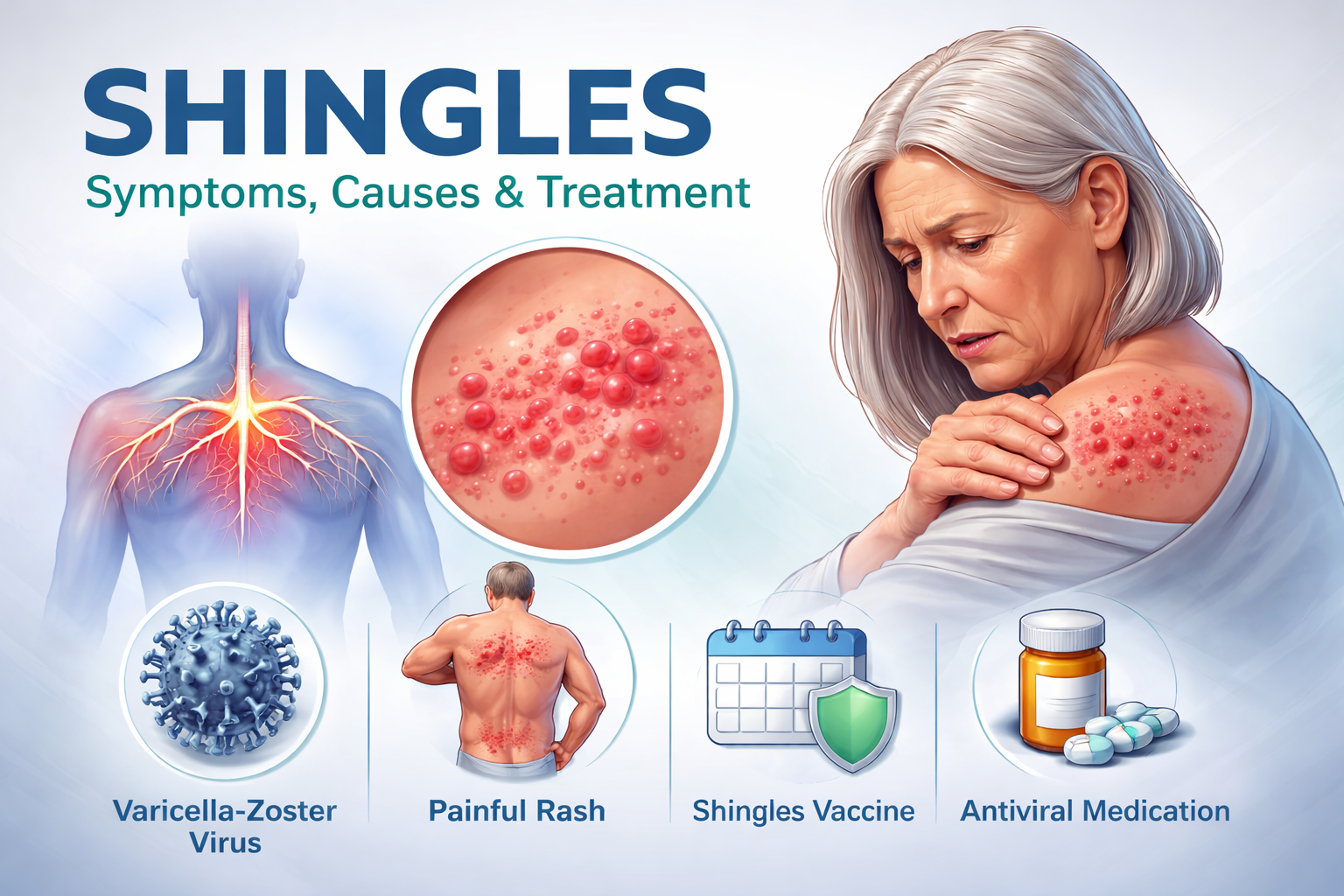
Shingles: Symptoms, Causes, Treatment, and Prevention Guide
Shingles is a painful viral infection that affects millions of adults each year. If you have ever had chickenpox, you are at risk of developing shingles later in life. Understanding the early warning signs, treatment options and prevention strategies can help you reduce complications and recover faster.
This comprehensive guide explains everything you need to know about shingles, including symptoms, causes, diagnosis, treatment and vaccination options.
What Is Shingles?
Shingles, also known as herpes zoster, is a viral infection that causes a painful rash and nerve damage. It is caused by the varicella zoster virus, the same virus responsible for chickenpox.
After you recover from chickenpox, the virus does not leave your body. Instead, it remains inactive in your nerve cells. Years or even decades later, it can reactivate and cause shingles.
According to the Cleveland Clinic, shingles most commonly affects adults over age 50, but it can occur at any age in people who have previously had chickenpox.
What Causes Shingles?
Shingles is caused by the reactivation of the varicella zoster virus. After a person recovers from chickenpox, the virus lies dormant in nerve tissue near the spinal cord and brain.
While experts are not always certain why the virus reactivates, several factors increase the risk:
- Age over 50
- Weakened immune system
- Cancer or HIV
- Immunosuppressive medications
- Chronic stress
As people age, their immune systems naturally weaken, which makes viral reactivation more likely.
Is Shingles Contagious?
You cannot spread shingles directly to another person. However, you can transmit the varicella zoster virus to someone who has never had chickenpox or the chickenpox vaccine.
Transmission occurs through:
- Direct contact with fluid from shingles blisters
- Inhaling viral particles from open blisters
If exposed, the person will develop chickenpox, not shingles.
To reduce risk of spreading the virus:
- Keep the rash covered
- Avoid scratching blisters
- Wash hands frequently
- Avoid contact with infants, pregnant women and immunocompromised individuals until lesions crust over
Early Symptoms of Shingles
Shingles often begins with subtle warning signs before a rash appears. Early detection is important because antiviral medications work best when started within 72 hours.
Common early symptoms include:
- Burning, tingling or stabbing nerve pain
- Itching
- Sensitivity to touch
- Discoloration or redness
- Fever
- Headache
- Chills
- Fatigue
- Upset stomach
These symptoms can appear days or even weeks before the rash develops.
What Does a Shingles Rash Look Like?
The shingles rash usually appears on one side of the body and follows a specific nerve pathway called a dermatome. It does not typically cross the midline.
Common rash locations include:
- Waist
- Chest
- Back
- Neck
- Face
The rash progresses in stages:
- Red or discolored patches
- Raised bumps
- Fluid-filled blisters
- Crusting and scabbing
Blisters usually form within three to four days. They dry out within 7 to 10 days and may take several weeks to fully heal.
Some individuals experience shingles without a visible rash. This condition is called zoster sine herpete and still requires medical evaluation.
Who Is Most at Risk?
Anyone who has had chickenpox can develop shingles. However, certain individuals are at higher risk:
- Adults over 50
- People with weakened immune systems
- Cancer patients undergoing treatment
- Organ transplant recipients
- People taking steroids or immunosuppressive drugs
Age remains the strongest risk factor.
Complications of Shingles
Most people recover fully, but shingles can cause serious complications.
Postherpetic Neuralgia
The most common complication is postherpetic neuralgia, a condition where nerve pain continues long after the rash heals. This pain can last months or even years and can significantly impact quality of life.
Up to 1 in 5 people with shingles develop this complication.
Eye Complications
When shingles affects the eye, it can lead to:
- Vision changes
- Eye pain
- Sensitivity to light
- Potential vision loss
This form is called herpes zoster ophthalmicus and requires urgent care.
Other Possible Complications
- Bacterial skin infections
- Facial paralysis
- Hearing loss
- Tinnitus
- Brain inflammation
- Pneumonia
- Vertigo
Rarely, shingles can be fatal in severely immunocompromised individuals.
How Is Shingles Diagnosed?
Healthcare providers diagnose shingles based on symptoms and physical examination of the rash.
Key diagnostic clues include:
- Rash limited to one side of the body
- Rash following a dermatome pattern
- Blistering lesions
In some cases, providers may take a swab of blister fluid for laboratory confirmation.
If you experience nerve pain without a rash, medical evaluation is still important.
Shingles Treatment Options
There is no cure for shingles, but treatment helps reduce severity and prevent complications.
Antiviral Medications
Doctors may prescribe:
- acyclovir
- valacyclovir
- famciclovir
These medications are most effective when started within 72 hours of symptom onset.
Pain Relief
Pain management options include:
- Acetaminophen
- Ibuprofen
- Prescription pain relievers
- Corticosteroids in specific cases
Severe cases may require hospitalization.
When to Seek Emergency Care
Go to the emergency room if you experience:
Prompt treatment can prevent permanent damage.
How Long Does Shingles Last?
A typical shingles outbreak lasts three to five weeks from first symptoms to complete healing.
Timeline overview:
- Days 1 to 3: Early nerve pain
- Days 3 to 5: Rash appears
- Week 1 to 2: Blisters form and crust
- Week 3 to 5: Scabs heal
Pain may improve within 7 to 10 days, though some people experience longer lasting nerve pain.
Can You Get Shingles More Than Once?
Yes, shingles can occur more than once, though it is not common. Recurrence is more likely in individuals with weakened immune systems.
If shingles returns, it typically affects a different nerve area.
Shingles Prevention and Vaccination
Vaccination is the most effective way to prevent shingles and its complications.
The CDC recommends the shingles vaccine Shingrix for adults aged 50 and older. It is also recommended for certain immunocompromised individuals.
Even if you have already had shingles or previously received Zostavax, Shingrix is still recommended for stronger protection.
Benefits of vaccination include:
- Reduced risk of shingles
- Lower chance of postherpetic neuralgia
- Decreased severity if infection occurs
Consult your healthcare provider to determine if vaccination is appropriate for you.
Living With Shingles
If you develop shingles:
- Rest and stay hydrated
- Keep the rash clean and covered
- Wear loose clothing
- Avoid scratching
- Limit contact with high risk individuals
Early medical intervention greatly improves recovery outcomes.
Key Takeaways
- Shingles is caused by reactivation of the chickenpox virus
- Early symptoms often include nerve pain before rash
- Antiviral treatment works best within 72 hours
- Adults over 50 are at highest risk
- Vaccination significantly reduces risk
- Complications can include long-term nerve pain
If you suspect shingles, contact a healthcare provider promptly.
Disclaimer
This article is for informational and educational purposes only and does not constitute medical advice. It is not a substitute for professional diagnosis, treatment or medical consultation. Always seek the advice of a qualified healthcare provider with any questions you may have regarding a medical condition. If you believe you are experiencing a medical emergency, call emergency services immediately.