
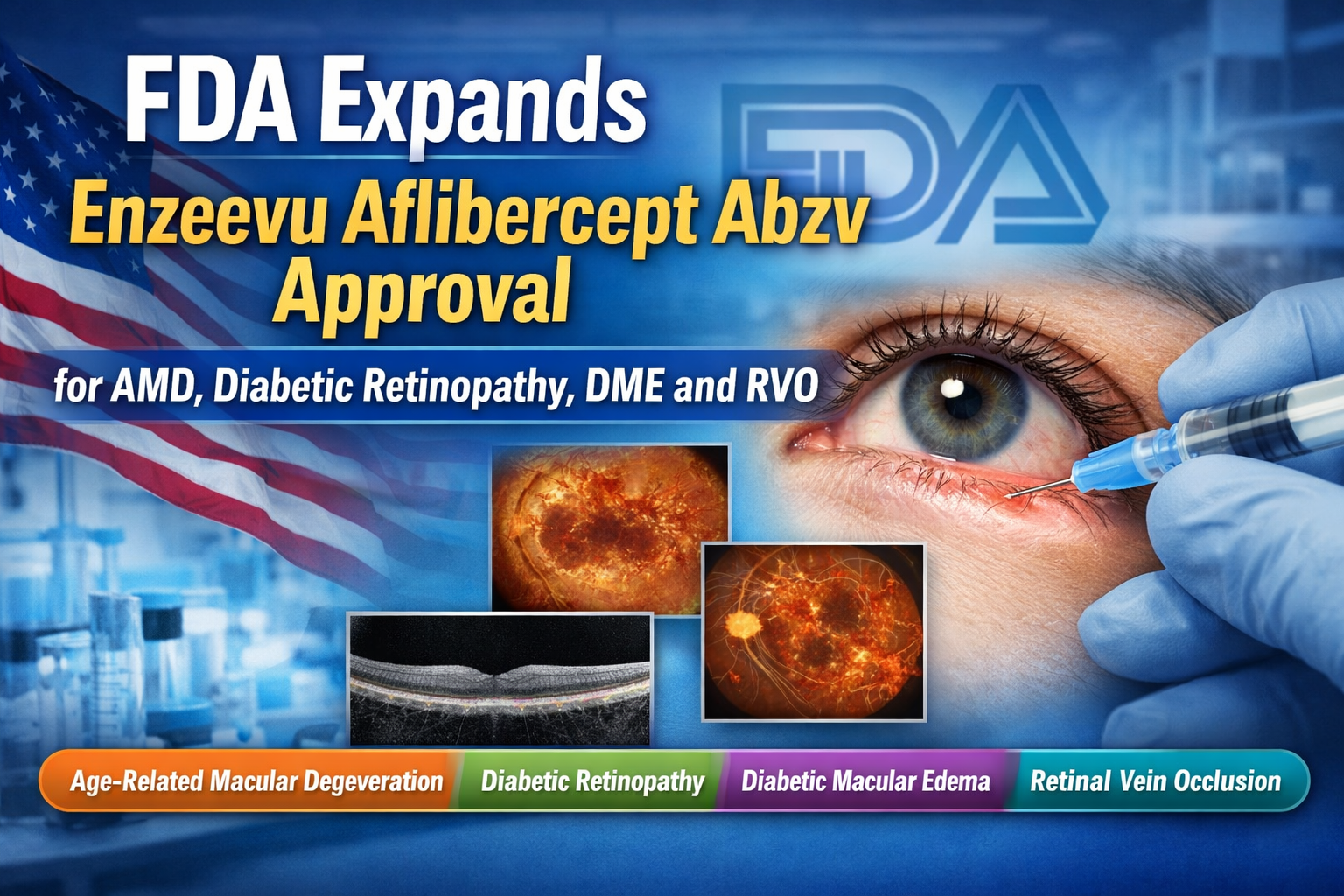
FDA Expands Enzeevu Approval: Sandoz Secures Label Expansion for Multiple Retinal Diseases
In a significant development for ophthalmology and biosimilar access in the United States, Sandoz has announced that the U.S. Food and Drug Administration has approved an expanded label for Enzeevu aflibercept abzv. This regulatory milestone broadens the use of Enzeevu beyond its original indication and reinforces the growing role of biosimilars in retinal disease treatment.
With more than 30 million Americans affected by retinal diseases that may lead to vision loss or blindness, expanded treatment options are essential. This approval strengthens access to a clinically proven aflibercept biosimilar and positions Sandoz as a key player in the ophthalmology biosimilar market.
FDA Expands Enzeevu Approval for Multiple Retinal Diseases
Enzeevu aflibercept abzv was initially approved in August 2024 for the treatment of neovascular wet age related macular degeneration nAMD. The newly expanded label now includes the following additional indications:
- Macular edema following retinal vein occlusion RVO
- Diabetic retinopathy DR
- Diabetic macular edema DME
- Previously approved neovascular wet age related macular degeneration nAMD
This expanded approval allows retina specialists to use Enzeevu across all major retinal indications currently treated with aflibercept therapy.
According to Sandoz, Enzeevu is expected to launch in the United States in the fourth quarter of 2026, or earlier under certain circumstances.
What Is Enzeevu Aflibercept Abzv
Enzeevu contains aflibercept, a recombinant fusion protein designed to bind to vascular endothelial growth factor A VEGF A and placental growth factor PlGF. By targeting these growth factors, aflibercept inhibits abnormal blood vessel formation and reduces vascular permeability, both of which are central mechanisms in retinal diseases.
In clinical use, Enzeevu is administered as an intravitreal injection directly into the eye. This method allows the medication to act locally in the retina, helping to stabilize or improve vision in patients affected by:
- Wet age related macular degeneration
- Macular edema after retinal vein occlusion
- Diabetic retinopathy
- Diabetic macular edema
By expanding its label, the FDA has validated the use of this biosimilar across a broader spectrum of sight threatening conditions.
Understanding the Retinal Diseases Treated by Enzeevu
1. Neovascular Wet Age Related Macular Degeneration
Wet age related macular degeneration is characterized by abnormal blood vessel growth beneath the retina. These fragile vessels can leak fluid or blood, leading to rapid vision loss if untreated. Anti VEGF therapies such as aflibercept have become the standard of care for managing this condition.
2. Macular Edema Following Retinal Vein Occlusion
Retinal vein occlusion occurs when a vein in the retina becomes blocked. This blockage can cause swelling in the macula, known as macular edema, which impairs central vision. Anti VEGF injections help reduce swelling and restore visual function.
3. Diabetic Retinopathy
Diabetic retinopathy is a complication of diabetes that damages retinal blood vessels. As the disease progresses, abnormal vessel growth may occur, increasing the risk of bleeding and vision loss.
4. Diabetic Macular Edema
Diabetic macular edema is a consequence of diabetic retinopathy and involves swelling in the macula due to leaking blood vessels. It is a leading cause of vision impairment in people with diabetes.
By covering all these conditions, Enzeevu provides retina specialists with a biosimilar alternative across the full range of aflibercept treated retinal diseases.
The Importance of Biosimilars in Ophthalmology
Biosimilars are biologic products that are highly similar to an already approved reference biologic, with no clinically meaningful differences in safety, purity, or potency.
The expansion of Enzeevu is part of a broader biosimilar growth trend in ophthalmology. Sandoz has actively strengthened its position in this space through:
- The acquisition of Cimerli ranibizumab eqrn in 2024
- The European launch of Afqlir aflibercept in 2025
- Continued development of a broad biosimilar pipeline
The biosimilar market is projected to represent approximately 320 billion USD in opportunity over the next decade. As biologic therapies continue to dominate specialty medicine, biosimilars play a critical role in improving affordability and sustainability within healthcare systems.
Enzeevu Safety Information and Important Considerations
As with all intravitreal anti VEGF treatments, Enzeevu carries important safety considerations.
Contraindications
Enzeevu should not be used in patients with:
- Ocular or periocular infection
- Active intraocular inflammation
- Known hypersensitivity to aflibercept or any component of the formulation
Warnings and Precautions
Potential risks include:
- Endophthalmitis
- Retinal detachment
- Retinal vasculitis with or without occlusion
- Increases in intraocular pressure within 60 minutes of injection
- Potential risk of arterial thromboembolic events
Patients and caregivers should be instructed to report any symptoms such as eye pain, vision changes, redness, or light sensitivity without delay.
Most Common Adverse Reactions
Adverse reactions reported in five percent or more of patients receiving aflibercept include:
- Conjunctival hemorrhage
- Eye pain
- Cataract
- Vitreous detachment
- Vitreous floaters
- Increased intraocular pressure
Healthcare professionals should review the full prescribing information before initiating treatment.
Sandoz Strengthens Its Position in the Biosimilar Market
Headquartered in Basel, Switzerland, Sandoz has a long history dating back to 1886. Today, it operates as a global leader in affordable medicines, employing more than 20,000 people across 100 nationalities.
The company reports that approximately 900 million patient treatments are delivered annually through its portfolio of around 1,300 products. In 2024, Sandoz recorded net sales of 10.4 billion USD.
The Enzeevu label expansion represents another strategic step in capitalizing on the projected growth of the global biosimilar market. With 13 biosimilars currently available and 27 additional assets in development, Sandoz continues to expand patient access to biologic therapies at more affordable price points.
What This Means for Retina Specialists and Patients
The FDA approval of expanded indications for Enzeevu may offer several potential benefits:
- Increased treatment options for physicians
- Greater competition in the aflibercept market
- Potential cost savings for healthcare systems
- Expanded patient access to biologic therapy
For retina specialists, having a biosimilar option across all major aflibercept indications may enhance flexibility in treatment planning.
For patients, especially those managing chronic diseases such as diabetes, increased competition in the biologic space may improve affordability and insurance coverage options over time.
Launch Timeline and Market Outlook
Enzeevu is expected to launch in the United States in the fourth quarter of 2026, with the possibility of earlier availability under certain circumstances.
As biosimilar adoption continues to grow, market competition is likely to increase, particularly in ophthalmology where anti VEGF agents remain a cornerstone of therapy.
The long term outlook suggests that expanded biosimilar access may contribute to healthcare cost containment while maintaining high standards of clinical effectiveness and safety.
Final Thoughts
The expanded FDA approval of Enzeevu aflibercept abzv marks an important milestone in retinal disease treatment. By extending its label to include macular edema following retinal vein occlusion, diabetic retinopathy, and diabetic macular edema, Sandoz strengthens its role in ophthalmology and reinforces the expanding presence of biosimilars in specialty medicine.
With millions of Americans affected by retinal diseases that threaten vision, the availability of clinically validated, more affordable biologic alternatives may have a meaningful impact on patient care in the years ahead.
As Enzeevu prepares for its anticipated US launch in late 2026, retina specialists, healthcare systems, and patients alike will be watching closely to see how this biosimilar shapes the evolving landscape of anti VEGF therapy.
Source
Sandoz Media Release, February 18, 2026.
Enzeevu aflibercept abzv Prescribing Information.
CDC Vision and Eye Health Surveillance System data.
Sandoz corporate reports and biosimilar market projections.
Disclaimer
This article is for informational and educational purposes only and does not constitute medical advice, diagnosis, or treatment. Healthcare decisions should always be made in consultation with a qualified healthcare professional. The information presented here is based on publicly available data at the time of writing and may be subject to change.