
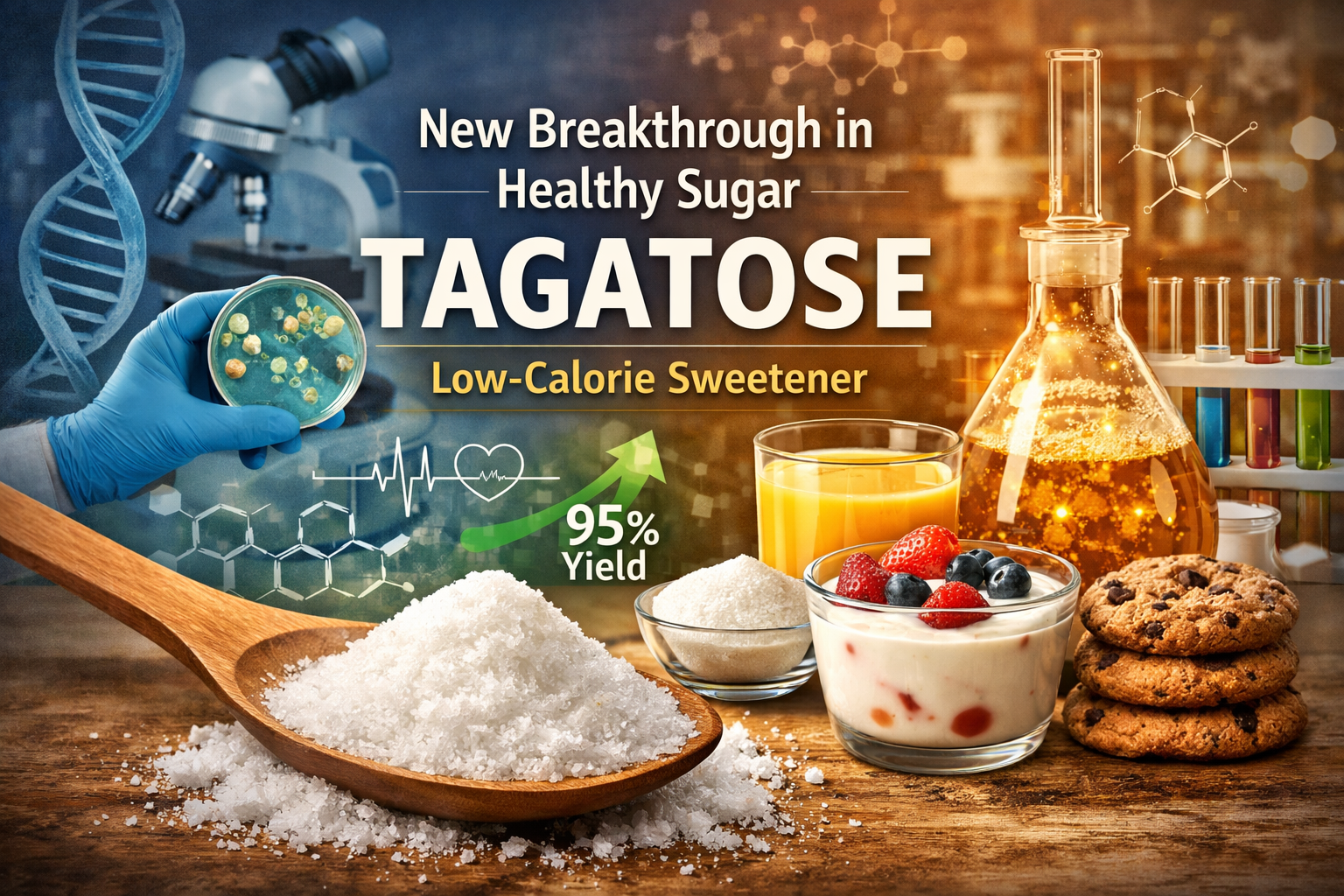
Scientists Discover Breakthrough Method to Produce a Healthier Sugar Alternative
For decades, scientists and food manufacturers have searched for a sweetener that tastes like sugar, behaves like sugar, and does not come with sugar’s well-known health drawbacks. Artificial sweeteners often fall short, either because of aftertaste, digestive issues, or poor performance in cooking and baking.
Now, researchers say they may be closer than ever to that goal.
A new study from Tufts University reveals a more efficient and affordable way to produce tagatose, a rare sugar that closely resembles table sugar but contains significantly fewer calories and has a much smaller impact on blood sugar levels. This discovery could change how foods are sweetened in the future, particularly for people managing diabetes, obesity, or metabolic health concerns.
What Is Tagatose?
Tagatose is a naturally occurring monosaccharide, meaning it is a simple sugar similar in structure to glucose and fructose. It is found in very small amounts in dairy products such as milk and yogurt, as well as in certain fruits.
Despite being classified as a sugar, tagatose behaves differently in the body compared to sucrose, also known as table sugar.
Key characteristics of tagatose include:
- Approximately 92 percent as sweet as table sugar
- Around 60 percent fewer calories than sucrose
- Minimal effect on blood glucose and insulin levels
- Similar texture and mouthfeel to sugar
- Ability to brown during cooking and baking
Because it functions as a bulk sweetener, tagatose can replace sugar not only for sweetness but also for structure, texture, and caramelization. This sets it apart from many high-intensity sweeteners that only provide sweetness and require fillers.
Why Rare Sugars Are Difficult to Use
Rare sugars like tagatose have long attracted interest from nutrition researchers and food scientists. The problem has never been their benefits. The challenge has been production.
Tagatose occurs naturally only in trace amounts. Extracting it directly from food sources is impractical and expensive. Traditional manufacturing methods rely on chemical or enzymatic processes that produce low yields, typically between 40 percent and 77 percent. These methods are costly, energy-intensive, and difficult to scale for widespread food use.
As a result, tagatose has remained a niche ingredient despite its promising health profile.
The New Scientific Breakthrough
In a study published in Cell Reports Physical Science, researchers from Tufts University outlined a novel biosynthesis process that dramatically improves tagatose production efficiency.
The new approach uses genetically engineered bacteria to convert common glucose into tagatose. Glucose is abundant, inexpensive, and already widely used in food manufacturing, making it an ideal starting material.
The innovation lies in the enzymes used during this conversion process.
The Role of Engineered Bacteria
The research team introduced a set of specialized enzymes into bacteria, including one enzyme originally discovered in slime mold. This enzyme allowed the researchers to reverse a natural metabolic pathway.
Normally, organisms break down galactose into glucose for energy. The Tufts team flipped that process, enabling bacteria to convert glucose into galactose and then into tagatose.
This engineered pathway achieved a tagatose yield of up to 95 percent, a dramatic improvement over existing production methods.
According to the researchers, this breakthrough significantly lowers the cost and complexity of producing tagatose at scale.
Why This Matters for Health
Excess sugar consumption is strongly linked to obesity, type 2 diabetes, cardiovascular disease, and dental problems. While artificial sweeteners have helped reduce sugar intake, they come with their own controversies and limitations.
Tagatose offers a middle ground.
Blood Sugar and Diabetes
Studies have shown that tagatose causes only small increases in blood glucose and insulin levels. This makes it potentially suitable for people with diabetes or insulin resistance when used as part of a balanced diet.
Because it is absorbed slowly and partially metabolized, tagatose has a lower glycemic impact compared to traditional sugars.
Weight Management
With roughly 60 percent fewer calories than sucrose, tagatose can help reduce overall calorie intake without sacrificing taste. Unlike zero-calorie sweeteners, it provides bulk and satisfaction, which may help with appetite control and food enjoyment.
Dental Health
Early research suggests that tagatose may inhibit the growth of certain oral bacteria responsible for tooth decay. Unlike sugar, it does not appear to promote cavities to the same extent, making it a potentially tooth-friendly alternative.
Gut Health Potential
Some evidence indicates that tagatose may act as a prebiotic, supporting the growth of beneficial gut bacteria. A healthier gut microbiome has been linked to improved digestion, immune function, and metabolic health.
FDA Safety Status
Tagatose is already classified by the U.S. Food and Drug Administration as Generally Recognized as Safe, also known as GRAS. This designation means it can be legally used in food products without requiring additional safety approvals.
The GRAS status removes a major regulatory hurdle and opens the door for broader use of tagatose in commercial foods and beverages.
How Tagatose Compares to Other Sweeteners
When compared to common sugar substitutes, tagatose stands out in several important ways.
Unlike artificial sweeteners such as aspartame or sucralose, tagatose does not have an intense sweetness that requires dilution. It behaves much like sugar in recipes.
Compared to sugar alcohols like xylitol or erythritol, tagatose is less likely to cause digestive discomfort when consumed in moderate amounts.
It also avoids the bitter or metallic aftertaste that some people experience with non-nutritive sweeteners.
Potential Applications in Food and Beverage Products
Because tagatose browns, dissolves, and adds bulk like sugar, it can be used in applications where other sweeteners fail.
Potential uses include:
- Baked goods such as cookies, cakes, and bread
- Dairy products like yogurt and ice cream
- Beverages and flavored drinks
- Sauces, dressings, and condiments
- Nutrition bars and functional foods
Food manufacturers have long struggled to reduce sugar while maintaining texture and taste. Tagatose could provide a practical solution.
Economic and Environmental Impact
Lowering the cost of tagatose production could have benefits beyond nutrition.
Using engineered bacteria and common glucose feedstocks may reduce energy use and chemical waste compared to traditional sugar refining processes. This could make tagatose not only healthier but also more environmentally sustainable.
From an economic standpoint, affordable production increases the likelihood that tagatose could appear in everyday grocery products rather than remaining a specialty ingredient.
What Comes Next?
While the research is promising, widespread adoption will take time. Manufacturers must scale up production, conduct further testing, and reformulate existing products to incorporate tagatose effectively.
Consumer education will also play a role. Many people are unfamiliar with rare sugars, and clear labeling and communication will be essential for acceptance.
Still, experts believe this discovery represents a meaningful step forward in the search for better sweeteners.
Final Thoughts
The quest for a healthier sugar has often led to compromise. Either the taste suffers, the texture changes, or health concerns arise. Tagatose challenges that pattern.
Thanks to a new production method developed by scientists at Tufts University, this rare sugar may soon be more accessible, affordable, and practical for everyday use.
If adopted widely, tagatose could help reduce sugar-related health risks while preserving the foods people love. It is not a magic solution, but it may be one of the most promising sugar alternatives discovered so far.
Source
Tufts University, News Release, January 12, 2026
Study published in Cell Reports Physical Science
Disclaimer
This article is for informational purposes only and does not constitute medical advice. Statistical data and study findings reflect general trends and may not apply to individual circumstances. Individual health responses can vary. Always consult a qualified healthcare professional before making dietary or medical decisions.