Protein continues to dominate the wellness conversation. From fitness routines to everyday nutrition, more people are paying attention to how much protein they consume and where it comes from. At the same time, rising grocery prices have made traditional protein staples like beef less appealing or accessible. As a result, many are exploring alternative foods that deliver the same nutritional punch without the higher cost.
Beef has long been seen as a reliable protein source. A typical three-ounce serving provides around 22 to 25 grams, making it an easy way to approach the recommended 30 grams per meal. However, focusing only on protein overlooks the bigger picture. A well-rounded diet includes fiber, healthy fats, and essential vitamins and minerals. Fortunately, many foods not only match beef in protein content but also bring additional health benefits to the table.
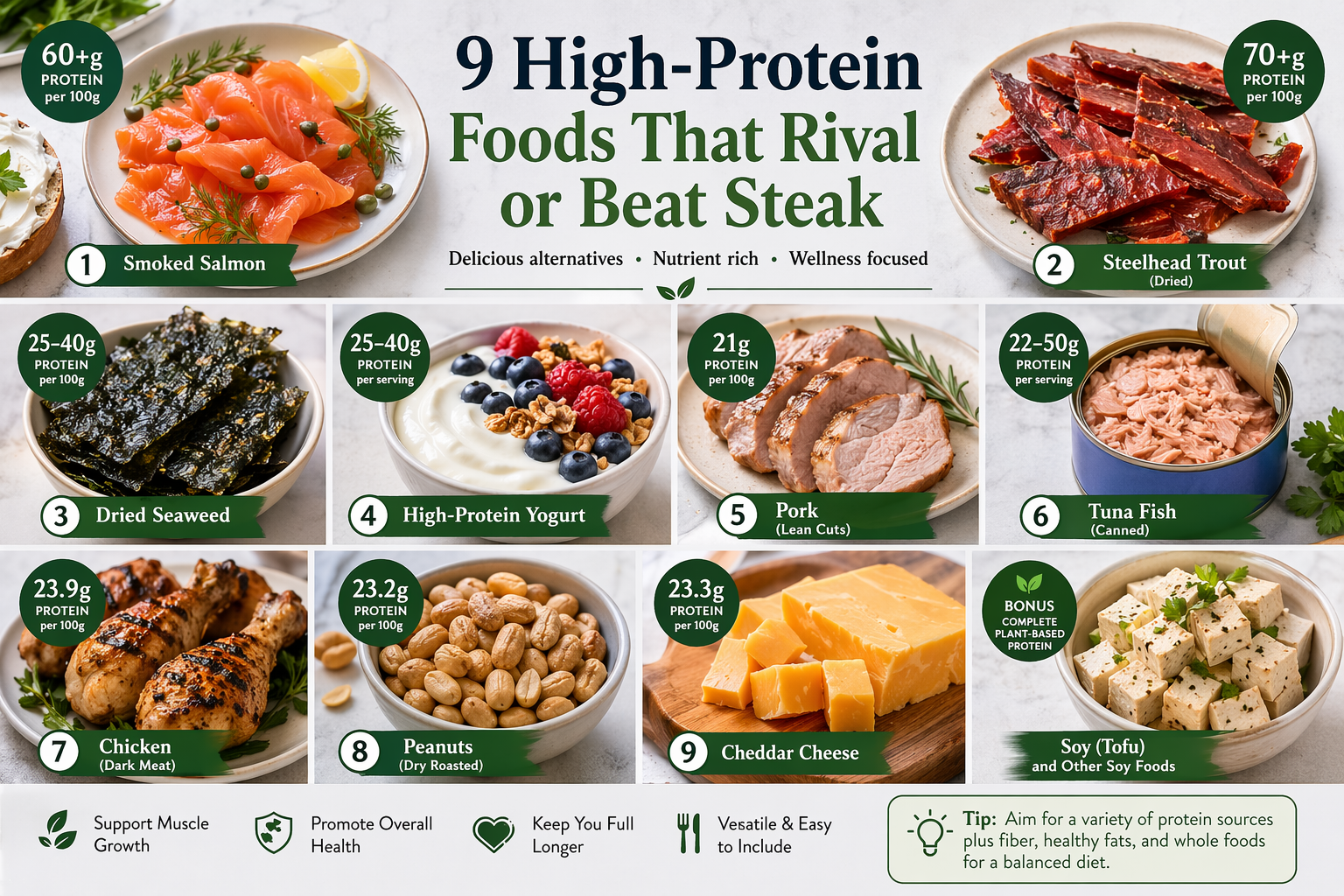
If you are looking to switch things up, save money, or improve your overall nutrition, here are nine foods that can compete with or even outperform steak in protein content.
Steelhead trout is a lesser-known option that packs a serious protein punch. In its dried form, it can provide more than 70 grams of protein per 100 grams. It is also low in fat and free from added sugars when prepared naturally. In addition to protein, it contains omega-3 fatty acids that support heart and brain health. This makes it a great alternative for those who enjoy protein-rich snacks like jerky.
Smoked salmon is not just a brunch favorite; it is also an excellent protein source. With over 60 grams of protein per 100 grams, it easily competes with beef. It also delivers beneficial fats that support cardiovascular health. To keep things balanced, it is wise to choose options with lower sodium. It pairs well with whole grains or fresh vegetables for a nutritious meal.
Dried seaweed may be unexpected, but it is surprisingly rich in protein. Depending on the variety, it can offer between 25 and 40 grams per 100 grams. Types like nori and green laver also provide important nutrients such as iodine, magnesium, and vitamin C. These support thyroid function, immune health, and overall wellness. Seaweed is also easy to incorporate into snacks or meals.
Greek yogurt stands out as a convenient and nutrient-dense option. It often contains up to twice the protein of regular yogurt, with some varieties reaching 40 grams per serving. It is also lower in carbohydrates and contains probiotics that benefit gut health. Choosing plain versions helps avoid added sugars while allowing you to customize with fruits, nuts, or seeds.
Lean pork cuts such as tenderloin or shoulder are another solid protein choice, offering about 21 grams per 100 grams. While slightly lower than beef in some cases, pork still contributes valuable nutrients like thiamine and zinc, which support energy and immune function. Simple cooking methods help retain its nutritional value.
Canned tuna has become increasingly popular due to its affordability and convenience. It provides between 22 and 50 grams of protein per serving, depending on how it is packaged. Oil packed varieties tend to have more protein, while water packed options are lighter in calories. Tuna also contains omega 3 fatty acids, making it a heart healthy addition to meals.
Chicken remains one of the most widely consumed protein sources. A 100 gram serving of drumstick meat contains nearly 24 grams of protein. Dark meat offers slightly more nutrients, including iron and zinc. Chicken also supplies B vitamins that support metabolism and immunity. Its versatility makes it easy to include in a variety of dishes.
Peanuts are a plant-based protein option that delivers more than 23 grams per 100 grams. They also provide healthy fats and fiber, which help keep you full and support heart health. Opting for unsalted versions is a simple way to maintain a balanced diet. Peanuts work well as a snack or as an ingredient in sauces and spreads.
Cheddar cheese offers around 23 grams of protein per 100 grams. It is also a good source of calcium and vitamin K, both essential for strong bones. While it should be enjoyed in moderation due to its fat content, it can be part of a healthy eating pattern when paired with other nutrient-rich foods.
For those following a plant based lifestyle, soy products like tofu are excellent protein sources. Tofu is considered a complete protein, meaning it contains all essential amino acids. It has been a staple in traditional diets known for longevity and overall health. Including a mix of plant proteins such as beans, lentils, nuts, and seeds helps ensure balanced nutrition.
While protein is important, it is only one part of a healthy diet. Foods that provide fiber, vitamins, and healthy fats play a crucial role in overall well-being. Plant-based options, in particular, offer fiber that supports digestion, something animal proteins do not provide.
Incorporating a variety of protein sources can improve nutrient intake, reduce reliance on any single food, and make meals more interesting. It can also support budget-friendly shopping and sustainable eating habits.
Steak may be a classic protein choice, but there are many other foods that can deliver equal or greater benefits. From seafood and dairy to plant-based alternatives, these options provide flexibility and variety while supporting your nutritional needs. A balanced approach to protein can help you build a healthier and more sustainable diet over time.
Disclaimer:
This article is for informational and educational purposes only and is not intended as medical or nutritional advice. Individual dietary needs can vary based on age, health conditions, activity level, and other factors. Always consult with a qualified healthcare professional or registered dietitian before making significant changes to your diet, especially if you have underlying health concerns or specific nutritional requirements.

Most Accurate Healthcare AI designed for everything from admin workflows to clinical decision support.