
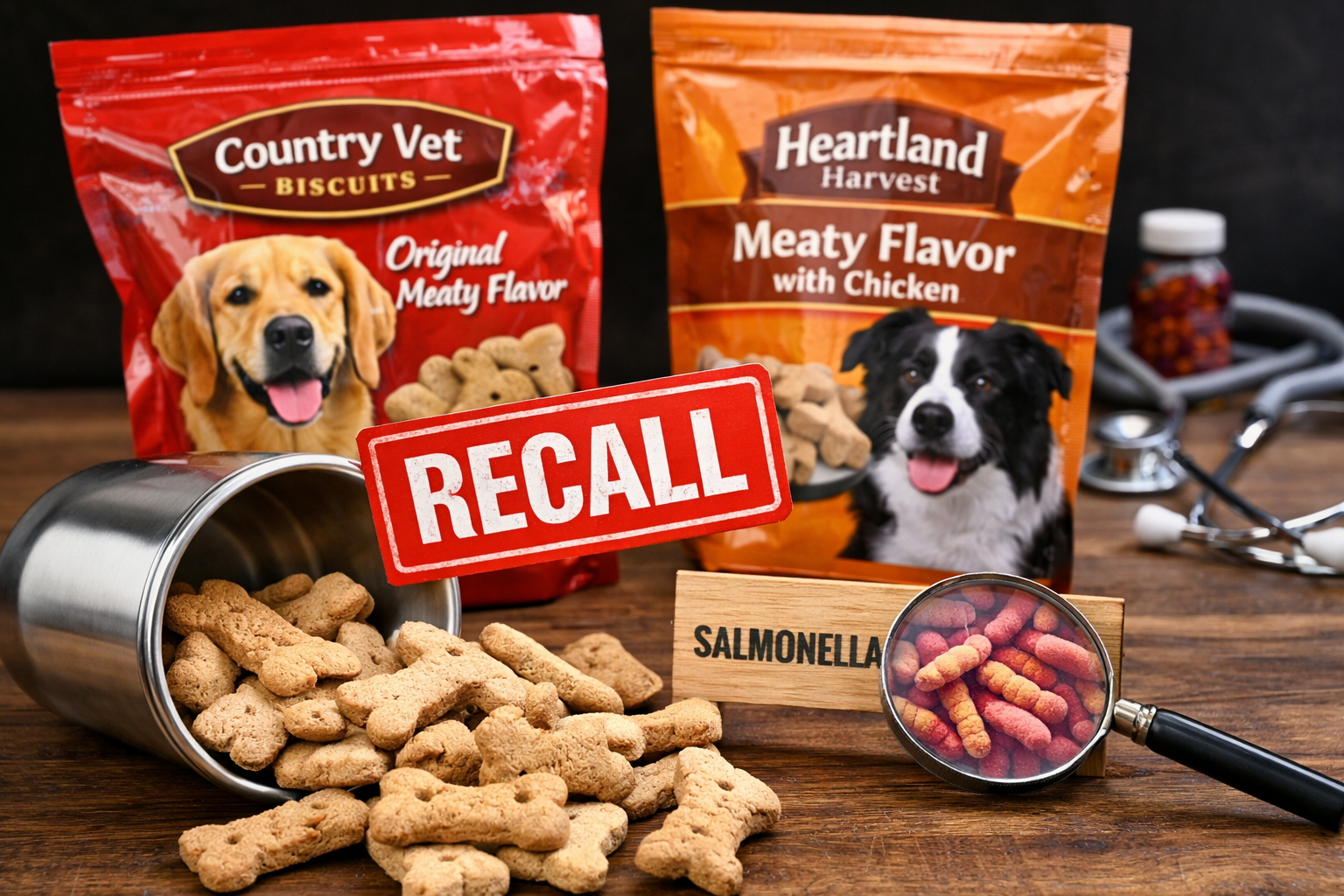
Popular Dog Treats Recalled in Seven States Due to Salmonella Contamination
Dog owners across the United States are being urged to check their homes after a recent recall involving popular dog treats sold in multiple states. Federal health officials have warned that certain dog biscuits may be contaminated with Salmonella, a harmful bacteria that can affect both pets and humans. While no illnesses have been reported so far, the recall highlights the ongoing risks associated with contaminated pet food products and the importance of prompt action by consumers.
This article breaks down everything pet owners need to know, including which products are affected, the health risks involved, symptoms to watch for, and what steps to take if you purchased the recalled treats.
Overview of the Dog Treat Recall
On December 24, Consumers Supply Distributing issued a voluntary recall of two dog treat products after routine testing detected the presence of Salmonella. The recall was announced with oversight from the U.S. Food and Drug Administration.
The recalled dog treats were sold in four pound bags and distributed across seven states. These states include Colorado, Iowa, Kansas, Missouri, Texas, Montana, and Nebraska. If you live in any of these areas and recently purchased dog biscuits, it is important to review the details carefully.
Although no pets or people have fallen ill at this time, health experts emphasize that Salmonella contamination poses serious risks and should not be taken lightly.
Recalled Dog Treat Products and Identification Details
Two specific dog treat products are included in the recall. Consumers should verify the product name, UPC code, lot number, and expiration date to determine whether they are affected.
Recalled Product 1
Country Vet Biscuits Original Meaty Flavor
UPC: 899623000463
Lot Code: 40906513
Package Size: 4 pound bag
Expiration Date: September 6, 2026
Recalled Product 2
Heartland Harvest Dog Biscuits Meaty Flavor with Chicken
UPC: 840227340691
Lot Code: 40906513
Package Size: 4 pound bag
Expiration Date: September 6, 2026
Only products matching these exact identifiers are included in the recall. However, consumers are encouraged to err on the side of caution and stop using any suspected products immediately.
Why Salmonella Is Dangerous for Pets and People
Salmonella is a type of bacteria that can cause serious gastrointestinal illness in both animals and humans. While it is commonly associated with contaminated food products, many pet owners are unaware that dog treats can also carry the bacteria.
How Pets Are Affected
Dogs that consume Salmonella contaminated treats may develop symptoms such as diarrhea, sometimes bloody, vomiting, fever, lethargy, abdominal pain, and loss of appetite. In some cases, infected pets may show no symptoms at all. Even asymptomatic dogs can carry the bacteria and spread it to other animals or humans through close contact.
Puppies, senior dogs, and pets with weakened immune systems are at higher risk of developing severe illness.
How Humans Are Affected
Humans can become infected with Salmonella by handling contaminated dog treats or touching surfaces that came into contact with them. The risk increases when proper handwashing is not followed.
Symptoms of Salmonella infection in people may include nausea, vomiting, diarrhea or bloody diarrhea, stomach cramps, and fever. In rare but serious cases, the infection can lead to complications such as bloodstream infections, joint inflammation, eye irritation, muscle pain, or urinary tract issues.
Children, elderly adults, pregnant individuals, and people with compromised immune systems face the greatest risk of severe illness.
How the Contamination Was Discovered
The Salmonella contamination was identified during routine sampling conducted by the FDA. These tests are part of ongoing federal efforts to monitor the safety of pet food and animal treats sold in the United States.
Once the bacteria was detected, Consumers Supply Distributing immediately halted production and distribution of the affected products. The company also launched an internal investigation in cooperation with federal regulators to determine the source of the contamination and prevent future incidents.
What Pet Owners Should Do Immediately
If you have purchased any of the recalled dog treats, health officials recommend taking the following steps right away:
- Stop feeding the treats to your dog immediately.
- Secure the product so pets and children cannot access it.
- Return the unused portion to the store where it was purchased for a full refund.
- Clean and disinfect any surfaces, containers, or hands that came into contact with the treats.
- Monitor your pet for symptoms such as vomiting, diarrhea, or lethargy.
- Contact your veterinarian if your dog shows any signs of illness.
- Seek medical care if you or a family member develop symptoms after handling the treats.
Taking quick action can significantly reduce the risk of illness and help prevent the spread of bacteria within your household.
Preventing Salmonella Exposure in the Future
While recalls are sometimes unavoidable, there are steps pet owners can take to reduce the risk of Salmonella exposure from pet food and treats.
Safe Handling Tips for Dog Treats
Always wash your hands thoroughly with soap and water after handling pet food or treats.
Store dog treats in a clean, sealed container away from human food.
Avoid allowing pets to lick your face after eating treats.
Clean feeding bowls regularly with hot, soapy water.
Keep pet food out of reach of young children.
These simple precautions can go a long way in protecting both pets and humans from harmful bacteria.
The Growing Concern Over Pet Food Safety
Pet food recalls have become more frequent in recent years, raising concerns among veterinarians and pet owners alike. As supply chains grow more complex, the risk of contamination at various stages of production increases.
The FDA continues to strengthen testing and oversight efforts, but experts stress that consumer awareness remains a critical layer of protection. Staying informed about recalls and understanding how to respond can make a meaningful difference in pet health outcomes.
No Illnesses Reported So Far
As of now, there have been no reported cases of illness linked to the recalled dog treats. This is encouraging news, but health officials caution that symptoms can take time to appear. Continued vigilance is essential in the days and weeks following the recall announcement.
Consumers who believe their pet or family member may be affected should not delay seeking professional medical or veterinary advice.
Final Thoughts for Dog Owners
The recent dog treat recall serves as an important reminder that pet products can pose health risks when contamination occurs. While the situation is under control and no illnesses have been reported, taking immediate action is the best way to protect your household.
By checking product labels, following safe handling practices, and staying informed about recalls, dog owners can reduce the risk of exposure to Salmonella and other foodborne pathogens.
If you have any doubts about the safety of a pet product, it is always better to discard it and consult a professional rather than take unnecessary chances.
Staying proactive today helps ensure a healthier tomorrow for both pets and people.
Source: U.S. Food and Drug Administration (FDA). Product Recall Notice issued December 24, 2025.