
The Heartbreaking Story of Punch the Baby Monkey and Why Mother Animals Sometimes Abandon Their Young
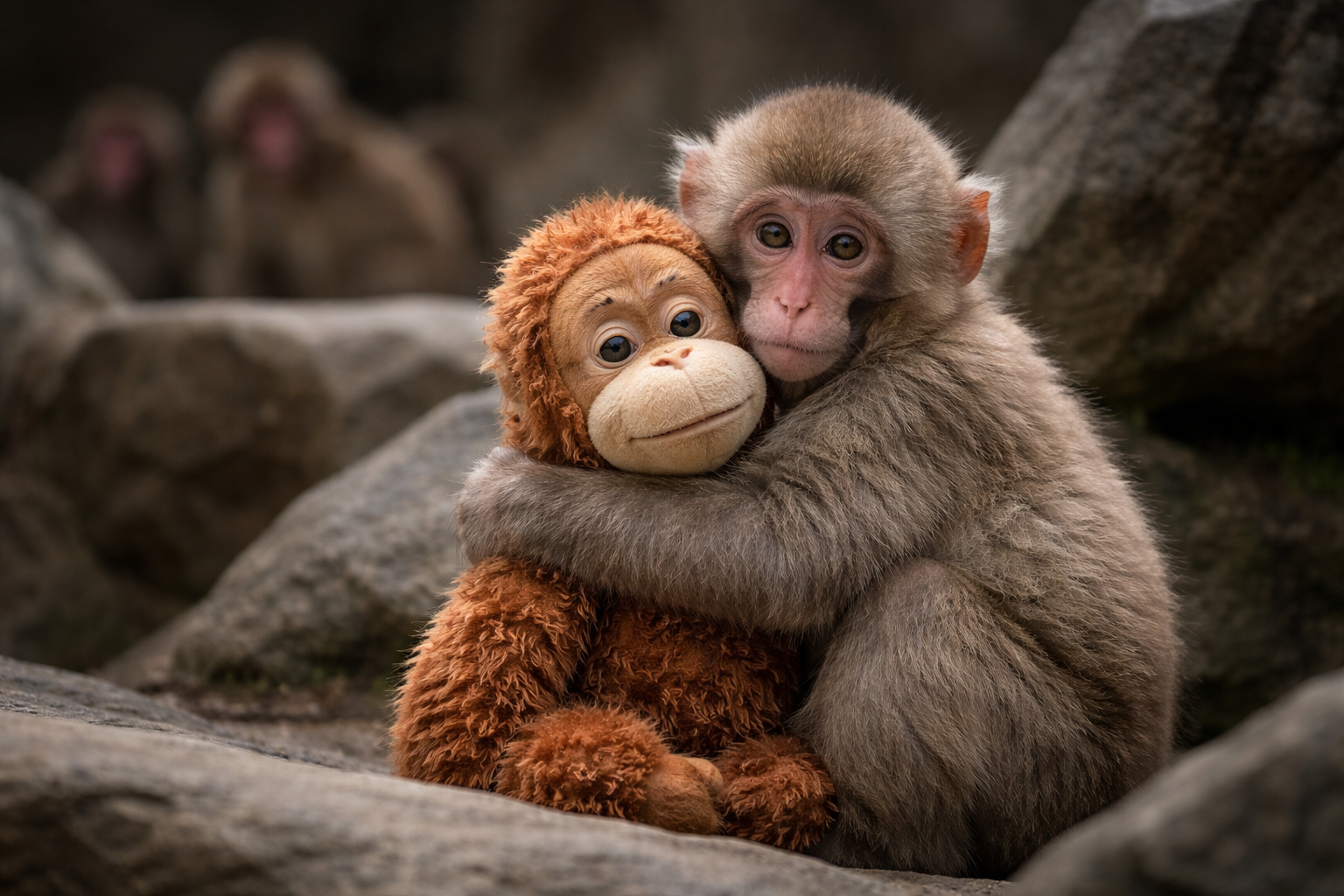
A tiny monkey clutching a stuffed toy has captured global attention. The story of Punch, a young Japanese macaque in Japan, has sparked deep emotions and raised complex questions about animal behavior, maternal instincts, and life inside zoos. While social media has turned Punch into a symbol of loneliness and resilience, experts say the reality behind his situation is more nuanced.
In this in depth explainer, we explore why mother animals sometimes abandon their offspring, what makes Japanese macaques unique, and what Punch’s story tells us about wildlife, climate stress, and human influence.
Who Is Punch the Monkey?
Punch is a seven month old Japanese macaque, born in July 2025 at Ichikawa City Zoo and Botanical Gardens in Japan. Shortly after birth, he was rejected by his mother, who was reportedly a first time parent.
Without maternal care, Punch struggled to integrate into the macaque troop. Zoo staff introduced a stuffed orangutan toy to give him something to cling to. Videos of Punch holding the toy while being chased or dragged by older monkeys quickly went viral.
In some clips, he appears isolated and vulnerable. In others, a fellow monkey briefly grooms him, offering moments of hope. The emotional contrast fueled widespread reactions online, with millions expressing sympathy.
However, experts emphasize that while the footage appears distressing to human viewers, the behavior seen among the monkeys is largely normal within their social system.
Why Do Mother Animals Abandon Their Babies?
Animal abandonment is uncommon in many species, but it does happen. In primates like Japanese macaques, maternal rejection can occur under specific conditions.
1. Inexperience in First Time Mothers
Punch’s mother was reportedly a first time mother. In primates, maternal skills are partly learned through observation and social interaction. Inexperienced mothers may struggle with nursing, carrying, or responding to their infant’s needs.
Unlike humans, animals do not receive guidance through structured learning. Young females typically observe other mothers in their troop. If social conditions are unstable or stressful, maternal behavior can be affected.
2. Environmental Stress and Heat
Punch was born during a heatwave. Environmental stress, including extreme heat, can impact maternal behavior. When survival feels threatened, mothers may prioritize their own health and future reproductive potential.
From an evolutionary perspective, if an infant appears weak or compromised due to environmental factors, a mother may invest energy elsewhere. While emotionally difficult for humans to process, this behavior can be rooted in survival strategy.
Climate change is increasing the frequency and severity of heatwaves globally, which may influence wildlife reproduction patterns in both wild and captive environments.
3. Health Concerns
In some cases, infants with underlying health issues may be rejected. Even subtle physical weakness can alter maternal bonding. Although there is no confirmed public information suggesting Punch had health problems, such factors are common in animal abandonment cases.
Understanding Japanese Macaque Society
The social world of the Japanese macaque is complex and highly structured. Often called snow monkeys, they are known for their intelligence and adaptability.
Strict Matrilineal Hierarchies
Japanese macaques live in matrilineal societies. Rank is inherited through the mother’s lineage. High ranking families dominate lower ranking ones, and social status influences grooming, feeding priority, and protection.
Aggression within the group is not necessarily bullying. It is part of maintaining social order. Young macaques learn how to display submissive signals to avoid escalation.
Without his mother’s guidance, Punch may struggle to develop appropriate subordinate behaviors. This could affect how he integrates into the troop long term.
The Role of Attachment
Baby macaques cling to their mother immediately after birth. Physical contact builds muscle strength and emotional security. In Punch’s case, zoo staff attempted to replicate this comfort with rolled towels before introducing the stuffed orangutan toy.
The toy may function as an attachment substitute. Research in primatology shows that young primates form strong physical attachments and derive psychological comfort from tactile objects when maternal care is absent.
The Power of Viral Animal Stories
Punch’s story spread rapidly across social media platforms. Millions viewed and shared clips of him clutching his toy while navigating troop aggression.
This reaction highlights how deeply humans connect with animals, especially infants displaying vulnerability. Similar global fascination occurred in 2024 with Moo Deng, a pygmy hippo at Thailand who became an internet sensation.
While viral attention can raise awareness about animal welfare, it also presents risks.
Increased Zoo Traffic
After Punch’s story gained traction, Ichikawa City Zoo reportedly experienced a surge in visitors. Officials implemented stricter barriers and asked guests to remain quiet to reduce stress on the animals.
Excessive noise and crowd pressure can negatively impact zoo animals, particularly primates who are highly perceptive and sensitive to environmental change.
Risk of Exotic Pet Demand
Experts warn that viral baby animal stories can unintentionally fuel interest in exotic pet ownership. Baby monkeys appear cute and manageable. However, macaques grow into strong, complex adults within four years.
They require social groups, specialized care, and enriched environments. Removing them from their species often leads to severe psychological distress and behavioral problems.
Japanese Macaques Beyond the Zoo
Japanese macaques are native to Japan and are among the northernmost living non human primates in the world. They are famous for bathing in hot springs during winter.
Despite their cultural prominence, macaques face challenges.
Habitat Loss
Urban expansion and agricultural development reduce natural habitats. As forests shrink, macaques increasingly raid crops, leading to conflict with farmers.
Culling Practices
In parts of Japan, macaques have been culled due to crop damage. This adds another layer of complexity to their conservation status.
Biomedical Research
Japanese macaques have also been used in neuroscience and biomedical research because of their cognitive abilities. Their intelligence makes them valuable research subjects but also raises ethical concerns.
What Punch’s Story Teaches Us
Punch’s situation reveals several broader themes:
- Maternal rejection in animals can have biological explanations.
- Climate stress may influence animal behavior.
- Social hierarchy is essential in primate development.
- Viral fame can both help and harm animal welfare.
It also reminds us that projecting human emotions onto animal interactions can sometimes obscure scientific realities. What appears as cruelty may be typical dominance behavior.
At the same time, empathy is not misplaced. Compassion drives improvements in animal welfare standards and conservation efforts.
Will Punch Be Okay?
It is impossible to predict Punch’s long term development. Some orphaned or rejected primates successfully integrate into their groups with time. Others face ongoing social challenges.
The zoo’s decision to provide an attachment substitute may help mitigate psychological stress. Monitoring his interactions and growth will be crucial.
Ultimately, Punch’s future depends on how well he adapts to the strict social dynamics of his troop.
Final Thoughts
The tragedy of Punch the baby monkey is both deeply emotional and scientifically complex. His story illustrates how animal behavior, environmental stress, and human perception intersect.
While it is natural to feel sorrow watching a young macaque cling to a toy for comfort, understanding the evolutionary and social context provides clarity. Animals operate within survival frameworks shaped by millions of years of adaptation.
Punch’s viral journey also serves as a reminder. Wild animals belong with their own species. Admiration from afar should translate into support for ethical zoo practices, habitat protection, and responsible conservation policies.
If Punch’s story inspires meaningful reflection about wildlife and climate challenges, then his small stuffed companion may symbolize not only comfort but awareness.
Source
The Guardian article by Maya Yang, published 23 February 2026, covering Punch the Japanese macaque at Ichikawa City Zoo in Japan.