
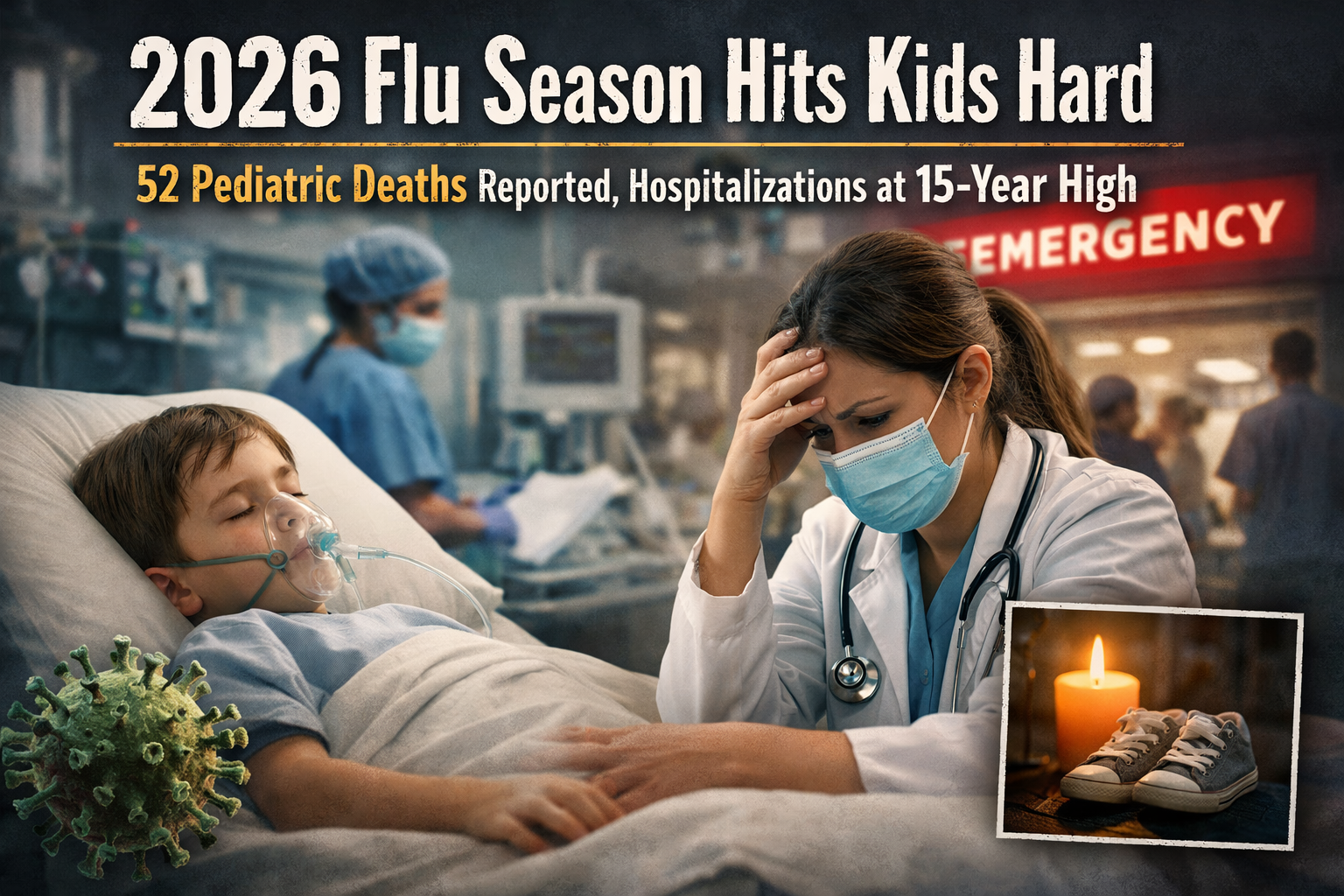
Pediatric Flu Deaths Rise in 2026 as Child Hospitalizations Reach 15 Year High
The 2025 to 2026 influenza season is shaping up to be one of the most concerning for children in more than a decade. According to recent data from the U.S. Centers for Disease Control and Prevention, at least 52 children have already died from flu related complications this season. Pediatric hospitalizations are rising rapidly, and public health experts warn that the peak of flu season may still be ahead.
This surge in severe pediatric flu cases is drawing attention from parents, healthcare providers, and policymakers alike. Lower vaccination rates, multiple circulating flu strains, and changing public health guidance are all contributing factors. Understanding what is happening and what families can do now may help prevent further illness and save lives.
Flu Season 2026 Is Hitting Children Especially Hard
Influenza is a common seasonal virus, but its impact varies from year to year. This season, children are experiencing unusually high rates of severe illness. The CDC estimates that there have already been more than 20 million flu cases nationwide, resulting in approximately 270,000 hospitalizations and 11,000 deaths across all age groups.
Among children, the situation is particularly alarming. This season has recorded the highest pediatric flu hospitalization rate in 15 years. By late December, weekly hospital admissions for children under 18 reached levels not seen since the 2010 to 2011 flu season.
Emergency room visits for flu also increased significantly among children ages 5 to 17 in late January. While flu related visits among adults have stabilized or declined, pediatric cases continue to rise.
Fifty Two Pediatric Flu Deaths Reported So Far
As of January 30, 2026, the CDC confirmed 52 flu related deaths among children. Roughly 90 percent of those children had not received a flu vaccine. This statistic has raised urgent concerns among public health officials and pediatric specialists.
Last flu season was the deadliest ever recorded for children, with 289 pediatric deaths. At the same point last year, 47 children had died. The fact that this season has already surpassed that number suggests a troubling trend.
Health experts caution that pediatric flu deaths are often underreported early in the season and tend to rise sharply as flu activity peaks later in winter.
Multiple Flu Strains Are Circulating
One factor contributing to the severity of this season is the presence of more than one dominant flu strain. Most current cases are linked to influenza A H3N2, a strain historically associated with more severe illness and higher hospitalization rates.
At the same time, influenza B is now spreading quickly across several regions of the United States. The CDC notes that it is common to see multiple waves of flu in a single season, particularly in January and February.
When more than one strain circulates widely, the risk of infection increases, especially for children with developing immune systems or underlying health conditions.
Declining Flu Vaccination Rates Among Children
Vaccination remains one of the most effective tools for preventing severe flu complications, yet fewer children are receiving flu shots than in previous years.
As of January 17, 2026, only 45.1 percent of children ages 6 months to 17 years had received a flu vaccine. By comparison, vaccination coverage during the 2019 to 2020 season was 63.7 percent.
This sharp decline has raised alarms among pediatricians and public health advocates. Michele Slafkosky, executive director of Families Fighting Flu, emphasized the connection between vaccination rates and severe outcomes.
Health experts stress that while the flu vaccine does not guarantee complete protection from infection, it significantly reduces the risk of hospitalization, serious complications, and death.
Policy Changes May Be Affecting Public Confidence
Earlier this year, the Trump administration revised long standing guidance that recommended annual flu vaccination for all children starting at 6 months of age. Under the updated guidance, parents are now encouraged to discuss flu vaccination with their pediatrician rather than follow a universal recommendation.
This change has sparked debate within the medical community. Major organizations including the American Academy of Pediatrics continue to strongly recommend annual flu vaccination for all eligible children.
Some experts worry that shifting public health messaging may contribute to confusion or hesitation among parents, particularly during an already severe flu season.
Why Children Are More Vulnerable to Severe Flu
Children are not just small adults when it comes to infectious diseases. Their immune systems are still developing, which can make it harder to fight off viral infections like influenza.
Young children are also more likely to experience complications such as pneumonia, dehydration, and inflammation of the heart or brain. Children with asthma, diabetes, obesity, or neurological conditions face even higher risks.
In some cases, previously healthy children can become critically ill within days of developing flu symptoms. This unpredictability is one reason pediatric flu is taken so seriously by healthcare providers.
Warning Signs Parents Should Not Ignore
Recognizing early warning signs can be lifesaving. Parents should seek immediate medical care if a child with flu symptoms experiences:
- Difficulty breathing or rapid breathing
- Bluish lips or face
- Severe chest pain
- Persistent high fever
- Dehydration or refusal to drink fluids
- Confusion or extreme drowsiness
- Seizures
- Symptoms that improve but then suddenly worsen
Prompt treatment, including antiviral medications when appropriate, can reduce the severity and duration of illness.
It Is Not Too Late to Get a Flu Shot
Despite the severity of the current flu season, experts emphasize that it is not too late to get vaccinated. Flu activity often continues well into spring, and vaccination can still offer protection against circulating strains.
Even if a child has already had the flu, vaccination may help protect against other strains spreading later in the season. It can also reduce the risk of severe outcomes if reinfection occurs.
Parents are encouraged to speak with their pediatrician about vaccination, especially if their child has underlying health conditions.
Preventive Steps Families Can Take Now
In addition to vaccination, families can take several practical steps to reduce flu transmission:
- Encourage frequent hand washing with soap and water
- Teach children to cover coughs and sneezes
- Keep sick children home from school and activities
- Clean and disinfect commonly touched surfaces
- Avoid close contact with people who are ill
These measures are especially important in households with infants, elderly family members, or individuals with compromised immune systems.
Public Health Experts Warn the Peak May Still Be Ahead
Flu season typically peaks between January and February, but severe seasons can extend into March or April. Health officials caution that current numbers may represent only part of the full impact this year.
Hospitals in some regions are already reporting strain on pediatric units. Emergency departments are seeing increased wait times, and healthcare workers are bracing for additional waves of illness.
Experts stress that community wide prevention efforts, including vaccination and early treatment, remain essential to reducing further loss of life.
Conclusion
The rise in pediatric flu deaths and hospitalizations during the 2026 flu season is a sobering reminder of how dangerous influenza can be for children. With multiple flu strains circulating and vaccination rates declining, families and healthcare providers face significant challenges.
Public health experts agree on one point: prevention matters. Vaccination, awareness of symptoms, and timely medical care can make a critical difference. As flu season continues, informed and proactive decisions may help protect children and prevent further tragedies.
Sources
NBC News, January 30, 2026
U.S. Centers for Disease Control and Prevention
Disclaimer
This article is for informational purposes only and is not intended as medical advice, diagnosis, or treatment. Statistical data reflects population trends and does not apply to individual cases. Health outcomes can vary based on personal medical history and circumstances. Always consult a qualified healthcare provider for personalized medical guidance.