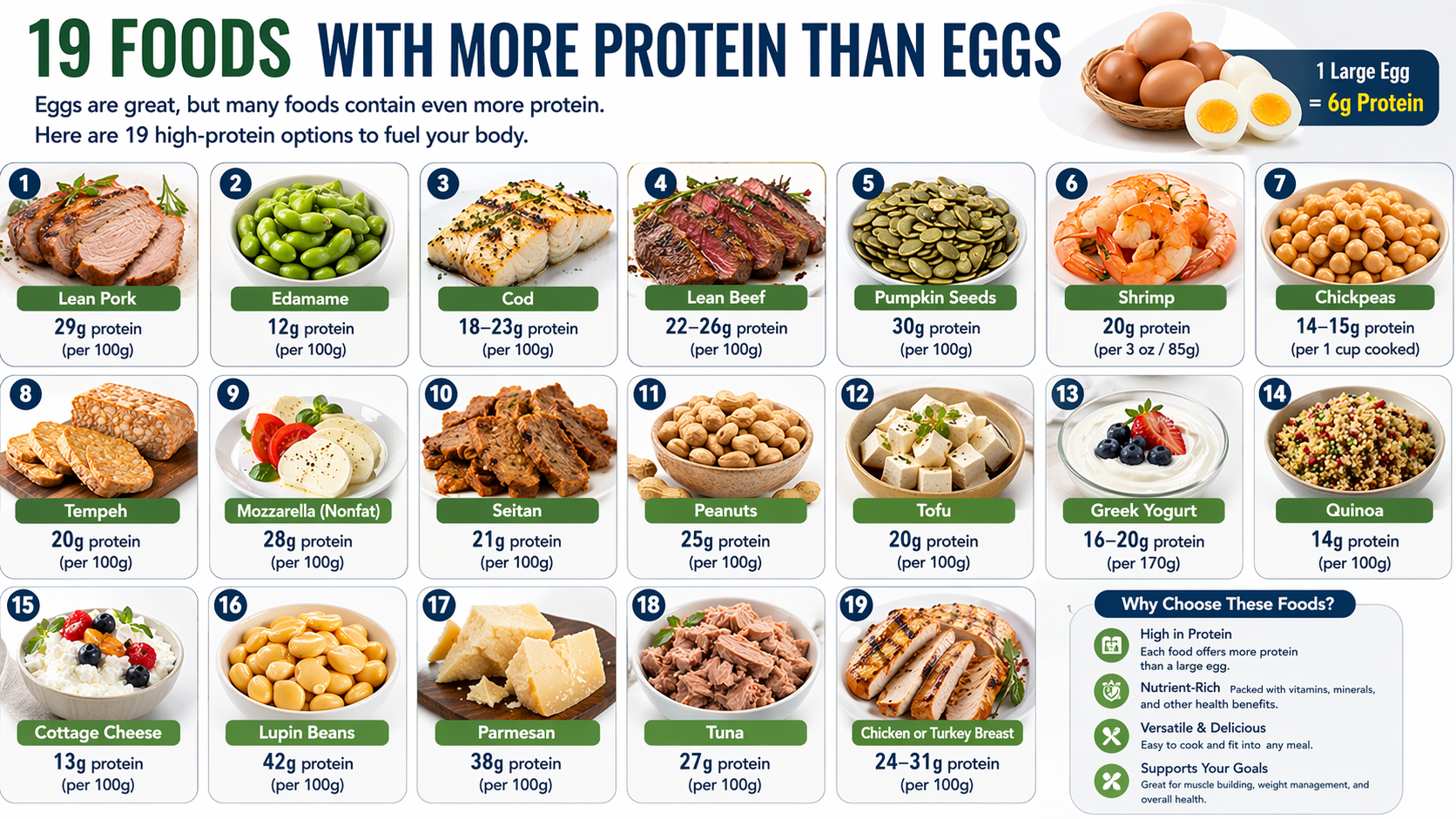
Eggs have long been considered a gold standard when it comes to protein. Affordable, versatile, and nutrient-rich, they are a staple in many diets. However, relying solely on eggs for your protein intake can limit both variety and overall nutrition.
A single egg contains around 6 grams of protein, which is beneficial, but far from unbeatable. Many other foods offer significantly more protein per serving, along with additional vitamins, minerals, and health benefits.
Whether you are trying to build muscle, lose weight, follow a plant-based diet, or simply improve your nutrition, expanding your protein sources is a smart move. In this guide, we explore 19 powerful foods that deliver more protein than eggs and how to include them in your daily meals.
Before diving into the list, it is important to understand what defines a quality protein source. It is not just about the number of grams.
A good protein source should offer:
With that in mind, let’s explore the top high-protein foods that outperform eggs.
Lean pork is a protein powerhouse, offering around 29 grams of protein per 100 grams. It is also rich in B vitamins, zinc, and iron, making it excellent for energy and immune health.
You can grill, roast, or pan-sear lean pork for a satisfying and protein-rich meal.
Edamame, or young soybeans, provide about 12 grams of protein per 100 grams. They are also packed with fiber, vitamins, and minerals like magnesium and potassium.
They make a great snack or addition to salads and stir-fries.
Cod is a lean fish that delivers between 18 and 23 grams of protein per 100 grams. It is low in fat and easy to digest, making it ideal for a clean, high-protein diet.
Baked or grilled cod pairs well with vegetables and whole grains.
Lean beef offers around 22 to 26 grams of protein per serving. It is also a top source of iron and vitamin B12, which are essential for energy production.
Choose lean cuts like sirloin to keep fat intake balanced.
Pumpkin seeds are a surprisingly rich source of protein, along with healthy fats, magnesium, and zinc. They are calorie-dense, so portion control is key.
Sprinkle them on salads or eat them as a snack for a protein boost.
Shrimp provides about 20 grams of protein per 3-ounce serving. It is low in calories and rich in nutrients like selenium and iodine.
Grilled or steamed shrimp makes for a light yet protein-packed meal.
Chickpeas offer around 14 to 15 grams of protein per cup when cooked. They also provide fiber, which helps with digestion and blood sugar control.
Use chickpeas in salads, stews, or blend them into hummus.
Tempeh is a fermented soy product with about 20 grams of protein per 100 grams. It is a complete protein and contains probiotics that support gut health.
It can be grilled, sautéed, or used as a meat substitute in many dishes.
Nonfat mozzarella contains around 28 grams of protein per 100 grams. It also provides calcium and vitamin B12.
Add it to salads, sandwiches, or enjoy it as a snack.
Seitan, made from wheat gluten, delivers about 21 grams of protein per 100 grams. It has a meat-like texture and is popular in plant-based diets.
It works well in stir-fries, sandwiches, and protein bowls.
Peanuts contain around 25 grams of protein per 100 grams. They are also rich in healthy fats and very versatile.
Enjoy them as a snack, in smoothies, or as peanut butter.
Tofu provides about 20 grams of protein per serving and is a staple in vegetarian and vegan diets. It also contains calcium, iron, and essential amino acids.
Its mild flavor allows it to absorb spices and sauces easily.
Greek yogurt is a convenient and protein-rich option, offering between 16 and 20 grams per serving. It also contains probiotics that support gut health.
It works well as a breakfast option or post-workout snack.
Quinoa is a complete plant-based protein with around 14 grams per 100 grams. It contains all essential amino acids and is rich in fiber and minerals.
Use it as a base for salads, bowls, or side dishes.
Cottage cheese offers about 13 grams of protein per 100 grams. It is also high in calcium and supports bone health.
It can be eaten on its own or combined with fruits and nuts.
Lupin beans are an underrated protein source with an impressive 42 grams per 100 grams. They are also high in fiber and make a great snack.
They are especially popular in Mediterranean diets.
Parmesan contains around 38 grams of protein per 100 grams, making it one of the most protein-dense cheeses.
Use it sparingly due to its high salt content, but it adds both flavor and protein to meals.
Tuna provides about 27 grams of protein per 100 grams and is rich in omega-3 fatty acids.
Canned tuna is convenient and perfect for quick, protein-packed meals.
Chicken and turkey breast offer between 24 and 31 grams of protein per 100 grams. They are lean, easy to digest, and widely available.
These are among the best options for muscle building and weight management.
Expanding your protein intake beyond eggs offers several advantages:
Different foods provide different nutrients, ensuring a more balanced diet.
Mixing plant and animal proteins can support gut health and digestion.
Eating a wide range of foods keeps meals interesting and enjoyable.
You can adapt your protein intake to suit vegetarian, vegan, or specific health goals.
Incorporating these foods into your daily routine does not have to be complicated. Here are some simple ideas:
Small adjustments can significantly increase your daily protein intake.
While increasing protein intake is beneficial, there are a few things to watch out for:
Balance and variety are key to long-term success.
Eggs are a great protein source, but they are just one piece of the puzzle. With so many high-protein foods available, there is no reason to limit yourself.
From lean meats and seafood to plant-based options like tofu and quinoa, these 19 foods offer more protein than eggs while delivering a wide range of nutrients.
By diversifying your diet, you not only boost your protein intake but also support overall health and wellness. Start experimenting with these foods today and build meals that are both nutritious and satisfying.

Most Accurate Healthcare AI designed for everything from admin workflows to clinical decision support.