
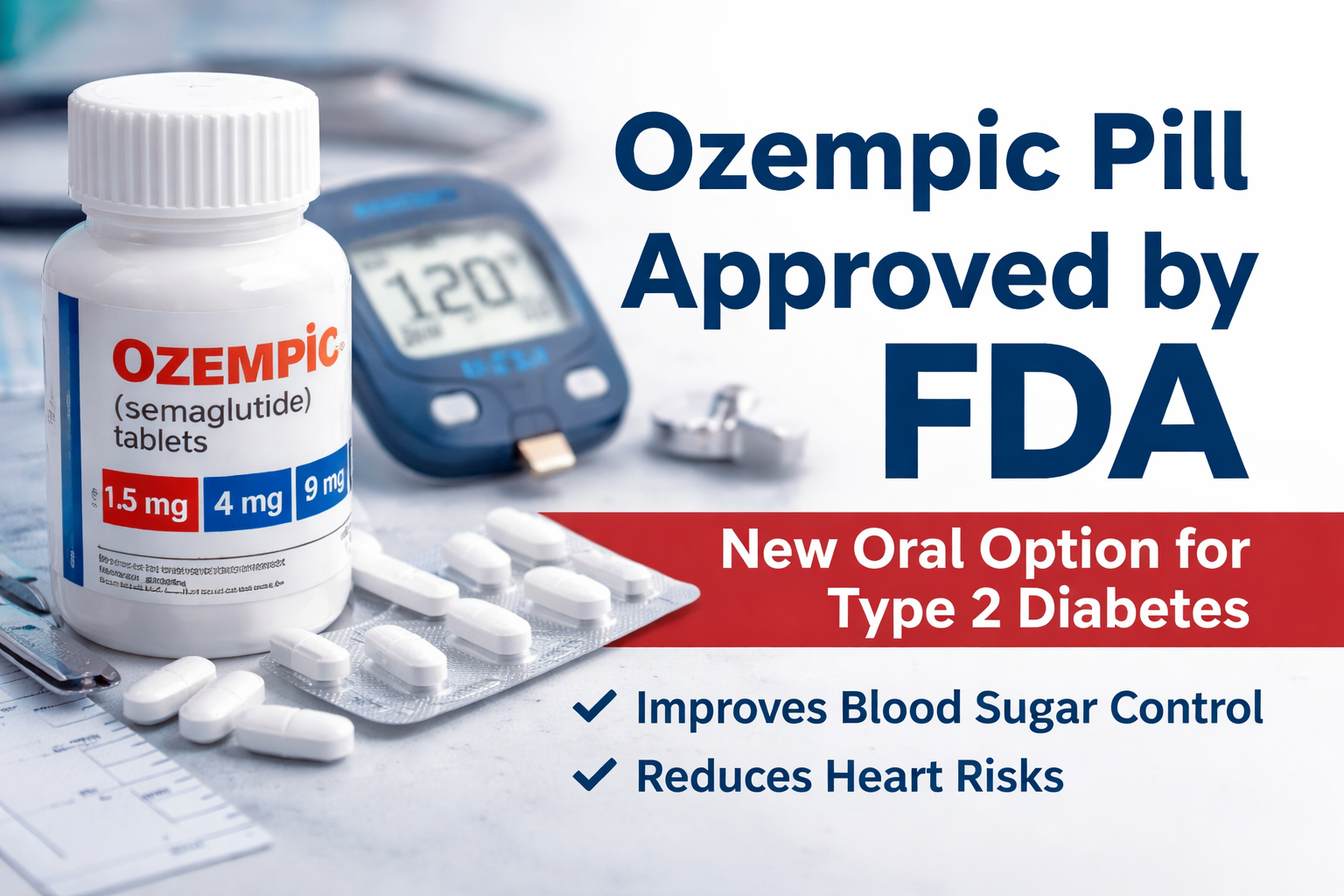
Ozempic Pill Approved by FDA: What the Oral Semaglutide Tablets Mean for Type 2 Diabetes in 2026
The treatment landscape for type 2 diabetes is changing again. In February 2026, Novo Nordisk announced that the US Food and Drug Administration has approved Ozempic tablets, an oral form of semaglutide, with availability expected in the United States in the second quarter of 2026. For years, Ozempic has been widely recognized as a once weekly injectable medication. The approval of an Ozempic pill marks an important milestone for patients and clinicians who have been waiting for an effective oral alternative that delivers comparable benefits.
This article breaks down what Ozempic tablets are, how they work, why this approval matters, and what patients with type 2 diabetes should know before talking with their healthcare provider.
What Are Ozempic Tablets?
Ozempic tablets contain semaglutide, the same active ingredient used in Ozempic injections and in the oral diabetes drug previously marketed as Rybelsus. The FDA has approved Ozempic tablets in 1.5 mg, 4 mg, and 9 mg strengths as the proprietary name for this oral semaglutide formulation.
Think You’re Sick? Get Clarity in Minutes.
Use our quick Symptom Checker for instant insights and next-step guidance.
👉 https://www.rejoyhealth.com/symptom-checker
According to Novo Nordisk, the medicine itself has not changed. What has changed is the name and positioning. By bringing both injectable and oral semaglutide under the Ozempic brand, the company aims to make it easier for patients and healthcare professionals to recognize that these options share the same core treatment approach.
Ozempic tablets are approved for adults with type 2 diabetes to improve blood sugar control along with diet and exercise. They are also approved to reduce the risk of major adverse cardiovascular events such as heart attack, stroke, or cardiovascular death in adults with type 2 diabetes who are at high risk for these outcomes.
Build Your Resume — Get Hired Faster!
Create a professional resume in minutes that passes ATS systems and gets noticed by recruiters. Easy to use. Instant download. Start today!
Why the Ozempic Pill Approval Matters
For many people living with type 2 diabetes, injections can be a barrier to starting or staying on treatment. Fear of needles, inconvenience, and social stigma all play a role. An effective oral option can improve adherence and quality of life for certain patients.
While oral semaglutide has been available since 2019 under the brand name Rybelsus, many patients did not realize it was part of the same medication family as Ozempic. The new Ozempic tablets aim to close that knowledge gap.
From a clinical perspective, the approval also confirms that the new tablet formulation offers comparable efficacy and safety to previously approved oral semaglutide doses. This was demonstrated through bioequivalence studies and supported by the broader semaglutide clinical trial program.
How Ozempic Tablets Work in the Body
Semaglutide belongs to a class of medications known as GLP 1 receptor agonists. These drugs mimic the action of a naturally occurring hormone called glucagon like peptide 1.
GLP 1 receptor agonists help manage type 2 diabetes by:
- Stimulating insulin release when blood sugar levels are high
- Reducing the amount of glucose released by the liver
- Slowing gastric emptying, which helps control post meal blood sugar spikes
- Increasing feelings of fullness, which may reduce calorie intake
These combined effects help lower blood glucose levels and contribute to cardiovascular risk reduction in certain patients.
Dosage Strengths and Bioavailability
Ozempic tablets are approved in three strengths: 1.5 mg, 4 mg, and 9 mg. These doses were designed to achieve similar therapeutic exposure as the earlier oral semaglutide doses of 3 mg, 7 mg, and 14 mg.
Novo Nordisk reports that the new formulation has enhanced bioavailability. In practical terms, this means the body absorbs the medication efficiently enough to deliver the intended effect at lower milligram strengths.
Patients currently taking Rybelsus are advised not to stop or switch medications on their own. Healthcare providers will guide any transition once Ozempic tablets become available at pharmacies in Q2 2026.
Cardiovascular Benefits of Ozempic Tablets
One of the most significant aspects of semaglutide therapy is its cardiovascular benefit. Ozempic tablets are approved not only for blood sugar control but also for reducing the risk of major cardiovascular events in adults with type 2 diabetes who are at high risk.
This dual benefit is particularly important because people with type 2 diabetes face a much higher risk of heart attack and stroke compared with the general population. Having a medication that addresses both glucose control and cardiovascular risk simplifies treatment strategies for many patients.
Safety Information and Potential Side Effects
Like all prescription medications, Ozempic tablets come with important safety considerations. Patients should review these carefully with their healthcare provider.
Ozempic tablets may cause serious side effects, including possible thyroid tumors. In animal studies, semaglutide caused thyroid tumors, including thyroid cancer. It is not known whether this risk applies to humans. Patients should report symptoms such as a lump in the neck, hoarseness, difficulty swallowing, or shortness of breath.
Ozempic tablets should not be used by people with a personal or family history of medullary thyroid carcinoma or by those with Multiple Endocrine Neoplasia syndrome type 2. They should also not be used by individuals who have had a serious allergic reaction to semaglutide.
Other serious side effects may include pancreatitis, changes in vision, low blood sugar when combined with insulin or sulfonylureas, dehydration leading to kidney problems, severe gastrointestinal symptoms, gallbladder issues, and serious allergic reactions.
The most common side effects reported with Ozempic tablets include nausea, abdominal pain, diarrhea, decreased appetite, vomiting, and constipation. These effects are most common when starting treatment and often improve over time.
Who Should Consider Ozempic Tablets?
Ozempic tablets may be an option for adults with type 2 diabetes who need better blood sugar control and prefer an oral medication rather than injections. They may also be appropriate for patients with established cardiovascular risk who could benefit from the added heart protection associated with semaglutide.
However, Ozempic tablets are not approved for use in children, and they may not be suitable for everyone. Factors such as medical history, other medications, pregnancy plans, and tolerance for side effects all play a role in determining whether this treatment is appropriate.
What to Expect at Pharmacies in 2026
Novo Nordisk has indicated that Ozempic tablets will launch in the United States in Q2 2026. Leading up to the launch, the company plans to provide education for patients, caregivers, and healthcare professionals to help explain the transition from Rybelsus and clarify dosing and prescribing details.
Patients are encouraged to continue taking their current medication as prescribed until they speak with their healthcare provider. Stopping diabetes treatment without guidance can lead to uncontrolled blood sugar and serious complications.
Future Developments: Higher Dose Tablets
In addition to the approved tablet strengths, Novo Nordisk has filed a supplemental drug application for a 25 mg Ozempic tablet for adults with type 2 diabetes. An FDA decision is expected by the end of 2026.
If approved, higher dose tablets could further expand treatment options for patients who need more intensive glucose lowering while still preferring an oral therapy.
The Bigger Picture for Diabetes Care
The approval of Ozempic tablets reflects a broader trend in diabetes treatment toward flexibility, personalization, and long term risk reduction. As more therapies address both metabolic control and cardiovascular outcomes, clinicians can tailor treatment plans more effectively.
For patients, having an oral option under a well known brand may reduce confusion and empower more people to engage actively in their care. Education and shared decision making will remain key as these options become available.
Final Thoughts
Ozempic tablets represent an important step forward for people living with type 2 diabetes. By offering an oral formulation of a proven GLP 1 receptor agonist, this approval expands choice without compromising efficacy or safety.
If you are managing type 2 diabetes and are curious about whether Ozempic tablets could be right for you, the best next step is a conversation with your healthcare provider. Together, you can review your goals, risks, and preferences to decide on the most appropriate treatment path.
Source
Novo Nordisk. FDA approves Ozempic (semaglutide) tablets for adults with type 2 diabetes. February 4, 2026.
Ozempic (semaglutide) tablet prescribing information. Novo Nordisk Inc.
Nielsen MS, Brøndsted L, Kankam M, et al. A bioequivalence study of two formulations of oral semaglutide in healthy participants. Diabetes Therapy. 2025;16(2):269–287.
Disclaimer
This article is for informational and educational purposes only and does not constitute medical advice, diagnosis, or treatment. Always seek the guidance of a qualified healthcare professional with any questions you may have regarding a medical condition or medication. Never disregard professional medical advice or delay seeking it because of something you have read here.