
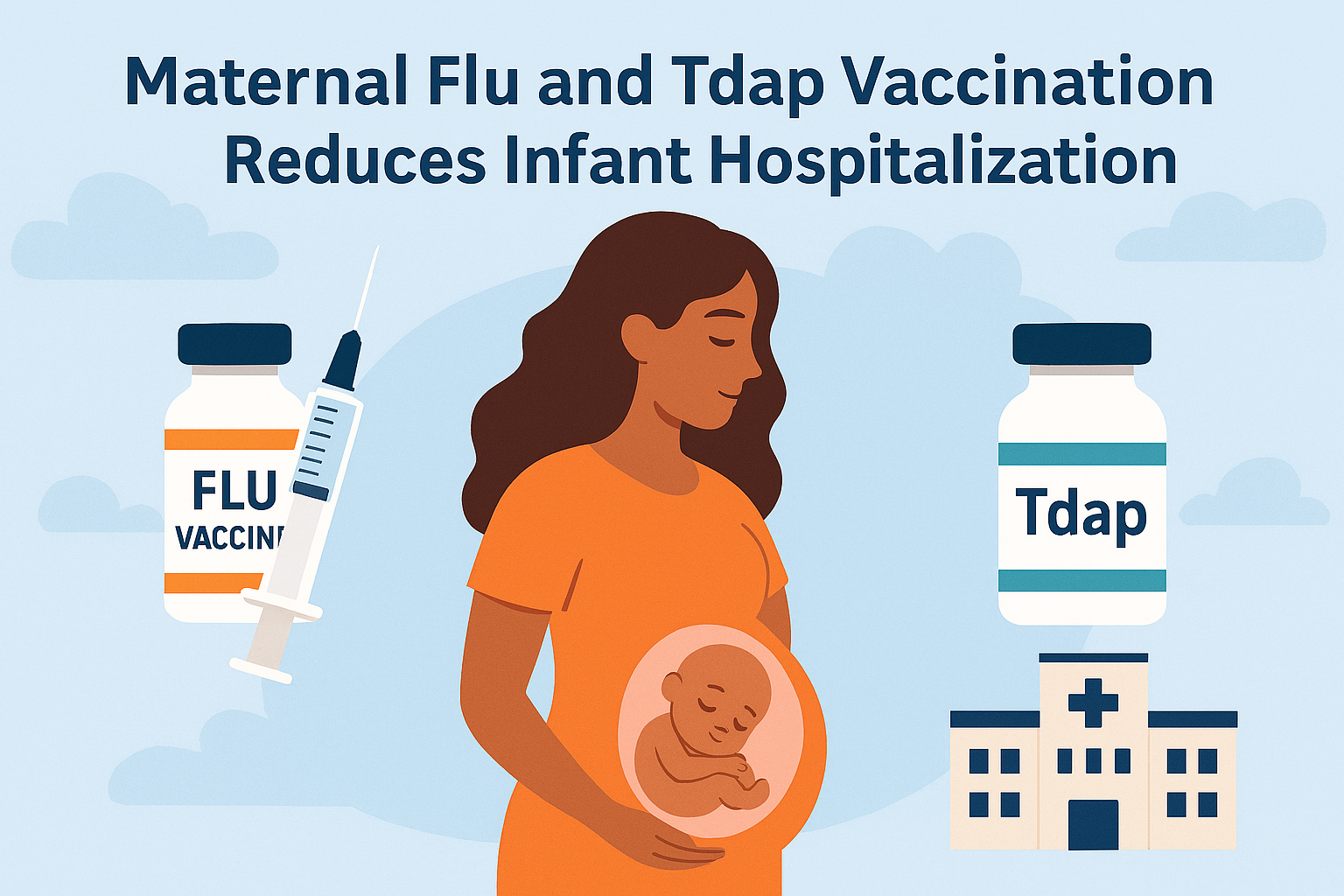
Maternal flu and Tdap vaccines in pregnancy reduce infant hospital and ER visits
Estimated reading time: 10 minutes
Overview
A new population based cohort study published in JAMA Network Open on January 8, 2026 reports that getting influenza and tetanus diphtheria acellular pertussis (Tdap) vaccines during pregnancy is linked to a substantially lower risk of hospital or emergency department visits for influenza and pertussis among infants younger than six months. The researchers estimated vaccine effectiveness of 69.7 percent for maternal influenza vaccination against infant influenza related hospital and ER visits and 88.6 percent for maternal Tdap vaccination against infant pertussis related hospital and ER visits. [jamanetwork.com]
These findings add real world evidence to long standing guidance from public health and obstetric organizations that recommend influenza and Tdap vaccination during pregnancy to protect both the mother and her newborn. [cdc.gov], [acog.org]
What the new study found
The investigation examined health care utilization data from Lombardy, Italy and included large matched cohorts of mother infant pairs. For the influenza cohort there were 84,348 dyads, and for the Tdap cohort there were 171,141 dyads, covering births from 2018 to 2022. Infants were followed to six months of age, and the outcomes measured were hospitalizations or ER visits with diagnoses of influenza or pertussis. Using Cox regression and calculating vaccine effectiveness from adjusted hazard ratios, the authors estimated 69.7 percent effectiveness for maternal influenza vaccination and 88.6 percent effectiveness for maternal Tdap vaccination. [jamanetwork.com]
The study also documented suboptimal maternal vaccine uptake in Italy, with 6.4 percent coverage for influenza and 41.0 percent for Tdap among pregnant individuals. This gap underscores the need for stronger communication and access strategies so that more families benefit from these protections. [medicalxpress.com], [cidrap.umn.edu]
Importantly, infants younger than six months are too young to receive the seasonal flu vaccine, and infants younger than two months do not receive Tdap. Maternal immunization helps bridge that early vulnerability by passing protective antibodies through the placenta before birth. [cidrap.umn.edu], [cdc.gov]
Why influenza and pertussis are high stakes for newborns
Influenza can cause severe respiratory illness in pregnant people and newborns, increasing risks of hospitalization and complications. Because newborns cannot be vaccinated against influenza until six months, the mother’s vaccination during pregnancy provides passive antibodies for early protection. ACOG advises that people who are or will be pregnant during the season should receive inactivated or recombinant influenza vaccine in any trimester as soon as vaccine is available. [acog.org], [guidelinecentral.com]
Pertussis or whooping cough is particularly dangerous for babies in the first months of life. Episodes can lead to apnea, pneumonia and in severe cases death. The CDC and the NHS recommend Tdap during pregnancy so the mother’s antibodies protect the baby until routine infant doses begin. In the United States, CDC recommends Tdap between 27 and 36 weeks of each pregnancy. In the UK, NHS guidance advises vaccination usually around the mid pregnancy scan at 20 weeks and from 16 weeks onwards, with the aim to vaccinate before 32 weeks for optimal passive transfer. [cdc.gov], [nhs.uk]
How maternal vaccination protects infants
After vaccination, a pregnant person generates IgG antibodies that cross the placenta into the fetal circulation. These antibodies can lower the risk of infection and severe outcomes in the early months. This strategy is known as maternal immunization and is now a central pillar of infant protection for multiple respiratory pathogens.
Evidence for transplacental antibody protection extends beyond influenza and pertussis. For example, studies of maternal COVID 19 vaccination show higher neutralizing antibody titers in infants born to vaccinated mothers and reduced risk of infection in the first six months. While COVID 19 is a different pathogen, the mechanism of maternal antibody transfer reinforces the broader principle that vaccination during pregnancy can protect infants who are too young for their own vaccines. [publications.aap.org]
What leading health bodies recommend today
- Influenza vaccine during pregnancy
ACOG strongly recommends inactivated or recombinant influenza vaccine during any trimester for those who will be pregnant while influenza is circulating. Vaccination can be co administered with other recommended maternal vaccines without reducing effectiveness. [acog.org], [guidelinecentral.com] - Tdap vaccine during pregnancy
CDC recommends a single dose of Tdap between 27 and 36 weeks in every pregnancy. Guidance emphasizes that postpartum Tdap does not protect the newborn and that cocooning alone is insufficient, although caregivers should still be up to date. [cdc.gov], [cdc.gov] - UK perspective
NHS advises whooping cough vaccination in pregnancy from 16 weeks, usually around 20 weeks, ideally before 32 weeks, with strong evidence of safety and effectiveness for newborn protection. [nhs.uk]
Practical tips for expecting parents
- Discuss timing early
If you are pregnant during flu season, schedule your influenza vaccine promptly. Most programs run from September through March and earlier vaccination improves protection. [acog.org] - Plan for Tdap in third trimester
Aim for 27 to 36 weeks in the US or before 32 weeks in the UK to maximize antibody transfer to your baby. If circumstances delay vaccination, you can still get Tdap later in pregnancy. [cdc.gov], [nhs.uk] - Consider co administration
It is acceptable to receive influenza and Tdap at the same visit. Evidence indicates co administration is safe and can improve uptake without compromising immune response. [guidelinecentral.com] - Maintain routine infant vaccines
Maternal antibodies protect early, but your baby still needs routine immunizations starting at eight weeks in the UK and at two months in the US. Follow your local schedule for DTaP, polio, Hib, hepatitis B, pneumococcal and others. [assets.pub…ice.gov.uk], [cdc.gov] - Update household vaccines
Ensure close contacts are up to date for pertussis and influenza to reduce transmission risk. Cocooning alone is not sufficient, but it still adds a layer of protection when done alongside maternal immunization. [cdc.gov]
Addressing common questions
Is it safe to get these vaccines during pregnancy
Yes. Guidance from CDC, NHS and ACOG shows strong safety profiles for inactivated influenza vaccines and Tdap during pregnancy. UK safety monitoring by MHRA and multiple studies have found no increased risk of adverse pregnancy outcomes from pertussis containing vaccines in pregnancy. [cdc.gov], [nhs.uk]
Can I get the nasal spray flu vaccine while pregnant
No. The live attenuated intranasal influenza vaccine is not indicated in pregnancy. Choose an inactivated or recombinant flu shot instead. [acog.org]
If I had Tdap recently, do I still need it in this pregnancy
Yes. Antibody levels wane over time and newborn protection depends on high maternal titers during late pregnancy. CDC recommends Tdap in every pregnancy regardless of prior Tdap history. [cdc.gov]
What if I miss Tdap before delivery
Postpartum Tdap helps protect the mother but does not pass antibodies to the newborn. If Tdap is missed before birth, ask your pediatric team about infant protections and ensure caregivers are vaccinated. [cdc.gov]
Public health implications
The JAMA Network Open findings are consistent with earlier observational studies that showed reduced infant pertussis cases and hospitalizations after maternal Tdap programs were introduced in countries such as England and Brazil, and with reductions in severe influenza outcomes when maternal influenza vaccination coverage increases. Strengthening maternal vaccine uptake through timely counseling and co administration can deliver immediate benefits for infant health. [cdc.gov]
Given the low uptake reported in the Italian cohorts, public health campaigns should emphasize clear messaging about timing, safety and co administration, and make vaccines accessible in antenatal clinics and community pharmacies. Health care teams can also use local data bulletins to target reminders during peak respiratory virus seasons. [acog.org]
Considerations for the UK and local context
In England, routine maternal vaccinations now include pertussis in every pregnancy, influenza during the season and RSV during specified gestational weeks. The UK Health Security Agency has highlighted high rates of flu and pertussis disease and has urged continued efforts to improve uptake in maternity settings. For parents in the UK, check your local NHS trust communications and book vaccines via your midwife or GP. [gov.uk]
The complete routine immunisation schedule details the infant doses that follow, starting at eight weeks, which are essential to maintain protection as maternal antibodies diminish. [assets.pub…ice.gov.uk]
SEO friendly summary
- Key takeaway
Maternal influenza and Tdap vaccination during pregnancy is associated with significantly fewer infant hospital and ER visits for flu and whooping cough in the first six months of life. [jamanetwork.com] - Why it matters
Newborns are too young for their own flu and Tdap vaccines. Maternal antibodies transferred before birth provide early protection. [cdc.gov] - Action steps
Get the flu shot in any trimester during the season. Plan Tdap for 27 to 36 weeks in the US or before 32 weeks in the UK. Co administer when convenient. Keep infant vaccines on schedule after birth. [acog.org], [cdc.gov], [nhs.uk] - Safety
Inactivated flu vaccines and Tdap are safe in pregnancy. Postpartum Tdap does not protect the newborn. [cdc.gov], [cdc.gov]
Bottom line
The newest evidence from JAMA Network Open aligns with established recommendations. Vaccinating against influenza and pertussis during pregnancy provides measurable protection for infants during an especially vulnerable window. Parents and clinicians should work together to plan vaccination in the appropriate trimester, co administer when possible and reinforce the infant’s routine immunisation schedule after birth. [jamanetwork.com], [acog.org], [cdc.gov]
Sources
- JAMA Network Open original investigation. Maternal Vaccine Receipt and Infant Hospital and Emergency Visits for Influenza and Pertussis. Published online January 8, 2026. [jamanetwork.com]
- MedicalXpress coverage of the study and summary of vaccine effectiveness estimates. [medicalxpress.com]
- CIDRAP news analysis summarizing cohorts, uptake and effectiveness. [cidrap.umn.edu]
- CDC guidance on Tdap vaccination during pregnancy and materials for health care providers and families. [cdc.gov], [cdc.gov], [cdc.gov]
- ACOG practice advisory on Influenza in Pregnancy and summaries of maternal immunization guidance. [acog.org], [guidelinecentral.com]
- NHS guidance on whooping cough vaccination in pregnancy and local UK informational materials. [nhs.uk], [england.nhs.uk]
- UKHSA Vaccine Update maternity special highlighting maternal programs in England. [gov.uk]
- UK infant immunisation schedule details. [assets.pub…ice.gov.uk]
- Evidence on maternal antibody transfer and infant protection for COVID 19 as an illustrative comparison. [publications.aap.org]
Disclaimer
This article is for educational purposes and summarizes current evidence and public health guidance. Statistical data describe population level trends and may not apply to individual situations. Always consult your obstetric provider, midwife or pediatrician for personalized medical advice, especially regarding vaccine timing and eligibility during pregnancy. [cdc.gov], [nhs.uk]