
Why Donald Trump’s High-Dose Aspirin Use Has Sparked Medical Debate
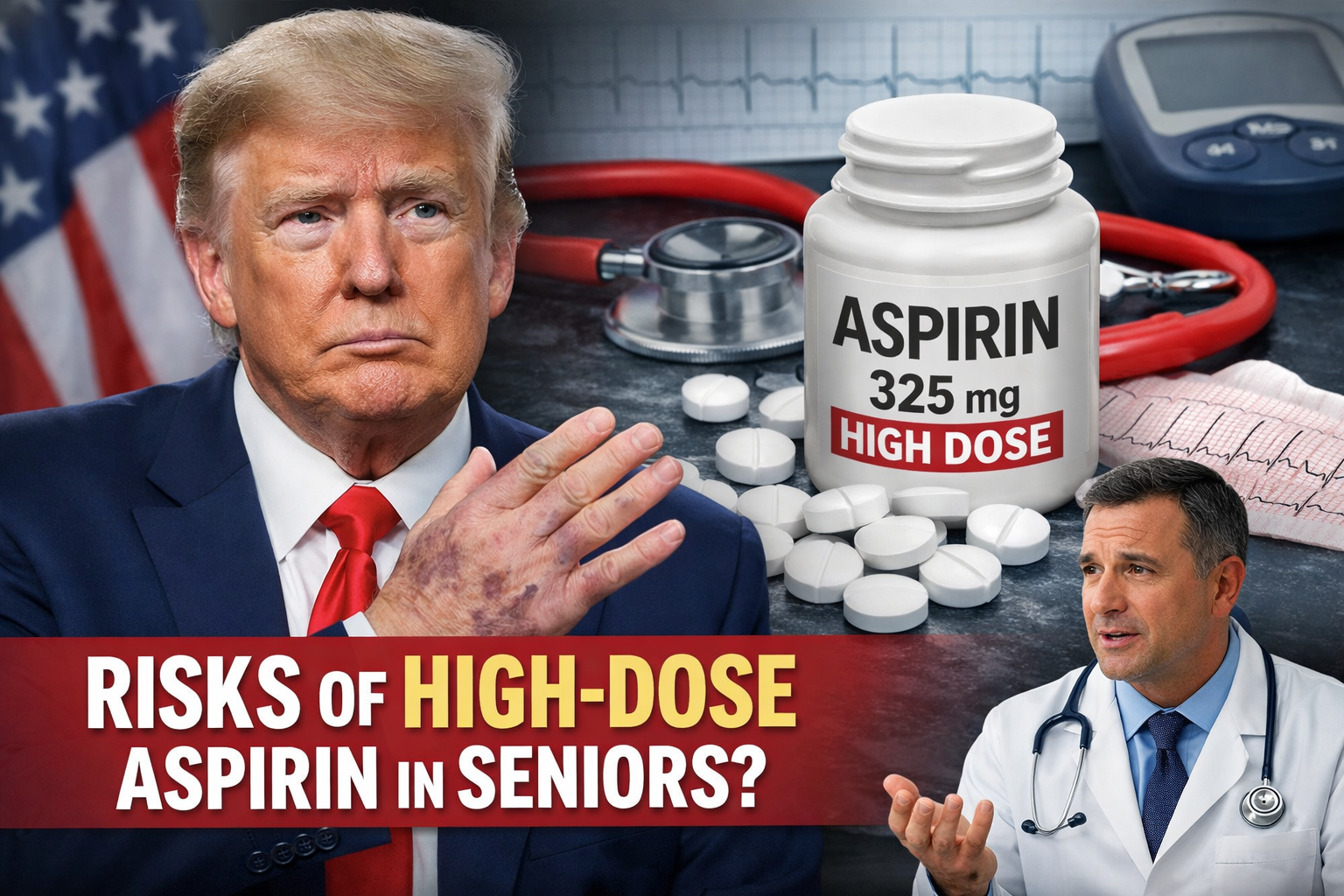
US President Donald Trump has once again drawn public attention to his health, this time due to visible bruising on his hands and his admission that he regularly takes a higher-than-recommended dose of aspirin. The discussion has reignited broader questions about aspirin use in older adults, bleeding risks, and evolving medical guidelines for heart health.
In a recent interview with The Wall Street Journal, Trump, now 79, explained that he intentionally takes a daily dose of aspirin that exceeds what his doctors advise. According to Trump, the medication helps keep his blood flowing smoothly, which he believes is important for protecting his heart. However, medical experts say his reasoning highlights common misunderstandings about aspirin therapy, especially in seniors.
This article explores Trump’s comments, the medical facts behind aspirin use, why bruising can occur, and what current health guidelines say about daily aspirin intake for older adults.
Trump Confirms He Takes More Aspirin Than Recommended
During the interview, Trump acknowledged that his physicians have advised him to take a lower daily dose of aspirin. Despite this guidance, he said he continues to take a larger amount because he believes it benefits his cardiovascular health.
Trump explained his thinking in simple terms, saying he wants thinner blood moving through his heart rather than thicker blood that could cause problems. He added that he has followed this routine for years and accepts the side effects that come with it, including frequent bruising.
His physician, Dr. Sean Barbabella, later confirmed that Trump takes 325 milligrams of aspirin each day. This amount is considered a full-strength adult dose and is significantly higher than what is typically prescribed for long-term prevention.
How Aspirin Affects the Body
Aspirin works by inhibiting platelets, which are blood cells involved in clot formation. By reducing platelet activity, aspirin lowers the likelihood of clots that can cause heart attacks or strokes. However, this same effect also increases the risk of bleeding.
Because platelets help stop bleeding when blood vessels are damaged, suppressing them makes it easier for bruises to form, even from minor bumps or pressure. This is particularly noticeable in older adults, whose skin becomes thinner and more fragile with age.
According to medical professionals, bruising on the hands is a common and generally harmless side effect of aspirin use. However, it can also be a visible sign that the blood’s ability to clot has been significantly reduced.
What Is Considered a Low-Dose Aspirin?
Most major medical organizations define low-dose aspirin as a daily amount ranging from 75 to 100 milligrams. In the United States, the most common low-dose tablet is 81 milligrams, often referred to as baby aspirin.
The Mayo Clinic and other health authorities note that this lower dosage is usually sufficient to provide cardiovascular benefits while minimizing bleeding risks. In contrast, a 325-milligram dose increases the likelihood of side effects without offering additional protection for most people.
This is why Trump’s admission has raised eyebrows within the medical community.
Cardiologists Question the Higher Dose
Dr. Jonathan Reiner, a cardiologist at George Washington University, has publicly stated that higher doses of aspirin are rarely necessary for preventive care. He explained that decades of research show 81 milligrams strikes the best balance between reducing clot-related events and limiting bleeding complications.
According to Reiner, increasing the dose does not improve aspirin’s effectiveness in preventing heart attacks or strokes but does raise the risk of bleeding. As a result, cardiologists almost never recommend 325 milligrams for daily preventive use.
This perspective reflects a broader shift in medical thinking over the past decade.
Changing Guidelines on Aspirin Use in Seniors
For many years, daily aspirin was widely recommended for older adults as a way to prevent heart disease. However, recent large-scale studies have led to major changes in those recommendations.
Newer guidelines from health organizations now advise against routine daily aspirin use for many seniors, particularly those who have never had a heart attack or stroke. The reason is simple: in older populations, the risk of serious bleeding often outweighs the potential cardiovascular benefits.
Bleeding complications can include gastrointestinal bleeding, hemorrhagic stroke, and prolonged bleeding from minor injuries. These risks increase with age and with higher aspirin doses.
Doctors now emphasize individualized decision-making, taking into account a person’s medical history, overall risk factors, and tolerance for side effects.
Bruising, Handshaking, and Public Speculation
Photos of Trump showing bruises on his hands have circulated widely in recent months, leading to speculation about his health. The White House has previously stated that the marks were caused by frequent handshaking combined with aspirin use.
Medical experts say this explanation is plausible. Repeated pressure or minor trauma, such as firm handshakes, can easily lead to bruising in someone taking blood-thinning medication.
In many cases, such bruising is cosmetic rather than dangerous. Still, it serves as a visible reminder of how medications like aspirin affect the body.
Trump Addresses Other Health Concerns
In addition to discussing aspirin, Trump also clarified details about a medical scan he underwent last fall. He noted that it was a CT scan rather than an MRI and said it was performed to rule out heart problems.
Dr. Barbabella stated that the scan showed normal results and no evidence of cardiovascular disease. He further claimed that Trump’s metabolic and cardiovascular health is significantly better than average for his age.
According to Barbabella, Trump’s cardiovascular profile resembles that of someone more than a decade younger, a statement that has drawn both interest and skepticism from the public.
Chronic Venous Insufficiency and Leg Swelling
Trump also addressed reports of swelling in his lower legs, which doctors have attributed to chronic venous insufficiency. This condition occurs when leg veins struggle to return blood back to the heart efficiently and is common among older adults.
One standard treatment involves wearing compression socks to improve circulation. Trump said he tried them briefly but stopped because he did not like how they felt.
While chronic venous insufficiency is usually not life-threatening, it can cause discomfort, swelling, and skin changes if left unmanaged.
Exercise and Lifestyle Choices
When asked about physical activity, Trump acknowledged that he does not enjoy structured exercise routines. He described treadmill workouts as boring and said they are not part of his lifestyle.
Health experts generally recommend regular physical activity for cardiovascular health, weight management, and overall well-being. Even light exercise such as walking can offer significant benefits, particularly for older adults.
Despite Trump’s lack of enthusiasm for exercise, his physician maintains that his overall health remains strong.
What This Means for the Public
Trump’s comments highlight a critical issue in modern medicine: medications that are beneficial for some people can be harmful to others if used incorrectly or without proper supervision.
Aspirin is widely available over the counter, which can give the impression that it is always safe. In reality, long-term aspirin use should be carefully evaluated by a healthcare professional, especially for older adults.
Experts strongly advise against self-prescribing aspirin at higher doses without medical guidance. What works for one individual may pose serious risks for another.
Key Takeaways About Aspirin Use
• Aspirin reduces blood clotting but increases bleeding risk
• Low-dose aspirin is typically 81 milligrams daily
• Higher doses raise bleeding risk without added benefit for most people
• Daily aspirin is no longer recommended for many seniors
• Bruising is a common side effect, especially in older adults
Anyone considering aspirin therapy should consult a healthcare provider to determine whether the benefits outweigh the risks.
Sources
CNN, January 1, 2026
The Wall Street Journal, January 1, 2026
Mayo Clinic aspirin guidelines
Medical Disclaimer
This article is for informational purposes only and does not constitute medical advice. Individual health conditions vary widely. Always consult a qualified healthcare professional before starting, stopping, or changing any medication.
=