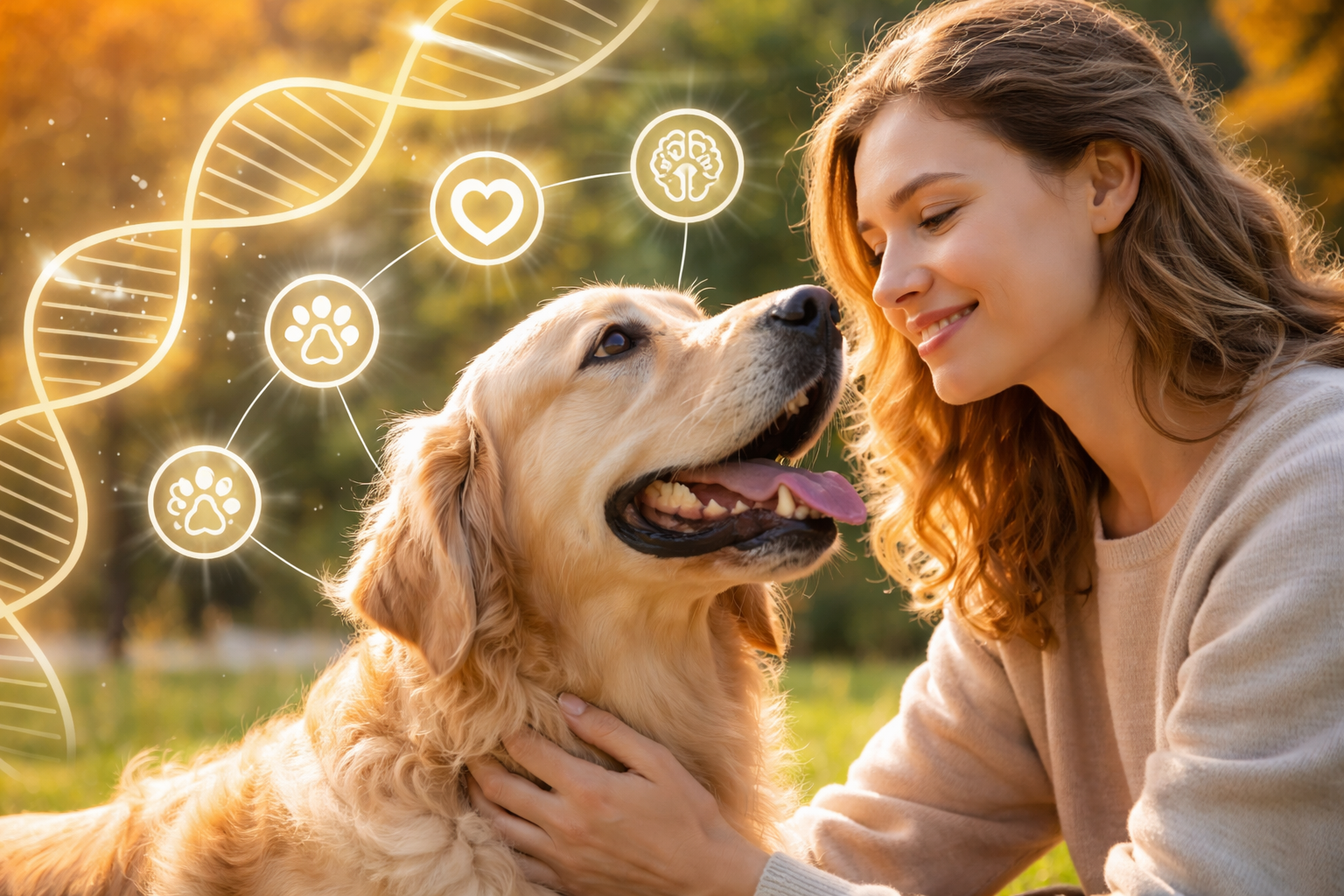
Recent research suggests that dogs and humans may be more alike than many people realize. Scientists have discovered that certain genes linked to dog behavior may also influence human emotions and personality traits. These findings help explain why dogs sometimes react to situations in ways that feel surprisingly familiar to their owners.
The study focuses on golden retrievers and explores how genetics may shape behaviors such as anxiety, aggression, intelligence, and trainability. Researchers believe these insights could improve dog training methods, strengthen the human-animal bond, and even provide clues about human psychology.
Researchers from University of Cambridge conducted a large study examining how genetics influence behavior in dogs. The research was published in the Proceedings of the National Academy of Sciences and highlights fascinating similarities between canine and human emotional traits.
The study analyzed DNA samples from more than 1,300 golden retrievers. Dog owners also completed detailed questionnaires describing their pets’ behavior, including how they react to strangers, other dogs, new environments, and training.
The survey covered 73 different behaviors. Scientists grouped these responses into 14 categories that represented key behavioral traits. These categories included activity levels, fear responses, trainability, and social behavior.
After analyzing both the genetic data and behavioral reports, researchers identified several genes that appear to influence how dogs behave. Surprisingly, many of these same genes have also been associated with emotional and cognitive traits in humans.
One of the most interesting findings from the research is that dogs and humans appear to share genetic foundations for certain behavioral traits. Out of the genes identified in golden retrievers, twelve were also linked to emotional responses and personality characteristics in people.
This discovery suggests that some aspects of behavior may stem from biological mechanisms that are similar across species. It also helps explain why dogs can display emotional reactions that seem very human.
Scientists emphasize that these genes do not directly control specific behaviors. Instead, they influence broader biological systems that affect mood, emotional sensitivity, and how individuals respond to stress.
One gene that drew significant attention in the study is called ROMO1. In humans, this gene has been linked to intelligence and emotional sensitivity. In golden retrievers, researchers found that it may influence how easily a dog can be trained.
This connection suggests that a dog’s ability to learn commands may depend not only on training methods but also on its emotional state and natural sensitivity.
A dog that feels anxious or overwhelmed may struggle to learn new behaviors even when the training approach is effective. Understanding this genetic component could help trainers and pet owners adjust their strategies to better suit each dog’s emotional needs.
Another gene highlighted in the study is PTPN1. In golden retrievers, this gene was associated with aggressive behavior toward other dogs. Interestingly, the same gene has been linked to depression and intelligence in humans.
Researchers also identified a gene variant connected to fear of other dogs. In people, this variant is associated with tendencies such as overthinking embarrassing moments or striving for strong academic performance.
These findings reinforce the idea that many emotional responses may arise from complex biological systems rather than simple learned behavior.
Many dog owners have witnessed their pets reacting strongly to everyday events. Some dogs bark loudly when the doorbell rings. Others hide when a vacuum cleaner starts running.
The study suggests that genetics may partly explain these reactions. Some dogs may be naturally predisposed to experience the world as more stressful.
When these genetic tendencies combine with challenging experiences, dogs may display behaviors that people interpret as stubbornness or misbehavior. In reality, the dog may be feeling genuine anxiety or emotional distress.
Recognizing this possibility can help owners respond with patience and empathy instead of frustration.
The research has practical implications for dog training and veterinary care. If genetics influence emotional sensitivity and learning ability, training programs may need to be more personalized.
For example, a highly sensitive dog may respond better to gentle reinforcement and calm environments. A more confident or energetic dog might thrive with more stimulating training routines.
Veterinarians and animal behavior specialists may also use genetic insights to better understand anxiety related conditions in dogs.
By identifying predispositions early, owners could potentially provide environments that reduce stress and support healthier emotional development.
One of the most meaningful aspects of this research is the way it highlights the deep biological connection between humans and dogs.
Dogs have lived alongside humans for thousands of years. Over time, their social abilities and emotional responsiveness have evolved in ways that allow them to understand and react to human behavior.
The discovery that dogs share certain genetic influences related to emotion and intelligence strengthens the idea that our bond with dogs goes beyond companionship. It reflects a deeper evolutionary relationship.
Understanding these similarities may help people appreciate their pets in new ways and encourage more compassionate approaches to training and care.
For dog owners, the study offers an important reminder that behavior is often shaped by both genetics and life experiences.
If a dog shows fear, aggression, or high sensitivity, it may not simply be a matter of poor training. In many cases, underlying biological factors may play a role.
This perspective encourages owners to focus on supportive training methods, consistent routines, and environments that help dogs feel secure.
Patience, empathy, and understanding can make a significant difference in helping dogs overcome stress related behaviors.
The new research into golden retriever genetics offers valuable insights into the biological foundations of behavior in both dogs and humans. By identifying shared genes linked to emotional responses, scientists are gaining a deeper understanding of why dogs sometimes act in ways that feel so familiar.
These findings highlight the importance of considering both genetics and environment when interpreting dog behavior. They also open the door to improved training approaches, better veterinary care, and stronger relationships between dogs and their human companions.
As research continues, scientists may uncover even more connections between human and canine psychology, further strengthening the bond that has connected these two species for centuries.
This article is for informational and educational purposes only. It summarizes scientific research and does not provide medical or veterinary advice. Behavioral traits and health conditions can vary widely between individuals. Pet owners should consult qualified veterinarians or animal behavior specialists for guidance related to their pets. Statistical and research findings describe general trends and may not apply to every individual.

Most Accurate Healthcare AI designed for everything from admin workflows to clinical decision support.