
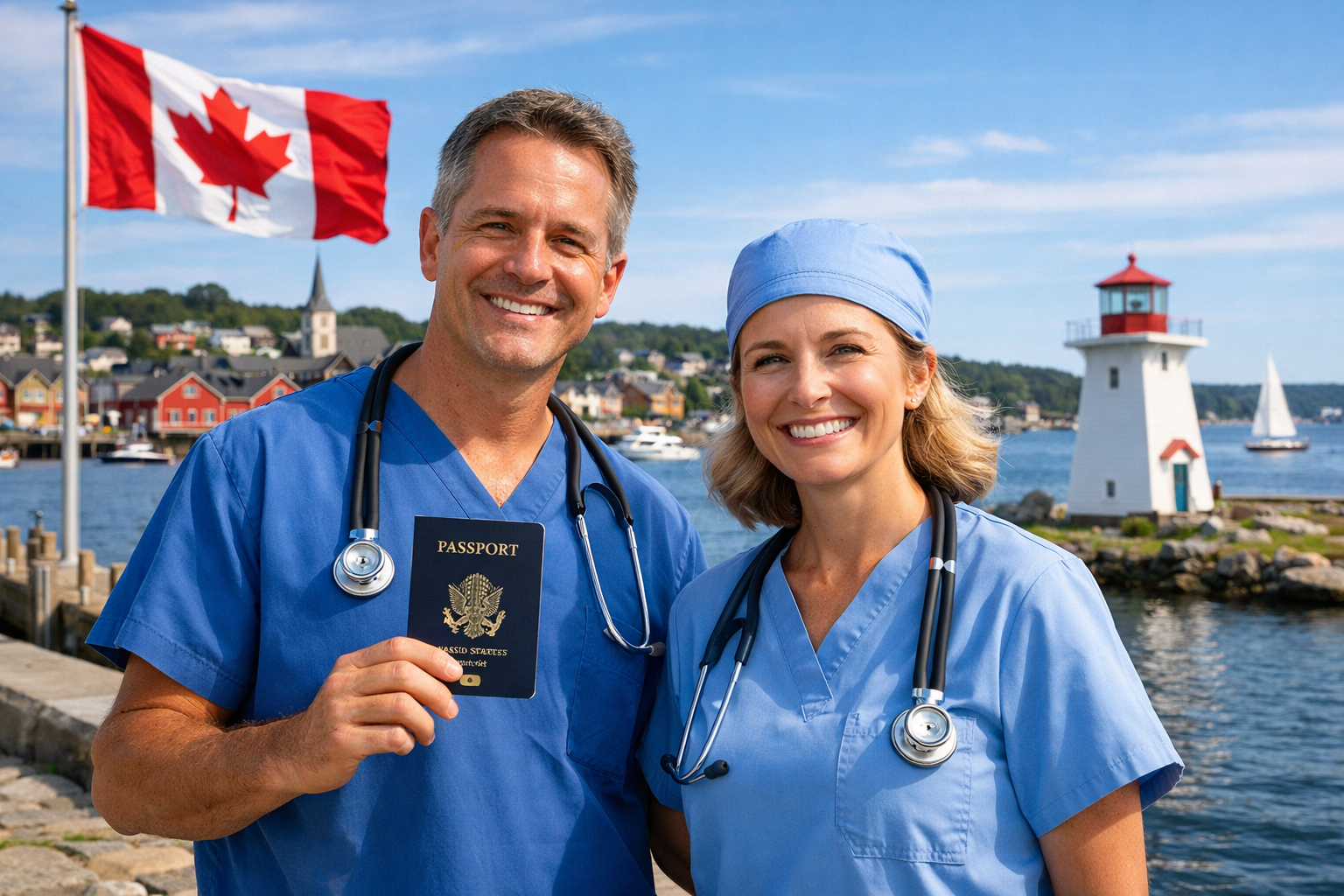
Why American Health Care Workers Are Relocating to Nova Scotia for a Better Future
Nova Scotia is becoming an increasingly attractive destination for American health care professionals who are looking for more than just employment. Nurses and other medical workers from the United States are crossing the border in growing numbers, drawn by a combination of professional opportunity, personal safety, political stability, and an improved quality of life.
What was once an unusual move is now a clear trend. Provincial data shows a steady increase in American health care workers accepting positions across Nova Scotia, helping address long-standing staffing shortages while also reshaping communities and workplaces. Behind these numbers are powerful personal stories of people seeking security, dignity, and peace of mind.
A Rising Trend in Cross-Border Health Care Migration
Nova Scotia, like much of Canada, has struggled with health care staffing shortages for years. An aging population, physician shortages, and nurse burnout have placed intense pressure on hospitals and clinics. At the same time, many American health care professionals are re-evaluating their futures due to political uncertainty, workplace stress, and social divisions in the United States.
These two forces are intersecting.
According to Nova Scotia Health, 50 American health care workers were hired in the past fiscal year, an increase from previous years. While the number may appear modest, it represents a meaningful contribution to a system where even a small increase in staffing can significantly affect patient care, wait times, and staff morale.
More importantly, the motivations driving this movement suggest it may continue.
Political Uncertainty and Personal Safety as Driving Factors
For some American health care workers, the decision to leave the United States is not primarily about money or career advancement. It is about safety and personal rights.
Several professionals who have relocated to Nova Scotia describe growing concern over political developments in the United States. Fears related to civil rights, identity recognition, and federal policy changes have pushed some to seek environments where they feel protected and respected.
For gender-diverse and LGBTQ+ individuals in particular, Canada is often seen as offering stronger legal protections and a more accepting social climate. Nova Scotia, while not without its challenges, is viewed as a province where people can live openly without constant fear of harassment or discrimination.
Many newcomers say the decision to move felt obvious once they weighed the risks of staying against the potential stability of leaving.
Florida as a Key Departure Point
Florida has become one of the most common starting points for American health care workers moving to Nova Scotia. Years of controversial legislation and public debate around education, gender identity, and health care access have contributed to a sense of unease among many professionals working in the state.
Experienced nurses from Florida report feeling exhausted not only by demanding workloads, but also by the broader social environment. Some say they felt compelled to constantly defend their identities, values, or professional judgment.
After exploring options in other parts of Canada, several found Nova Scotia to be especially welcoming. Provincial recruiters actively assisted them through licensing and relocation, making the transition smoother than expected.
Since arriving, many describe a noticeable reduction in stress and an improved sense of well-being.
The Importance of Community Acceptance
A defining feature of many relocation stories is the warmth of Nova Scotian communities. New arrivals frequently describe neighbors, coworkers, and even strangers offering help, advice, or simple words of welcome.
In smaller towns especially, health care workers are highly valued. Patients often recognize them outside of work, and community members understand the importance of keeping local hospitals staffed.
This sense of belonging can be life-changing for people who previously felt marginalized or politically targeted. Many say they finally feel comfortable focusing on their work and personal lives rather than constantly worrying about how they are perceived.
For newcomers, the prevailing attitude they encounter is straightforward. Be kind, do your job well, and treat others with respect.
Grassroots Efforts Helping Health Care Workers Relocate
While provincial recruitment plays a key role, volunteer-led initiatives are also helping American health care workers navigate the move to Canada.
One such initiative, Canada’s Healthcare Infusions, began as an informal effort to provide information and support to Americans interested in relocating. What started on Vancouver Island has now expanded to multiple regions across the country, including Nova Scotia.
The initiative provides practical resources on immigration pathways, professional licensing, housing, education, and local life. A key feature is its online discussion platform, where prospective movers can ask questions and receive honest answers from locals and recent arrivals.
The Nova Scotia chapter is run by volunteers, many of whom have personal connections to the health care system. Their motivation is simple. Strengthening health care staffing benefits everyone.
Participants often describe being surprised by the generosity of people willing to share their time and experience without any financial incentive.
Navigating Licensing and Immigration
Relocating to Canada as a health care professional involves several steps, including credential recognition, licensing, and immigration approval. These processes can be complex, but Nova Scotia has made efforts to reduce barriers for professionals trained in comparable systems like the United States.
Dedicated recruiters often guide candidates through each stage, helping them understand timelines, requirements, and documentation. For nurses in particular, the path can be more straightforward than in many other countries.
For many American professionals, the goal goes beyond temporary employment. A growing number are applying for permanent residency, viewing Nova Scotia not as a short-term solution, but as a long-term home.
Some have even expressed plans to fully settle in Canada, including pursuing citizenship in the future.
Benefits for Nova Scotia’s Health Care System
The arrival of experienced American health care workers provides immediate relief to an overburdened system. These professionals often bring years of clinical experience, leadership skills, and specialized training.
Key benefits include reduced staffing gaps, improved patient continuity, and less reliance on short-term contract workers. Experienced nurses can also support mentorship and training for newer staff, strengthening teams over time.
However, experts emphasize that international recruitment should complement, not replace, investment in domestic education and retention. Improving working conditions for all health care workers remains essential.
Lifestyle Improvements Matter
Beyond professional factors, lifestyle plays a major role in why American health care workers choose to stay in Nova Scotia.
Many cite a slower pace of life, access to nature, coastal landscapes, and a strong sense of community as major advantages. Universal health care also provides peace of mind, especially for those who previously navigated private insurance systems.
While salaries may be lower than in some U.S. states, many say the trade-off is worthwhile. Reduced stress, greater job security, and improved work-life balance often outweigh financial considerations.
For older professionals, the move represents an opportunity to spend the next stage of life somewhere they feel comfortable and respected.
Encouraging Others to Follow
Many American health care workers who have settled in Nova Scotia now spend time helping others who are considering the move. Through online forums and informal networks, they share advice, resources, and honest reflections on the challenges and rewards of relocating.
For gender-diverse individuals and others who feel unsafe or uncertain in their home states, Nova Scotia is increasingly seen as a place of refuge.
The message shared by many who have already moved is clear. If you have a realistic pathway and the opportunity, it is worth considering.
What This Shift Means for the Future
The movement of American health care workers to Nova Scotia reflects broader global changes in how people choose where to live and work. Safety, inclusion, and quality of life are becoming just as important as income or career prestige.
For Nova Scotia, this trend presents both opportunity and responsibility. Welcoming skilled professionals can strengthen the health care system, but long-term success depends on continued investment in infrastructure, staffing, and community support.
If managed carefully, this migration could help stabilize health care delivery while offering a fresh start to professionals seeking a better future.
Source: CBC News, Moira Donovan, “‘A no-brainer’: Why some U.S. health-care workers are moving to Nova Scotia” (05 January 2026)