
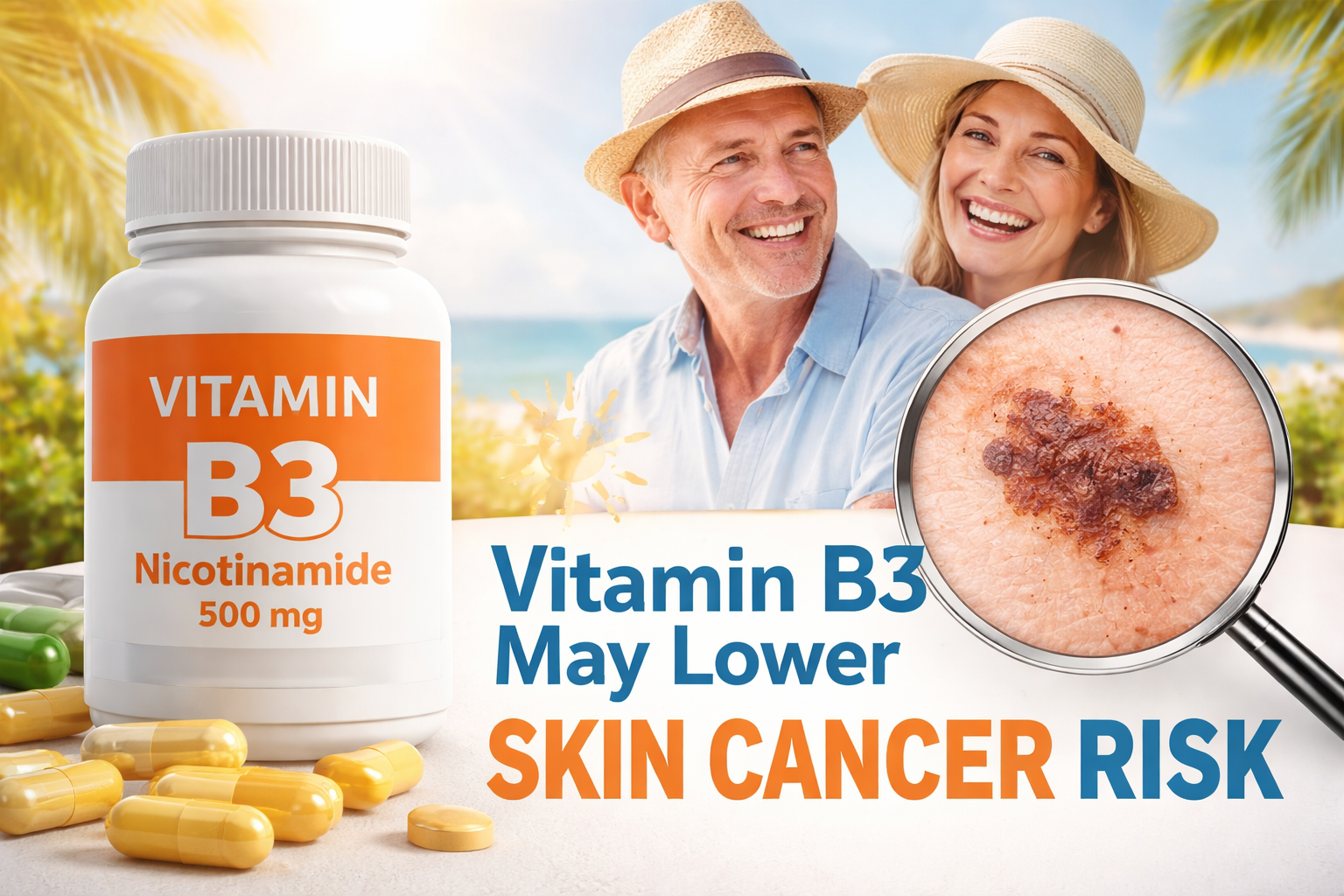
Vitamin B3 Supplement May Lower Skin Cancer Risk: What the Latest Research Reveals
Skin cancer is the most common form of cancer in the United States, affecting millions of people each year. While sunscreen, protective clothing, and regular skin checks remain essential prevention tools, new research suggests that a widely available vitamin supplement may also help reduce the risk of certain skin cancers. According to a large scale study published in JAMA Dermatology, nicotinamide, a form of vitamin B3, was linked to a significantly lower risk of developing new non melanoma skin cancers.
This finding has generated interest among dermatologists, researchers, and patients alike, especially because nicotinamide is inexpensive, easy to access, and generally well tolerated. Below is a detailed breakdown of what the study found, how nicotinamide works, who may benefit most, and what this could mean for future skin cancer prevention strategies.
Understanding Non Melanoma Skin Cancer
Non melanoma skin cancers primarily include basal cell carcinoma and cutaneous squamous cell carcinoma. These cancers develop in different layers of the skin and are strongly associated with cumulative sun exposure over time.
Basal cell carcinoma is the most common and usually grows slowly. It rarely spreads to other parts of the body but can cause significant local tissue damage if left untreated. Cutaneous squamous cell carcinoma is less common but tends to be more aggressive and carries a higher risk of spreading, particularly in older adults and people with weakened immune systems.
Together, these cancers account for the vast majority of skin cancer diagnoses in the United States. They most often appear on sun exposed areas such as the face, scalp, neck, arms, and hands.
What Is Nicotinamide?
Nicotinamide is a form of vitamin B3, also known as niacin. Unlike niacin, nicotinamide does not cause flushing and is commonly found in over the counter supplements. Vitamin B3 plays a key role in cellular energy production and DNA repair, both of which are essential for maintaining healthy skin cells.
Previous laboratory and clinical research suggested that nicotinamide may help skin cells repair DNA damage caused by ultraviolet radiation. Since DNA damage is a major driver of skin cancer development, researchers have been interested in whether this supplement could offer protective benefits in real world populations.
Overview of the New Study
The new research analyzed health records from more than 33,800 United States veterans who had already been diagnosed with non melanoma skin cancer. This made it one of the largest studies to date examining the potential cancer preventive effects of nicotinamide.
The researchers compared two groups. One group of 12,287 patients took nicotinamide at a dose of 500 milligrams twice daily for at least one month. The comparison group of 21,479 patients did not take the supplement.
Most participants were older male veterans, with an average age of 77. The researchers adjusted for multiple factors that could influence cancer risk, including age, sex, race, and medical conditions such as chronic lymphocytic leukemia or a history of organ transplant.
Key Findings: Reduced Risk of New Skin Cancers
Overall, patients who took nicotinamide experienced a 14 percent lower rate of new non melanoma skin cancers compared to those who did not use the supplement. While this reduction may seem modest, the results became far more striking when researchers looked at the timing of supplementation.
When nicotinamide was started immediately after a patient’s first skin cancer diagnosis, the rate of new skin cancers dropped by an impressive 54 percent. This suggests that early intervention may be critical for maximizing benefit.
In contrast, patients who began taking nicotinamide only after developing multiple skin cancers saw a smaller protective effect. This pattern indicates that the supplement may be more effective at preventing additional cancers early in the disease process rather than later.
Stronger Protection Against Squamous Cell Carcinoma
The study also found that nicotinamide appeared to offer greater protection against cutaneous squamous cell carcinoma than against basal cell carcinoma. This is particularly noteworthy because squamous cell carcinoma can be more aggressive and is more likely to spread beyond the skin.
For patients and clinicians, this finding may help guide decisions about who could benefit most from supplementation, especially those at higher risk for squamous cell carcinoma.
Findings in Organ Transplant Recipients
Solid organ transplant recipients are known to have a dramatically increased risk of skin cancer due to long term use of immune suppressing medications. The researchers performed a separate analysis focusing on this high risk group.
Overall, nicotinamide use did not significantly lower total skin cancer risk among transplant recipients. However, when the supplement was started early, there was a reduction in squamous cell carcinoma incidence even in this population. This suggests that while the benefits may be limited, timing still plays an important role.
Why Nicotinamide Stands Out Among Preventive Options
Currently, some medications are used to reduce the risk of repeated skin cancers in high risk patients. These include topical fluorouracil and oral acitretin. While effective for some individuals, these treatments can be associated with significant side effects.
Topical fluorouracil can cause pain, redness, and inflammation of the skin during treatment. Acitretin may lead to serious adverse effects, including liver toxicity, and requires regular laboratory monitoring.
In contrast, nicotinamide does not typically require blood tests, has a favorable safety profile, and is available without a prescription. These advantages make it an appealing option for long term use, particularly in older adults.
Expert Perspectives and Clinical Implications
Dr. Lee Wheless, an assistant professor of dermatology and medicine at Vanderbilt University Medical Center and a staff physician at the VA Tennessee Valley Healthcare System, emphasized the potential shift in clinical practice suggested by the findings.
According to Dr. Wheless, there are currently no formal guidelines for when to start nicotinamide for skin cancer prevention in the general population. Traditionally, clinicians may consider preventive treatments only after a patient has developed multiple skin cancers.
This study suggests that starting nicotinamide earlier, possibly right after the first diagnosis, could provide greater protection. However, Dr. Wheless also noted that not all patients will go on to develop multiple skin cancers, highlighting the need for better tools to identify who is most likely to benefit.
What This Means for Patients
For individuals with a history of non melanoma skin cancer, these findings may open the door to a simple additional preventive strategy. Still, nicotinamide should not be viewed as a replacement for established measures such as sun protection and regular dermatologic exams.
Patients interested in taking nicotinamide should discuss it with their healthcare provider, especially if they have other medical conditions or are taking multiple medications. While the supplement is generally safe, personalized medical advice remains essential.
The Future of Skin Cancer Prevention Research
This large scale study strengthens the evidence supporting nicotinamide as a preventive option for non melanoma skin cancer. Future research may focus on refining dosing strategies, identifying which patients benefit most, and exploring whether similar effects are seen in broader populations beyond older male veterans.
As skin cancer rates continue to rise, especially among aging populations, affordable and accessible prevention tools will play an increasingly important role in public health.
Conclusion
The latest research published in JAMA Dermatology suggests that nicotinamide, a vitamin B3 supplement, may significantly reduce the risk of developing new non melanoma skin cancers, particularly when started early after the first diagnosis. With its favorable safety profile and ease of use, nicotinamide represents a promising addition to existing skin cancer prevention strategies.
While more research is needed to establish formal guidelines, these findings may help shift clinical practice toward earlier intervention and more proactive prevention for high risk individuals.
Sources
Vanderbilt University Medical Center. News release, September 17, 2025
JAMA Dermatology. Published September 17, 2025
Disclaimer
This article is for informational and educational purposes only and is not intended as medical advice. Statistical findings describe general trends and may not apply to every individual. Always consult a qualified healthcare professional before starting any supplement or making decisions about medical care.