
Understanding the Connection Between Iron, Vitamin B12, Thyroid, and Hair Loss
Hair loss is a common concern that affects millions of people worldwide. While many people associate hair loss with aging or genetics, there are several nutritional and hormonal factors that can contribute to this problem. Among the most significant factors are deficiencies in iron and vitamin B12, as well as thyroid disorders. Understanding how these elements influence hair growth and hair loss can help individuals take proactive steps toward maintaining healthy hair.
Hair grows from follicles, which are tiny structures in the skin that produce hair fibers. The growth of hair occurs in cycles that include the anagen phase, the active growth phase, the catagen phase, which is a transitional stage, and the telogen phase, which is the resting phase. When the normal cycle is disrupted, hair can fall out in larger quantities than usual. Nutritional deficiencies and hormonal imbalances are among the most common disruptors of this cycle.
Iron Deficiency and Hair Loss
Iron is an essential mineral that plays a key role in many bodily functions. It is necessary for the production of hemoglobin, the protein in red blood cells that carries oxygen throughout the body. Hair follicles are highly active tissues that require a constant supply of oxygen and nutrients. When iron levels are low, the delivery of oxygen to hair follicles is reduced, which can lead to hair shedding.
Iron deficiency is one of the most common nutritional deficiencies worldwide. Women, particularly those of reproductive age, are more susceptible due to menstrual blood loss. Other risk factors include pregnancy, poor dietary intake, and chronic illnesses that affect absorption, such as celiac disease or inflammatory bowel disease.
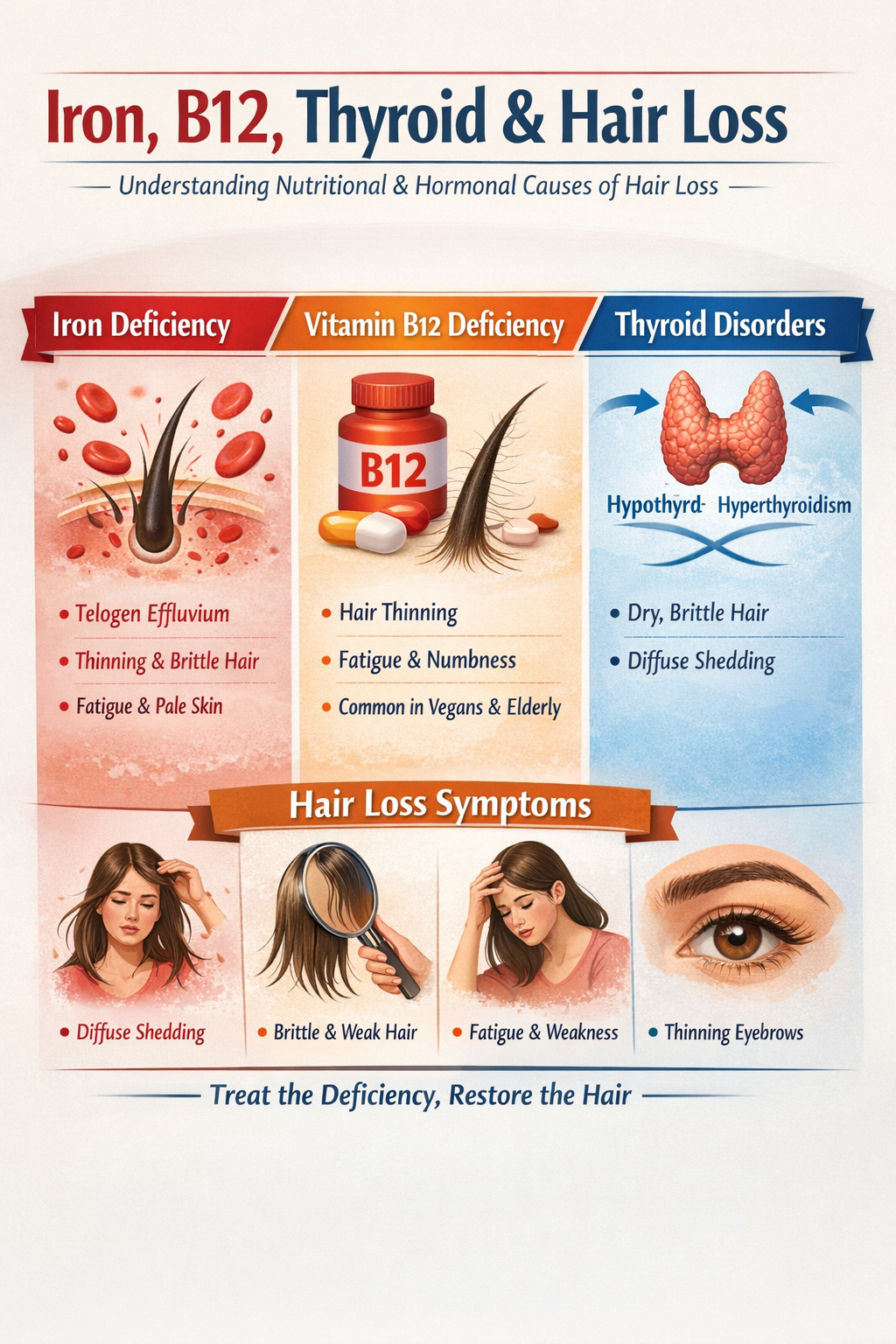
The most common type of hair loss associated with iron deficiency is called telogen effluvium. In this condition, a larger number of hairs than usual enter the resting phase and fall out. This hair loss is usually diffuse, meaning it occurs across the entire scalp rather than in patches. Individuals may notice their hair becoming thinner, less shiny, or more brittle. In addition to hair loss, iron deficiency can cause fatigue, weakness, pale skin, and brittle nails.
Doctors often assess iron status by measuring serum ferritin, which reflects the body’s stored iron. Low ferritin levels are strongly associated with hair loss. Treatment typically involves increasing dietary iron through foods such as red meat, spinach, lentils, and fortified cereals. In some cases, oral iron supplements may be recommended. Hair regrowth may take several months after correcting iron deficiency, as hair follicles require time to recover.
Vitamin B12 and Hair Health
Vitamin B12 is another nutrient that plays a critical role in hair growth. It is essential for DNA synthesis, red blood cell production, and nervous system health. Hair follicles, like all rapidly dividing cells, require DNA synthesis to function properly. Therefore, a deficiency in vitamin B12 can impair hair growth.
Vitamin B12 deficiency is less common than iron deficiency but still affects certain populations, such as vegetarians, vegans, older adults, and individuals with absorption issues in the digestive tract. People who have undergone gastric surgery or have conditions such as pernicious anemia are also at risk.
Symptoms of vitamin B12 deficiency extend beyond hair loss. Individuals may experience fatigue, weakness, pale or jaundiced skin, tingling or numbness in the hands and feet, and difficulty concentrating. In terms of hair, deficiency can lead to thinning, slow growth, and changes in texture.
Diagnosis of vitamin B12 deficiency involves blood tests measuring serum B12 levels. Additional tests, such as methylmalonic acid and homocysteine, may be used to confirm the deficiency. Treatment usually involves supplementation, either orally or through injections, depending on the severity and underlying cause. Once vitamin B12 levels are restored, hair growth may resume, but similar to iron, visible improvements take time.
Thyroid Function and Hair Loss
The thyroid gland, located in the neck, produces hormones that regulate metabolism, energy levels, and cellular activity. Thyroid hormones also influence hair follicle function and hair growth cycles. Both hypothyroidism, a condition characterized by low thyroid hormone levels, and hyperthyroidism, a condition with excessive thyroid hormone production, can lead to hair loss.
In hypothyroidism, hair becomes dry, coarse, and brittle. The rate of hair growth slows, and shedding may become noticeable. In severe cases, hair loss may also affect the outer third of the eyebrows. Other symptoms of hypothyroidism include fatigue, weight gain, constipation, depression, and cold intolerance.
Hyperthyroidism can also result in hair loss. In this condition, hair becomes fine and soft, and diffuse shedding occurs across the scalp. The hair loss in hyperthyroidism results from an accelerated hair cycle, where more hairs than usual enter the resting phase at the same time. Additional symptoms may include weight loss, rapid heartbeat, increased sweating, anxiety, and difficulty sleeping.
Thyroid disorders are diagnosed through blood tests measuring thyroid-stimulating hormone (TSH), free thyroxine (T4), and sometimes triiodothyronine (T3). Treatment depends on the type of thyroid disorder. Hypothyroidism is typically managed with thyroid hormone replacement therapy, while hyperthyroidism may be treated with medications, radioactive iodine, or surgery. Hair loss often improves gradually once thyroid function is stabilized.
Interconnected Factors
It is important to note that iron deficiency, vitamin B12 deficiency, and thyroid disorders can coexist and compound hair loss. For example, a person with hypothyroidism may also have low ferritin, making hair shedding more pronounced. Therefore, a comprehensive evaluation is often necessary when addressing hair loss.
Lifestyle factors can also influence these conditions. Poor diet, stress, and chronic illness may contribute to deficiencies or exacerbate thyroid dysfunction. Maintaining a balanced diet, managing stress, and addressing medical conditions are essential components of hair care and overall health.
When to Seek Medical Advice
Hair loss is often reversible if the underlying cause is identified and treated. However, persistent or sudden hair loss warrants medical attention. Signs that should prompt a consultation with a healthcare professional include:
- Sudden or patchy hair loss
- Severe thinning across the scalp
- Hair loss accompanied by fatigue, weight changes, or other systemic symptoms
- Family history of thyroid disorders or autoimmune conditions
A healthcare provider can conduct a thorough evaluation, including a physical examination, blood tests for iron, vitamin B12, and thyroid function, and sometimes a scalp biopsy. Identifying the correct cause is crucial for effective treatment.
Practical Steps for Supporting Hair Health
- Dietary Improvements: Incorporate iron-rich foods such as lean meats, legumes, leafy greens, and fortified cereals. Include sources of vitamin B12 such as eggs, dairy products, fish, and fortified plant-based foods.
- Supplements: When deficiencies are confirmed, supplements may be necessary. Iron supplements should be taken under medical supervision, as excessive iron can be harmful. Vitamin B12 supplementation can be oral or injectable depending on individual needs.
- Thyroid Management: Regular monitoring and treatment of thyroid disorders are essential. Adherence to prescribed medications and follow-up with a healthcare provider ensure hormone levels remain stable, reducing hair loss over time.
- Lifestyle Modifications: Adequate sleep, stress management, and regular exercise support overall health and hair growth. Avoid excessive styling or harsh chemical treatments that can further damage hair.
- Patience: Hair growth takes time. Even after correcting deficiencies or stabilizing thyroid function, noticeable improvements may take three to six months or longer. Consistency in treatment and self-care is key.
Conclusion
Hair loss is a multifactorial condition that can be influenced by nutrition, hormones, and overall health. Iron deficiency, vitamin B12 deficiency, and thyroid disorders are among the most common and treatable causes. By understanding the connection between these factors and hair growth, individuals can take proactive steps to prevent or reverse hair loss.
A balanced diet, proper supplementation when needed, regular monitoring of thyroid function, and healthy lifestyle choices are essential components of hair health. Consulting a healthcare provider is important for persistent or severe hair loss, as early diagnosis and treatment can improve outcomes.
Although hair loss can be distressing, understanding the underlying causes and addressing them systematically can lead to recovery and healthier, stronger hair. By focusing on nutrition, hormone balance, and overall well-being, individuals can optimize hair growth and maintain confidence in their appearance.