
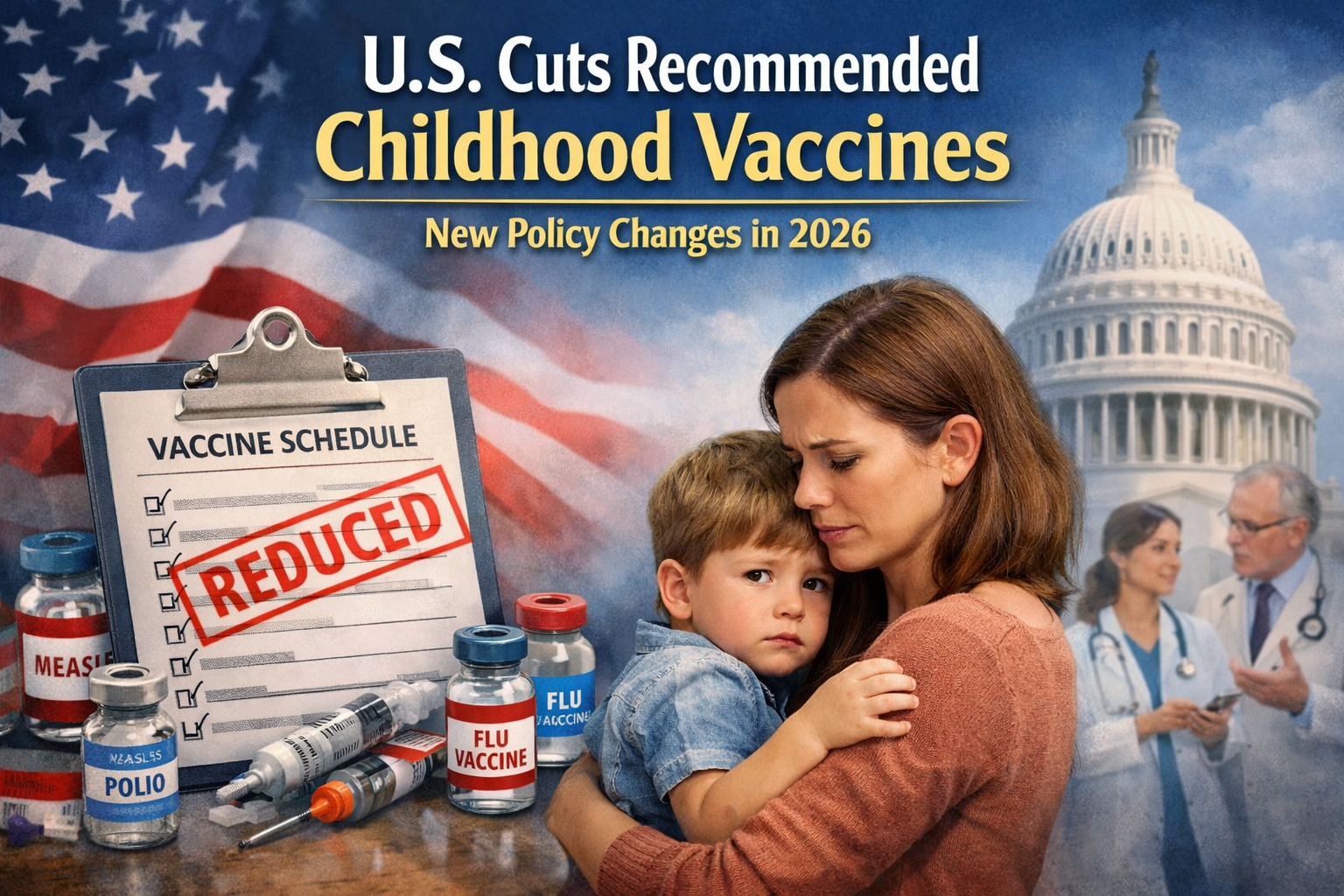
U.S. Cuts Recommended Childhood Vaccines: What Parents Need to Know in 2026
Introduction
In January 2026, federal health officials in the United States announced one of the most significant changes to childhood vaccination policy in decades. The U.S. Centers for Disease Control and Prevention released an updated childhood immunization schedule that reduces the number of diseases routinely covered by recommended vaccines from 17 to 11. The change took effect immediately and has sparked intense debate among pediatricians, immunologists, public health experts, and families across the country.
Supporters of the decision argue that it aligns the U.S. with international vaccination practices and strengthens informed consent. Critics warn that the move undermines decades of scientific review and could place children at increased risk of preventable diseases. As parents try to make sense of the new guidance, questions around safety, access, insurance coverage, and long term public health consequences continue to grow.
This article explains what changed in the U.S. childhood vaccine schedule, why the decision was made, which vaccines are still recommended, which now require additional consultation, and what the shift may mean for families in 2026 and beyond.
What Changed in the CDC Childhood Immunization Schedule
The updated immunization schedule released by the CDC reduces the number of diseases for which vaccines are universally recommended during childhood. Under the previous schedule, routine vaccination protected children against 17 diseases. The new guidance lowers that number to 11.
Vaccines that remain universally recommended include those that protect against some of the most contagious and historically dangerous childhood illnesses. These include:
- Measles
- Polio
- Whooping cough
- Diphtheria
- Tetanus
However, several vaccines that were previously recommended for all children are no longer considered routine under the new schedule. Instead, these vaccines now require a discussion between families and a healthcare provider before administration.
Vaccines that now fall under shared clinical decision making include:
- Influenza
- Hepatitis A
- Rotavirus
- Respiratory syncytial virus for most children
RSV vaccination is now recommended only for certain high risk infants rather than all children.
Why Federal Officials Changed the Vaccine Recommendations
The revised vaccine schedule was approved by Jim O’Neil, acting director of the CDC, and reflects long standing views held by U.S. Health Secretary Robert F. Kennedy Jr. Kennedy has repeatedly expressed concern about the number of vaccines administered to children and has advocated for a more limited approach.
The changes also follow a directive issued by President Donald Trump in December 2025. The president instructed federal agencies to review vaccine schedules used in other wealthy nations and determine whether the United States should adopt a similar approach. Countries cited included Germany, Japan, and Denmark.
According to Kennedy, the administration conducted an extensive review of international vaccination practices. In a public statement, he said the new schedule aligns the U.S. with international consensus while increasing transparency and informed consent.
Federal officials emphasized that the goal was not to eliminate vaccines but to encourage more individualized decision making between families and healthcare providers.
Reaction From Public Health Experts
The response from the medical community has been swift and overwhelmingly critical.
Dr. Andrew Racine, president elect of the American Academy of Pediatrics, described the decision as dangerous and unnecessary. He emphasized that for decades, vaccine recommendations have been developed through a rigorous process involving independent scientific review, clinical trials, and ongoing safety monitoring.
Dr. Helen Chu, an immunologist at the University of Washington, warned that the abrupt changes could endanger children’s health. She stated that removing routine recommendations for vaccines like influenza and rotavirus could lead to increased hospitalizations and outbreaks.
Former CDC officials also questioned how the changes were made. Dr. Demetre Daskalakis, who previously led the CDC center overseeing vaccine policy, criticized the lack of transparency and expert involvement. He said that major policy shifts should include pediatricians, infectious disease specialists, and immunologists and should be based on a thorough review of scientific evidence.
How Vaccine Recommendations Are Typically Made
Traditionally, changes to the U.S. childhood immunization schedule follow a detailed and highly structured process. This process usually involves:
- Review of clinical trial data
- Evaluation of real world safety and effectiveness data
- Independent recommendations from advisory committees
- Public meetings and expert testimony
- Final approval by federal health agencies
Public health experts argue that the new schedule bypassed or abbreviated many of these steps. Instead of relying primarily on U.S. data, officials referenced international practices as a major justification.
Critics note that while other countries may recommend fewer vaccines, differences in healthcare systems, population density, disease exposure, and public health infrastructure make direct comparisons difficult.
Vaccines Still Required for School Attendance
It is important for families to understand that CDC recommendations do not automatically change school vaccination requirements. States have the authority to determine which vaccines are required for school and daycare attendance.
At this time, many states are expected to continue requiring vaccines for measles, polio, and whooping cough. However, CDC guidance heavily influences state laws, and experts anticipate that some states may revisit their requirements in light of the new federal recommendations.
Parents should check with state health departments and school districts for the most up to date requirements.
Potential Impact on Vaccine Uptake
One of the biggest concerns among public health experts is that the new schedule could reduce vaccination rates overall. Even vaccines that remain recommended may see lower uptake due to increased confusion and growing skepticism.
Dr. Chu noted that parents are already exposed to conflicting messages about vaccine safety. Changing long standing recommendations may reinforce doubts and make it harder for families to make informed decisions.
Lower vaccination rates increase the risk of outbreaks, particularly for highly contagious diseases like measles and influenza. The timing of the change is especially concerning given that the U.S. recently recorded its highest measles case count in decades.
Measles and Influenza Trends in the United States
In 2025, the United States reported more than 2,000 measles cases, the highest annual total in decades. Health officials attributed many of these cases to declining vaccination rates in certain communities.
Influenza has also surged in recent years. During the 2025 holiday season, hospitals across the country reported record levels of flu related illness. While the flu vaccine is now optional under the new schedule, experts stress that influenza remains a serious threat, especially for young children and older adults.
Insurance Coverage and Access to Vaccines
Despite concerns about reduced recommendations, federal officials have stated that insurance coverage will not change.
Dr. Mehmet Oz, administrator of the Centers for Medicare and Medicaid Services, confirmed that all vaccines currently recommended by the CDC will remain covered by insurance without cost sharing. This includes vaccines that now require shared decision making rather than universal recommendation.
Families enrolled in private insurance plans, Medicaid, and the Children’s Health Insurance Program should continue to have access to covered vaccines.
Legal and Policy Questions
Some legal experts have questioned whether the health secretary has the authority to make such sweeping changes without following established review procedures.
Richard Hughes IV, a vaccine law expert at George Washington University, stated that federal agencies are prohibited from acting arbitrarily or capriciously. He has previously challenged changes to COVID vaccine recommendations and is exploring legal options related to the childhood schedule revision.
If courts determine that proper procedures were not followed, parts of the new schedule could face legal challenges in the future.
What Parents Should Do Now
For families navigating the new vaccine landscape, experts recommend the following steps:
- Speak directly with a pediatrician or trusted healthcare provider
- Ask questions about the risks and benefits of each vaccine
- Review state school and daycare requirements
- Stay informed using reputable sources such as the CDC and American Academy of Pediatrics
Healthcare providers remain a critical resource for personalized guidance. Even vaccines that are no longer universally recommended may still be strongly advised based on a child’s health, environment, and exposure risk.
International Comparisons and Misconceptions
While officials cite countries like Germany and Japan as models, experts caution against oversimplifying international comparisons. Many countries rely on stronger public health surveillance systems, higher baseline trust in healthcare, and different approaches to disease prevention.
Additionally, several countries with fewer routine vaccines still experience outbreaks when coverage declines. Experts argue that the U.S. schedule already closely matched those of Canada and the United Kingdom before the changes.
Long Term Public Health Implications
The full impact of the revised vaccine schedule may not be clear for years. Public health outcomes often lag behind policy changes, and early effects may include:
- Increased variability in vaccination rates
- Confusion among parents and providers
- Potential resurgence of preventable diseases
Experts emphasize that vaccines are most effective when coverage is high across communities. Even small declines can lead to significant outbreaks, particularly among vulnerable populations.
Conclusion
The decision to narrow the U.S. childhood immunization schedule represents a major shift in national vaccine policy. While federal officials describe the move as a step toward transparency and international alignment, many medical experts view it as a dangerous departure from evidence based practice.
For parents, the most important takeaway is that vaccines remain available, covered by insurance, and supported by decades of research. Open conversations with healthcare providers are more important than ever in navigating the evolving recommendations.
As the debate continues, the health of children and communities will depend on clear communication, scientific integrity, and informed decision making.
Sources
- The New York Times, January 5, 2026
- U.S. Centers for Disease Control and Prevention
- American Academy of Pediatrics
Disclaimer
This article is for informational and educational purposes only and does not constitute medical advice. Vaccine recommendations may vary based on individual health conditions and circumstances. Always consult a qualified healthcare professional for personalized medical guidance. Statistical data reflects general trends and may not apply to every individual.