
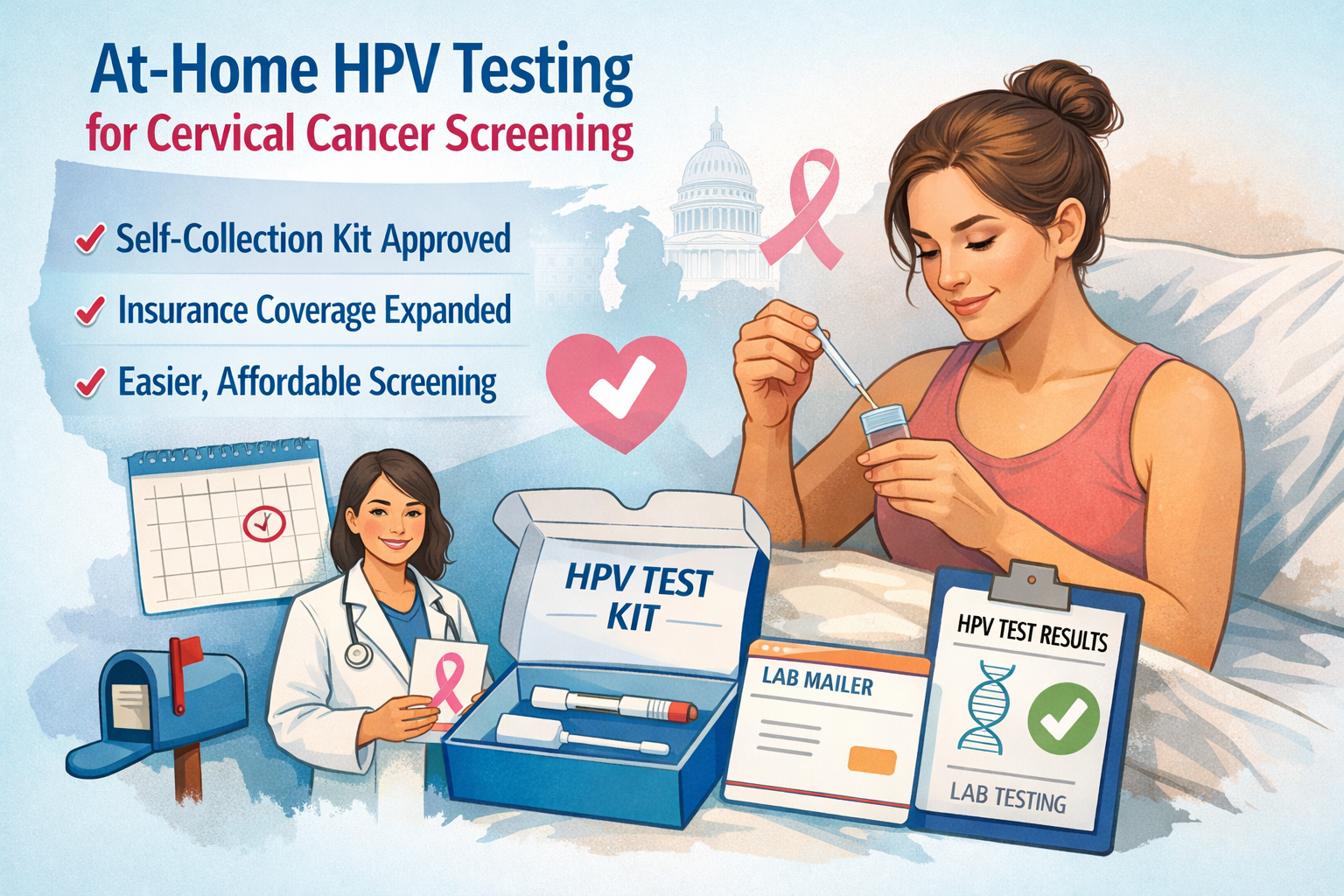
U.S. Backs At-Home HPV Testing to Improve Cervical Cancer Screening Access
Introduction
Cervical cancer screening in the United States is entering a significant new phase. In January 2026, federal health officials announced updated guidance that expands access to cervical cancer screening by allowing self-collected vaginal samples for human papillomavirus testing. This policy change is designed to make screening easier, more affordable, and more accessible, especially for women who face barriers to traditional in-office testing.
The guidance was issued by the Health Resources and Services Administration, an agency within the U.S. Department of Health and Human Services. Under the new rules, most private insurance plans will be required to cover self-collected HPV testing without out-of-pocket costs. Public health experts say this move could help close long-standing screening gaps and prevent thousands of cervical cancer cases each year.
Why Cervical Cancer Screening Matters
Cervical cancer is one of the most preventable forms of cancer when detected early. Regular screening allows healthcare providers to identify precancerous changes before they develop into cancer. Despite decades of progress, cervical cancer remains a serious public health concern in the United States.
According to the Centers for Disease Control and Prevention, approximately 13,000 new cases of cervical cancer are diagnosed annually, and about 4,000 people die from the disease each year. Most of these cases are linked to persistent infection with human papillomavirus, a common sexually transmitted infection that often causes no symptoms.
Public health officials emphasize that routine screening is essential because cervical cancer typically does not cause noticeable symptoms in its early stages. When symptoms appear, the disease may already be advanced and more difficult to treat.
Declining Screening Rates in the U.S.
One of the driving forces behind the new federal guidance is a concerning decline in cervical cancer screening rates. Data shows that about one in four women in the United States is not up to date on recommended screening.
Screening rates dropped significantly during the COVID-19 pandemic and have not fully recovered. Experts point to several contributing factors, including limited access to healthcare, discomfort with pelvic exams, lack of time, cost concerns, and fear or anxiety surrounding the procedure.
Health officials believe that expanding screening options could help reverse this trend and reach women who might otherwise skip or delay testing.
What the New HRSA Guidance Changes
The updated HRSA guidelines expand the methods available for cervical cancer screening while maintaining existing age-based recommendations.
Current Screening Recommendations
Average-risk women between the ages of 21 and 65 should continue regular screening according to established guidelines:
- Women ages 21 to 29 should receive a Pap test every three years.
- Women ages 30 to 65 should be screened every five years using an HPV test alone or a combination of HPV testing and a Pap test.
New Option for Self-Collected HPV Testing
For the first time, women ages 30 to 65 are now advised to be offered the option of using a government-approved self-collected vaginal sample for HPV testing. This sample can be collected by the patient rather than a clinician.
While most self-collected samples are expected to be taken in medical settings initially, federal officials say the guidance lays the groundwork for broader at-home testing in the future.
Insurance Coverage and Cost Barriers
A key element of the new policy is insurance coverage. Most private insurance plans will now be required to cover self-collected HPV testing as a preventive service. This means eligible patients should not face out-of-pocket costs such as copayments or deductibles.
Cost has long been a barrier to cervical cancer screening, particularly for uninsured or underinsured women. By removing financial obstacles, health officials hope to encourage more people to participate in routine screening and follow-up care.
An HRSA spokesperson stated that the guideline is designed to close the screening gap by expanding access and reducing cost barriers.
Alignment With American Cancer Society Recommendations
The HRSA update closely aligns with revised recommendations issued by the American Cancer Society in December 2025. The ACS has increasingly emphasized HPV testing as the primary method for cervical cancer screening, citing strong evidence that it is highly effective at identifying cancer risk.
Robert Smith, senior vice president of early cancer detection science at the American Cancer Society, noted that cervical cancer is a highly preventable disease. However, he also warned that screening rates have declined since 2021 and have not rebounded in the post-pandemic period.
Public health leaders see self-collection as a promising strategy to reengage patients and modernize cancer prevention efforts.
The Role of HPV in Cervical Cancer
Human papillomavirus is responsible for nearly all cases of cervical cancer. HPV is extremely common, and most sexually active people will contract it at some point in their lives. In many cases, the immune system clears the virus naturally.
Problems arise when high-risk strains of HPV persist in the body over time. Persistent infection can cause abnormal cell changes in the cervix that may progress to cancer if not detected and treated early.
HPV testing identifies the presence of these high-risk strains, allowing healthcare providers to determine whether further evaluation or monitoring is needed.
FDA Approval of At-Home HPV Testing Tools
In May 2025, the U.S. Food and Drug Administration approved the first at-home cervical cancer screening tool developed by Teal Health. The device includes a wand that allows patients to collect a vaginal sample themselves and mail it to a laboratory for HPV testing.
This approval marked a major milestone in cervical cancer prevention. While widespread at-home testing is still being rolled out, experts say it demonstrates that self-collection can be accurate, safe, and acceptable to patients.
For now, most self-collection is expected to occur in clinical settings such as doctor offices, pharmacies, or community health clinics. However, future expansion into fully at-home testing could further increase screening participation.
Benefits of Self-Collected HPV Testing
Self-collected HPV testing offers several potential advantages over traditional screening methods.
Increased Comfort and Privacy
Many women avoid cervical cancer screening due to discomfort or anxiety related to pelvic exams. Self-collection allows patients to collect samples privately, which may reduce emotional and physical barriers.
Improved Access
Self-collection may benefit individuals who face logistical challenges, including lack of transportation, limited clinic availability, or long wait times for appointments.
Time Savings
Allowing patients to collect samples themselves can reduce the length of medical visits and make screening easier to fit into busy schedules.
Public Health Impact
Experts believe that self-collection could significantly increase screening rates, particularly among populations that are currently underserved, including rural communities and marginalized groups.
Limitations and Considerations
While self-collected HPV testing is a promising advancement, it is not a complete replacement for traditional care.
Patients who receive positive HPV results may still need follow-up testing, including a Pap test or colposcopy, performed by a healthcare provider. Regular communication with a medical professional remains essential.
Additionally, self-collection is currently recommended only for women ages 30 to 65 at average risk. Younger women and those with higher risk factors should follow existing screening protocols.
What This Means for Patients
Women who fall within the eligible age range should talk with their healthcare providers about whether self-collected HPV testing is an appropriate option. Providers can explain how the test works, where it can be completed, and what the results may mean.
Public health officials stress that the most important step is getting screened regularly, regardless of the method used.
The Future of Cervical Cancer Prevention
The expansion of self-collected HPV testing reflects a broader shift toward patient-centered preventive care. Advances in technology, combined with policy changes that reduce cost barriers, are reshaping how preventive health services are delivered.
Experts hope that these changes will accelerate progress toward reducing cervical cancer incidence and mortality nationwide. With consistent screening, early detection, and appropriate follow-up care, cervical cancer can often be prevented entirely.
Conclusion
The U.S. government’s support for self-collected HPV testing represents a major step forward in cervical cancer prevention. By expanding screening options and requiring insurance coverage, federal health officials aim to reach millions of women who are currently overdue for testing.
As screening rates continue to lag, innovative approaches like self-collection may play a critical role in saving lives. Women are encouraged to stay informed, discuss screening options with their healthcare providers, and take advantage of preventive services that can protect long-term health.
Sources
- The Washington Post, January 5, 2026
- American Cancer Society
- U.S. Centers for Disease Control and Prevention
Disclaimer
This article is for informational purposes only and does not constitute medical advice, diagnosis, or treatment. Statistical data reflects general trends and may not apply to individual circumstances. Always consult a qualified healthcare professional for personalized medical guidance and screening recommendations.