
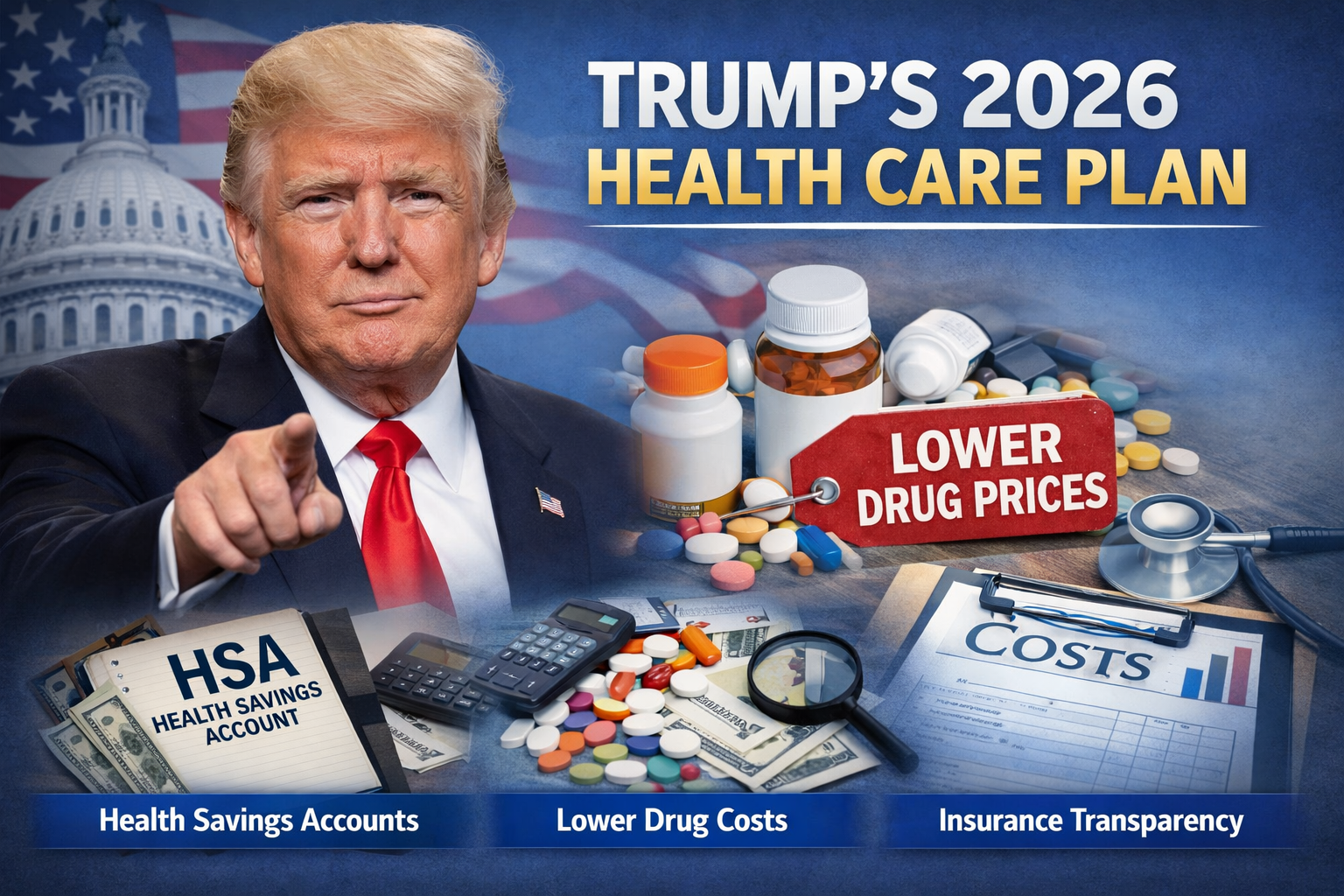
Trump’s New Health Care Plan: What Americans Need to Know in 2026
Health care in the United States is often a topic of national debate, and recent developments have reignited discussions on how Americans pay for medical care and health insurance. On January 20, 2026, President Donald Trump unveiled an outline of a new health care plan aimed at reshaping the way citizens access and afford health services. This proposal comes in the wake of the expiration of federal health insurance subsidies at the end of 2025, which previously helped millions of Americans afford coverage under the Affordable Care Act.
Understanding the details of this plan is essential for patients, health care providers, and lawmakers. In this article, we break down the key elements of Trump’s proposal, explore potential benefits and drawbacks, and examine the reactions from both political parties and health care experts.
Direct Payments to Health Savings Accounts
At the core of Trump’s proposal is a plan to send money directly to Americans through health savings accounts. President Trump described this in a prerecorded video released by the White House, stating that the government would pay money directly to individuals, who would then use the funds to purchase their own health care.
Health savings accounts, commonly referred to as HSAs, allow individuals to save money tax-free for medical expenses. These accounts have historically been favored by higher-income earners because they provide a tax-advantaged way to pay for health costs. Critics argue that while direct payments through HSAs may increase personal control over health spending, they might not adequately support lower-income individuals who are most in need of financial assistance for medical care.
The plan does not yet specify how much money Americans would receive, who would qualify, or how the funds would be distributed. Lawmakers and health policy experts have noted that similar proposals in the past tended to disproportionately benefit those with higher incomes rather than those with limited resources.
Efforts to Lower Drug Prices
Another key component of the new health care plan is the focus on lowering drug costs. The White House indicated that the administration would make certain medications available over the counter and would tie U.S. drug prices to lower prices paid in other countries. This approach is aimed at reducing the financial burden of prescription medications on American consumers.
Additionally, the administration announced the upcoming launch of a new website, TrumpRx.gov, which will allow consumers to purchase medications directly. At the time of the announcement, no drugs were listed on the website. This direct-to-consumer approach to drug distribution could potentially streamline access and reduce costs, but questions remain about how this will affect pharmacy networks, insurance coverage, and medication safety monitoring.
Transparency in Health Care Costs
Trump’s plan also calls for greater transparency from insurance companies regarding costs, denied claims, and wait times for care. Transparency is a critical issue in U.S. health care, as patients often face unexpected medical bills and have limited access to accurate pricing information. By requiring insurers to provide more detailed information, the plan aims to empower consumers to make informed decisions about their care.
Dr. Mehmet Oz, who leads the Centers for Medicare & Medicaid Services, described the proposal as a framework that lawmakers could use as a foundation to build more comprehensive legislation. The lack of specific details in the current proposal has drawn criticism, as many stakeholders are unsure how the plan would function in practice.
Political Reactions and Criticisms
Democrats have pushed back on the plan, emphasizing that health savings accounts alone would not replace the tax credits that previously helped lower monthly premiums for many Americans under the Affordable Care Act. The expiration of these subsidies at the end of 2025 has already left millions of Americans facing higher insurance costs.
Senator Bernie Moreno, an Ohio Republican, is part of a bipartisan effort proposing a two-year extension of the subsidies with added eligibility limits and an option for health savings accounts in the second year. Meanwhile, Republican Senator Bill Cassidy of Louisiana, who is a medical doctor, indicated that his committee would take action on the president’s affordability agenda.
While the White House has discussed the proposal with members of Congress, no specific lawmakers have been publicly identified as actively drafting legislation based on the plan. Press secretary Karoline Leavitt stated that every American with health care would see lower costs as a result of the proposal, but did not provide details on how coverage gaps or out-of-pocket expenses would be addressed.
Restoring Payments to Reduce Out-of-Pocket Costs
The proposal also aims to restore payments that help insurers reduce out-of-pocket costs for low-income customers on mid-level health plans. These payments, which were part of prior health care legislation, were designed to protect consumers from unexpectedly high medical bills. By reinstating these payments, the administration hopes to make insurance coverage more affordable for those who are most financially vulnerable.
Potential Implications for the Health Care System
While the plan introduces several promising ideas, it also raises significant questions about implementation, equity, and long-term sustainability. Health savings accounts and direct payments may empower some Americans to manage their own health care expenses, but they may also leave vulnerable populations at risk if subsidies are insufficient.
Efforts to lower drug prices and tie U.S. costs to international benchmarks could have far-reaching implications for pharmaceutical companies, insurers, and patients. While increased transparency in denied claims and wait times is a positive step, the plan does not yet provide concrete mechanisms to enforce compliance from insurance providers.
Health economists caution that a successful health care plan requires careful balancing of cost reduction, access, and quality of care. Any changes to federal subsidies or insurance regulations must be accompanied by robust oversight to ensure that Americans receive comprehensive coverage.
Public Reception and Next Steps
Public reaction to the proposal has been mixed. Supporters praise the emphasis on personal control over health care spending and the potential for reduced drug prices. Critics argue that the plan lacks sufficient detail to evaluate its effectiveness and may favor higher-income individuals.
Congressional hearings and committee meetings are expected in the coming months to review the proposal and determine whether it can be translated into actionable legislation. Bipartisan discussions may focus on extending subsidies, integrating health savings accounts, and implementing measures to improve drug affordability and transparency in insurance practices.
Health care professionals are closely monitoring these developments, as any major changes to federal policy could significantly affect hospital operations, insurance coverage, and patient access to medications and services. Experts emphasize that individuals should continue to plan for medical expenses and consult health professionals when making decisions about insurance coverage or treatment options.
Broader Context: Health Care Policy in the United States
Trump’s new plan is part of a long-standing debate about the future of health care in the United States. The Affordable Care Act, enacted during President Barack Obama’s administration, expanded insurance coverage and provided tax credits to make premiums more affordable. However, efforts to repeal or replace the ACA during Trump’s first term were unsuccessful, leaving the law largely intact.
The expiration of federal subsidies at the end of 2025 has created an urgent need for new policies to support Americans facing higher premiums. The new proposal aims to provide a framework that could reshape the insurance landscape, reduce prescription drug costs, and enhance transparency. Yet, as with any policy shift, careful evaluation is necessary to ensure that all Americans benefit equally and that unintended consequences are minimized.
The Role of Health Savings Accounts in the Proposal
Health savings accounts play a central role in Trump’s plan. By providing direct payments to individuals, the proposal seeks to shift the responsibility of purchasing health care from the government to the individual consumer. Proponents argue that this approach encourages personal responsibility and allows Americans to choose the care that best suits their needs.
However, the use of health savings accounts has limitations. HSAs are most beneficial to those with the ability to contribute significant funds, and they may not adequately address the needs of low-income populations. Additionally, medical costs can be unpredictable, and relying solely on individual savings may not provide sufficient protection in cases of serious illness or emergency care.
Drug Price Reforms and International Pricing Comparisons
A major component of the plan involves aligning U.S. drug prices with lower prices paid in other countries. Drug costs in the United States are among the highest in the world, and policymakers have long sought solutions to reduce financial barriers for patients.
While tying U.S. prices to international benchmarks could lower costs, it may also influence pharmaceutical innovation and market dynamics. Critics argue that price caps could reduce incentives for research and development of new medications, while supporters contend that ensuring affordability is critical for public health.
The proposed over-the-counter availability of certain medications could also improve access, though it will require careful regulation to ensure safety and proper use. The upcoming launch of TrumpRx.gov is expected to provide more clarity on which medications will be available and at what price points.
Transparency and Consumer Empowerment
Increasing transparency in health care costs, denied claims, and wait times is another significant aspect of the plan. By making insurance processes more open, consumers can make informed decisions about where to seek care and how to manage expenses.
However, transparency alone may not solve underlying affordability issues. Policymakers must ensure that increased access to information is accompanied by protections that prevent patients from being burdened by high out-of-pocket costs or limited coverage options.
Conclusion
President Trump’s 2026 health care proposal introduces several innovative concepts aimed at improving affordability, increasing transparency, and giving Americans more control over their health care spending. Direct payments to health savings accounts, efforts to lower drug prices, and increased insurance transparency are key elements of the plan.
Despite its potential, the proposal currently lacks detailed implementation strategies, making it difficult to assess its full impact. Lawmakers, health care professionals, and consumers will need to closely evaluate the plan as it develops, ensuring that it addresses the needs of all Americans, particularly those with limited income or complex medical conditions.
As the debate continues, one clear takeaway is that health care policy remains a complex and evolving issue in the United States. Any successful reform must balance cost, access, and quality to ensure that Americans receive comprehensive and affordable care.
Sources
- The Associated Press. Jan. 15, 2026. “Trump Unveils Outline of New Health Care Plan.” Drugs.com.
- Centers for Medicare & Medicaid Services. Public Statements, 2026.
Disclaimer
The content of this article is for informational and educational purposes only. It does not constitute medical advice, diagnosis, or treatment. Health policies and programs may affect individuals differently based on personal circumstances. Consult qualified health professionals for guidance on personal medical and insurance decisions.