Trampoline Injuries Explained: Risks, Prevention, and Safety Tips
Learn about trampoline injuries, causes, statistics, and expert tips to prevent accidents. Discover trampoline safety guidelines for children and adults.
Trampolines are a popular way for children and adults to exercise and have fun. Millions of people use trampolines in backyards, gyms, parks, and trampoline parks every year. While jumping can be enjoyable, trampoline injuries are common and sometimes serious. Understanding the risks and following safety guidelines can prevent accidents and ensure a safer experience.
Trampoline injuries are widespread. In the United States, approximately 100,000 trampoline-related injuries are treated in emergency rooms annually. Most occur at home rather than in organized activities or professional training. Children are the most affected, with 66 to 80 percent of injuries happening in children under 14 years old.
A major factor in injuries is jumping with multiple people at the same time. Studies indicate that around 75 percent of trampoline injuries involve more than one jumper, which increases the risk of collisions and falls.
| Cause | Description | Risk Factor |
|---|---|---|
| Multiple Jumpers | Two or more people jumping at the same time increases collisions and unstable landings | High |
| Falls On or Off | Falling on the trampoline mat, frame, or surrounding ground | High |
| Risky Moves | Performing flips, somersaults, or advanced tricks | High |
| Faulty Equipment | Broken springs, torn mats, or poorly installed trampolines | Medium |
| Lack of Supervision | Children left unsupervised are more likely to engage in unsafe behavior | High |
| Type of Injury | Description | Frequency |
|---|---|---|
| Sprains and Strains | Soft tissue injuries from awkward landings | Common |
| Fractures and Dislocations | Broken or dislocated limbs, especially wrists, elbows, and ankles | Very Common |
| Head and Neck Injuries | Injuries to the skull or cervical spine; may cause serious complications | Less Common |
| Spinal Injuries | Severe injuries to the spine, sometimes permanent | Rare but Severe |
| Cuts and Bruises | Minor injuries from impact with trampoline frame or mat | Very Common |
| Statistic | Value |
|---|---|
| ER visits per year (US) | ~100,000 |
| Injuries involving multiple jumpers | 75% |
| Injuries in children under 14 | 66–80% |
| Injuries that are fractures or dislocations | 70% |
| Injuries involving head or neck | 20–30% |
| Safety Measure | Explanation |
|---|---|
| One Jumper at a Time | Reduces risk of collision and unstable landings |
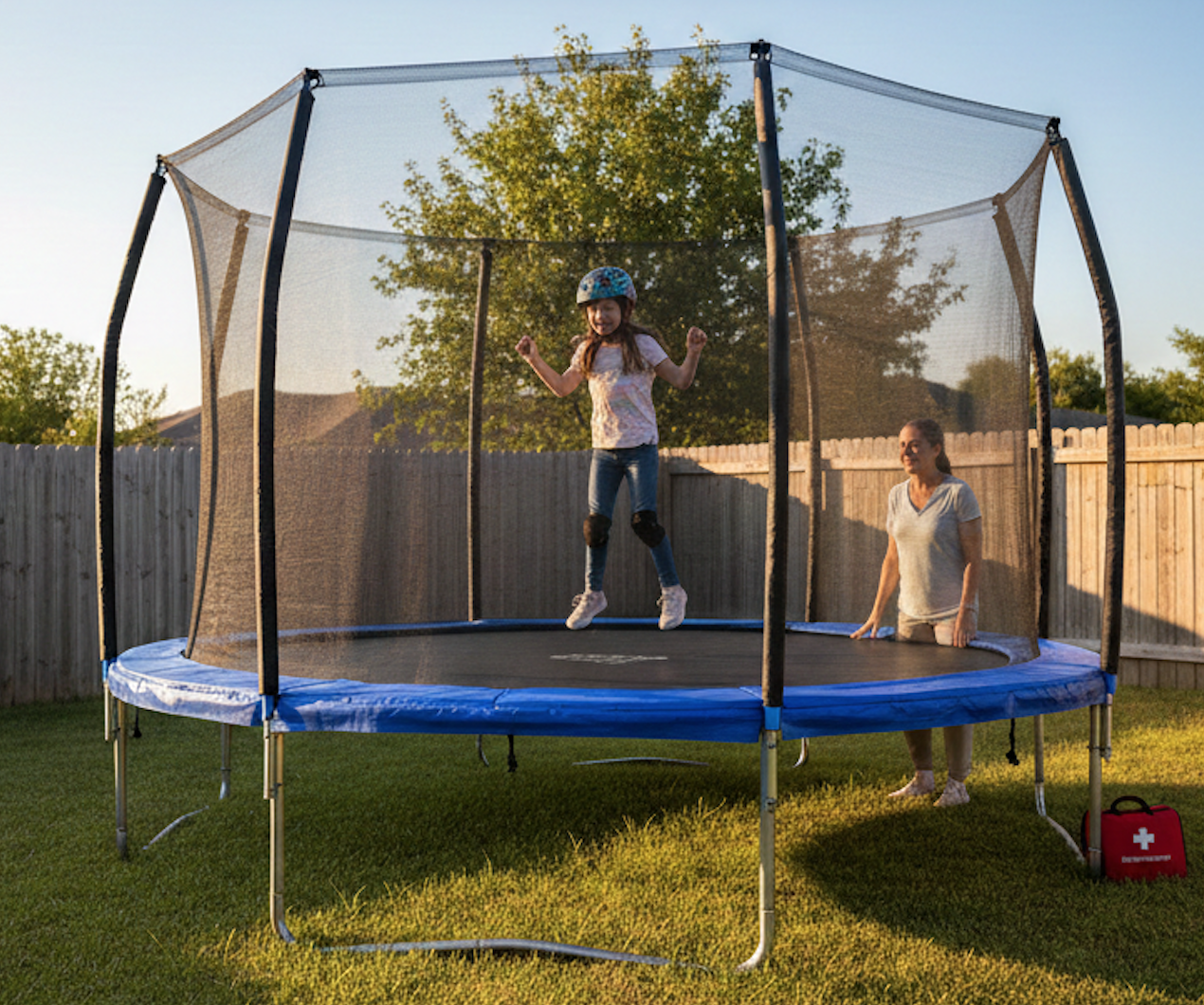
| Use Safety Nets and Padding | Nets and padding protect against falls and contact with springs or frames |
| Active Adult Supervision | Supervision ensures children follow safe behavior |
| Avoid Advanced Stunts | Do not perform flips or somersaults without professional guidance |
| Check Equipment Regularly | Inspect mats, springs, and frames; repair or replace damaged parts |
| Set Rules for Jumping | Clear rules help children understand safety boundaries |
In professional gymnastics and trampoline training, trampolines are used with safety mats, harnesses, and expert supervision. Backyard trampolines often lack these precautions. The American Academy of Pediatrics advises caution with home trampolines due to high injury risks.
Trampolines provide fun and exercise but carry significant risk, especially for children. Understanding the common causes of trampoline injuries, following safety guidelines, and supervising children can greatly reduce accidents. Families and trampoline users must be aware of potential dangers and safety measures to enjoy trampolines safely.
This content is for educational purposes only and is not a substitute for professional medical or legal advice. Consult a qualified healthcare provider for guidance on injuries, medical treatment, or trampoline safety. Safety guidelines may vary depending on local regulations and individual circumstances.

Most Accurate Healthcare AI designed for everything from admin workflows to clinical decision support.