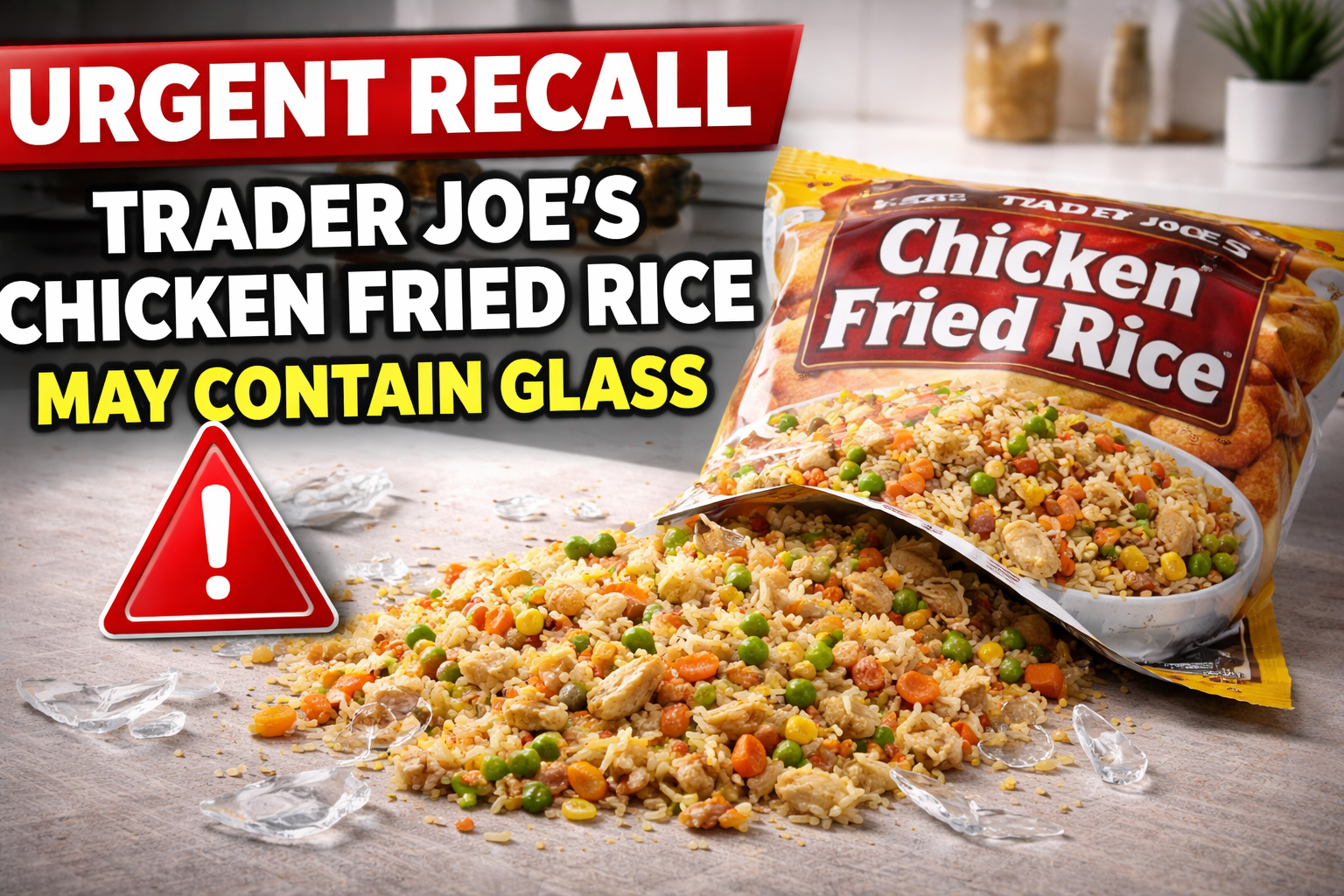
A major food safety recall has been issued affecting one of Trader Joe’s popular frozen products. This recall is based on a safety alert from the United States Department of Agriculture’s Food Safety and Inspection Service (FSIS) and involves millions of pounds of frozen chicken fried rice that may contain pieces of glass. The recall covers products sold in the United States and has prompted urgent warnings to consumers to check their freezers for the affected items.
The recalled product is Trader Joe’s Chicken Fried Rice, a frozen ready to cook meal containing stir fried rice, vegetables, seasoned chicken meat and eggs. According to the FSIS, this product may contain small fragments of glass that could potentially injure consumers. The recall was initiated after four customers reported finding glass in the fried rice, though at the time of this writing no injuries have been confirmed.
The recall is extensive and covers products produced between September 8, 2025 and November 17, 2025. Packages impacted by the recall display best by dates from September 8, 2026 through November 17, 2026 and bear establishment number P‑18356 inside the official United States Department of Agriculture mark of inspection.
This recall was announced by the FSIS on February 19, 2026 and has been widely reported by national news outlets. It is classified as a significant public health alert due to the risk that glass can pose if inadvertently consumed.
The recall covers an estimated 3.3 million pounds of frozen chicken fried rice products sold under the Trader Joe’s brand in the United States. In addition, similar products made by the same manufacturer were also recalled in Canada under the Ajinomoto brand name “Yakitori Chicken with Japanese‑Style Fried Rice.” While the Canadian product is not sold in the United States, it is part of the wider recall.
The frozen Trader Joe’s item came in 20‑ounce plastic bags and was shipped to Trader Joe’s stores nationwide. Customers who have purchased this item are advised not to eat it. Instead, the FSIS recommends that consumers throw it away or return it to the store for a refund or store credit.
Important identifying details for recalled products include:
These products were sold nationwide in the United States and are no longer displayed on store shelves. However, because frozen foods can remain in freezers for long periods, safety officials are concerned that consumers may still have affected items in their homes.
Glass contamination in food is a serious public health concern. If glass fragments are present in a product and are accidentally consumed, they can cause a range of injuries. Physical contaminants like glass can lead to broken teeth, cuts in the mouth or throat and even internal injuries if the glass passes through the digestive tract. These outcomes can require medical attention and, in severe cases, surgical intervention.
Although no injuries have been reported so far, the USDA and health experts describe this as a Class 1 recall, which is the most serious type that indicates a reasonable probability that consuming the product will cause adverse health consequences.
Recalls of this magnitude often draw consumer attention and media coverage because they involve products distributed across a wide geographic area and in high volumes. As one of the Trader Joe’s freezer staples, the Chicken Fried Rice meal is commonly purchased by households seeking convenient prepared meals. The potential for contamination with glass elevates the health risk and prompts a broad consumer warning.
If you purchased Trader Joe’s Chicken Fried Rice, you should take the following steps immediately:
For additional questions or concerns, consumers can contact the manufacturer, Ajinomoto Foods North America, at 855‑742‑5011 or via email at customercare@ajinomotofoods.com. The USDA Meat and Poultry Hotline is also available at 888‑674‑6854, and complaints can be submitted online.
The Food Safety and Inspection Service operates under the USDA and is responsible for ensuring that meat, poultry and egg products sold in the United States are safe, wholesome and correctly labeled. The FSIS oversees recalls when products are found to pose health risks, conducts investigations and issues public notices to inform consumers and retailers.
When the FSIS becomes aware of potential contamination, it collaborates with manufacturers to pull products from the supply chain and advise the public. In this case, the recall was triggered by consumer complaints reported to the manufacturer and communicated to the FSIS.
Consumers play an important role in food safety by reporting any unusual findings or illnesses associated with food consumption. Public reporting allows agencies to act quickly and helps prevent further risk to the wider population.
Food recalls are not uncommon, especially for frozen prepared foods that are produced in large batches. They can be triggered by a range of issues, including contamination by foreign materials, allergens not listed on labels, microbial contamination or packaging defects. What makes this recall especially concerning is the potential for physical harm from glass fragments.
Staying up to date with recall announcements helps you take swift action to protect your family’s health. Many consumers rely on official government sources or reputable news outlets to learn about recalls and recommended responses. Government agencies such as the USDA and the Food and Drug Administration (FDA) maintain online databases where recall information is regularly posted and updated.
Trader Joe’s Chicken Fried Rice is now part of a broad food safety recall that affects millions of products. If you or your household purchased this item, it is essential to check your freezer and dispose of or return the product immediately. Although no injuries have yet been reported, glass contamination can pose serious health risks. Keeping up with recall notices and acting quickly can help ensure your safety and peace of mind.
This blog is provided for informational and educational purposes only. It does not constitute medical, legal or professional advice. You should consult a qualified health professional for personalised guidance related to food safety or medical concerns. Product information and recall details are subject to change.

Most Accurate Healthcare AI designed for everything from admin workflows to clinical decision support.