
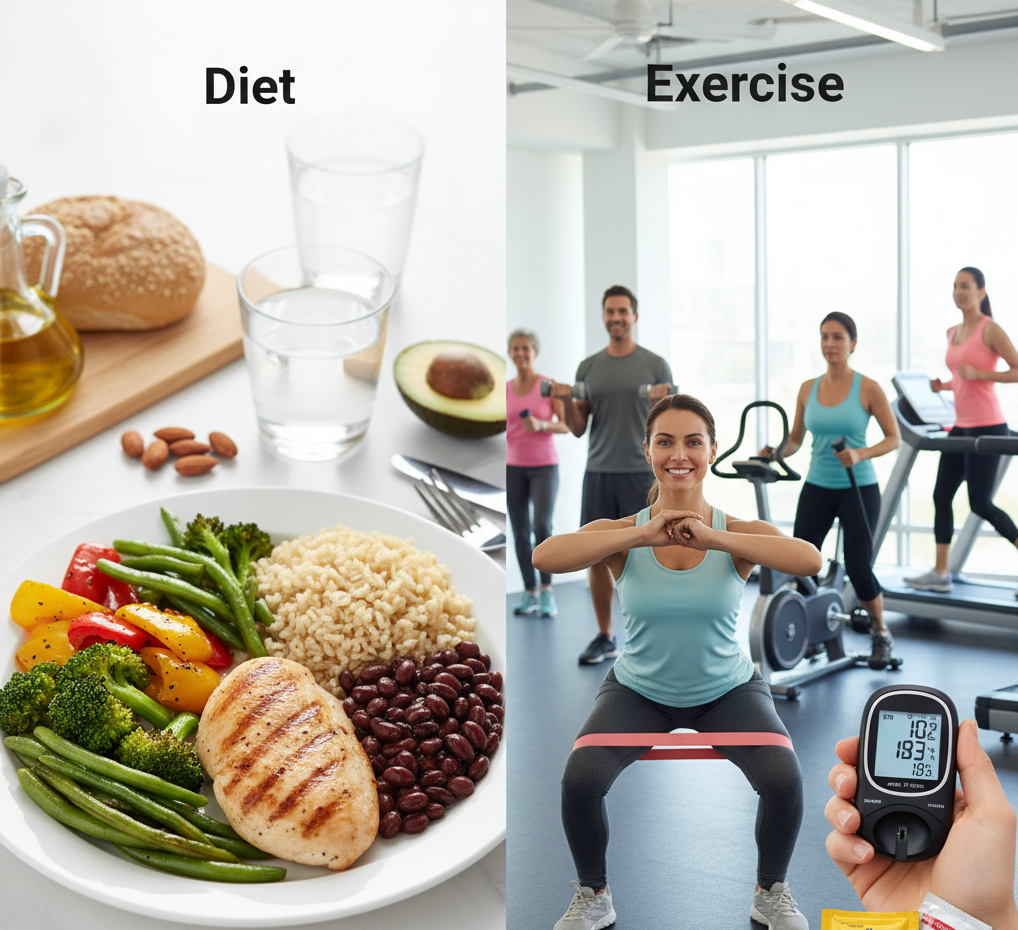
Thriving with Diabetes: Your Essential Guide to Diet and Exercise
Living with diabetes doesn't mean living a life of restriction—it means living a life of smart choices! Diet and exercise are the two most powerful tools you have to manage your blood sugar, boost your energy, and reduce your risk of complications.
Here is your straightforward guide to maximizing the benefits of what you eat and how you move.
The Diabetes-Friendly Diet: Fueling Your Body Wisely
The goal of a diabetes diet is not to eliminate carbs, but to choose the right kind and keep portion sizes consistent.
1. Focus on Fiber-Rich Carbs
Fiber slows down sugar absorption, which helps prevent blood sugar spikes.
- Go For: Complex Carbohydrates (whole grains like brown rice, oats, quinoa, whole-wheat bread).
- Limit/Avoid: Simple/Refined Carbohydrates (white bread, sugary drinks, pastries, white pasta).
2. Prioritize Lean Protein and Healthy Fats
These nutrients keep you feeling full and have a minimal impact on blood sugar.
- Lean Proteins: Chicken breast, fish, beans, lentils, tofu, and low-fat dairy.
- Healthy Fats: Avocados, nuts, seeds, and olive oil.
3. Be a Vegetable Champion
Fill at least half your plate with non-starchy vegetables at every meal. They are packed with nutrients and have very few carbohydrates.
- Examples: Broccoli, spinach, peppers, asparagus, and green beans.
Quick Tip: The Plate Method Imagine your plate divided: Half filled with non-starchy vegetables, one-quarter with lean protein, and one-quarter with complex carbohydrates. This simple visual guide can transform your meals!
Getting Active: The Power of Exercise
Physical activity makes your body more sensitive to insulin, which helps lower blood sugar levels. Plus, it’s great for your heart and mood!
1. Aim for Aerobic Exercise (Cardio)
Try to get at least 150 minutes of moderate aerobic activity per week.
- What is "Moderate"? Activities where you can talk, but you can't sing.
- Examples: Brisk walking, cycling, swimming, dancing, or light jogging.
2. Don't Skip Strength Training
Strength training builds muscle mass, and muscle is key for absorbing glucose from the blood.
- Aim for: At least two sessions per week on non-consecutive days.
- Examples: Lifting light weights, using resistance bands, or bodyweight exercises (like squats and push-ups).
3. Monitor Your Blood Sugar
Exercise is fantastic, but it can affect your blood sugar, sometimes causing it to drop too low (hypoglycemia) or, less commonly, spike too high.
- Always check your glucose before and after a new or intense workout.
- Keep a fast-acting carb source (like glucose tablets or juice) on hand, just in case.
Important Safety Note: Always talk to your healthcare provider or a certified diabetes educator before starting any new diet or exercise regimen. They can help you create a plan that is safe and effective for your specific needs and medications.
Your Next Step
Take a look at your schedule this week and commit to one small change. Will you add a side of broccoli to dinner tonight, or commit to a 15-minute walk tomorrow morning? Small steps lead to big results!