Thoracic Outlet Syndrome: Causes, Symptoms, Diagnosis, and Treatment
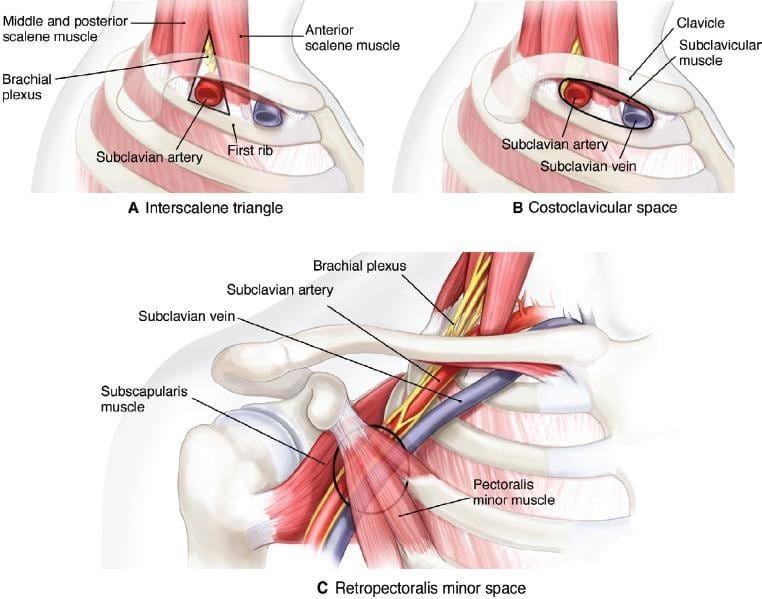
Thoracic outlet syndrome (TOS) is a nonspecific diagnosis representing many conditions that involve the compression of the neurovascular structures that pass through the thoracic outlet. Thoracic outlet is a triangular space bordered by first rib, scalene muscles, and the clavicle. TOS was first reported by Rogers in 1949 and more precisely characterized by Rob and Standeven in 1958.
How common is TOS?
Several variants of thoracic outlet syndrome (TOS) exist, with neurogenic thoracic outlet syndrome being the most prevalent by far, accounting for over 90% of all cases. TOS is more prevalent in females and those with poor muscle development, poor posture, or both. Due to the general nature of symptoms, the true prevalence of TOS is hard to determine. Its estimated incidence is anywhere between 3 to 80 cases per 1000 population. [1]
What are the types of TOS?
- Neurogenic TOS occurs when the nerves leading from the neck to the arm (the brachial plexus) are compressed.
- Venous TOS occurs when a vein (subclavian vein) is compressed, leading to upper body thrombosis. Five percent of cases are venous.
- Arterial TOS occurs when an artery (subclavian artery) is compressed and accounts for 1 percent of cases.
What causes TOS?
Causes of TOS can be either:
- CONGENITAL
- Between 1 and 3 percent of the population has a cervical rib, which may grow on one or both sides, and may reach down to attach to the first rib or may not be fully formed. Having a cervical rib increases the chance of nerve or blood vessel compression between the rib or its muscles and ligamentous connections sharing this small space. Many people with a cervical rib never know it, because the bone is often tiny and isn’t noticed, even in X-rays.
- Some people may have an extra or aberrant scalene muscle (an inner muscle of the neck) or an abnormal first rib or clavicle (collarbone). Any of these abnormal formations can compress blood vessels or nerves.
OR
- ACQUIRED
- Whiplash: Arm and hand symptoms that persist long after a whiplash injury may be a sign of thoracic outlet syndrome.
- Bodybuilding: Built-up muscles in the neck may grow too large and compress nerves or the subclavian vessels.
- Obesity: As with extra muscle mass, extra fat in the neck may compress nerves or subclavian vessels.
- Tumours around the base of neck: On rare occasions, a tumour may be the cause of the compression e.g. Pancoast Tumours. [2]
Repetitive movements or sustained postures: People who take up swimming, baseball or painting, or who work as hairstylists, auto mechanics or other jobs that require raised arms may develop thoracic outlet syndrome.
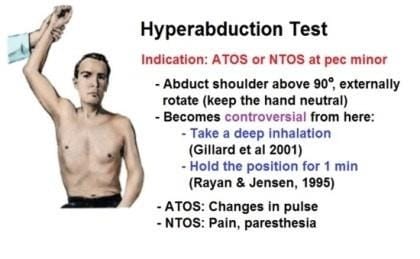
What are the symptoms of TOS?
Thoracic outlet syndrome symptoms affect your upper body (neck, upper chest, shoulder, arm or hand), typically on one side. Symptoms depend on the type of TOS which may present with:
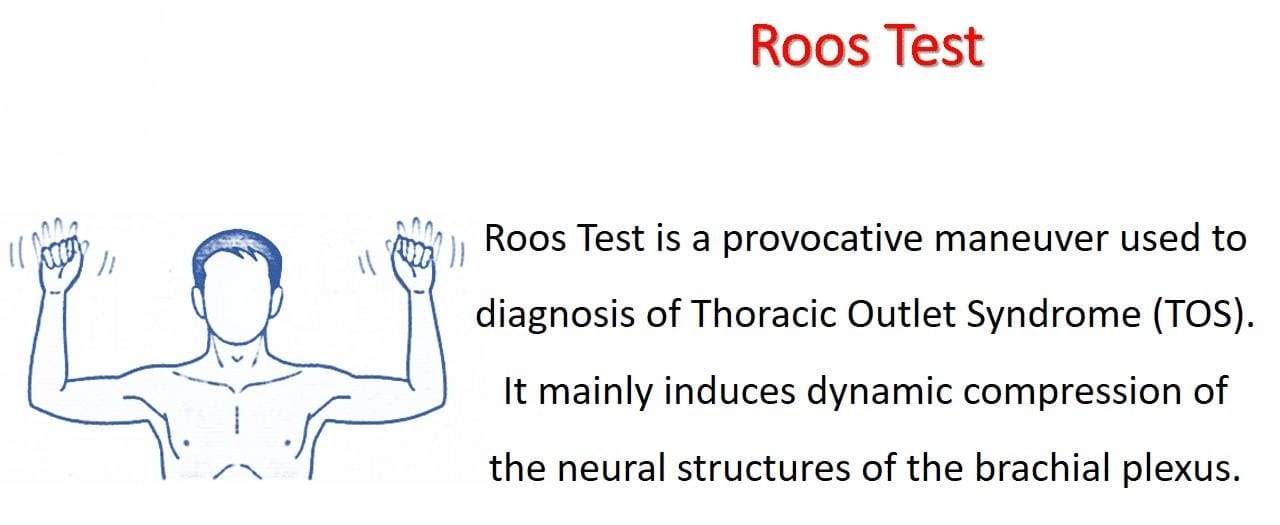
- Pain, which may worsen when you lift your arms.
- Tingling or “pins and needles.”
- Numbness
- Weakness
- Swelling or heaviness
- Skin colour changes (skin that looks pale or blue)
- Skin that feels cool to the touch.
- Slow healing sores on the fingers
How is TOS diagnosed?
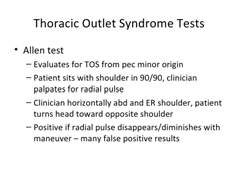
Physical exam, special bed-side tests and imaging can help confirm the diagnosis. The doctor may also require some cardiac tests to rule out heart conditions.
- Blood tests
- Chest X-ray
- Computed tomography (CT) of the chest and/or spine.
- Electromyography (EMG)
- Magnetic resonance angiography (MRA) of your blood vessels
- Magnetic resonance imaging (MRI) of the chest and/or spine.
- Nerve conduction study. [3]
How is TOS treated?
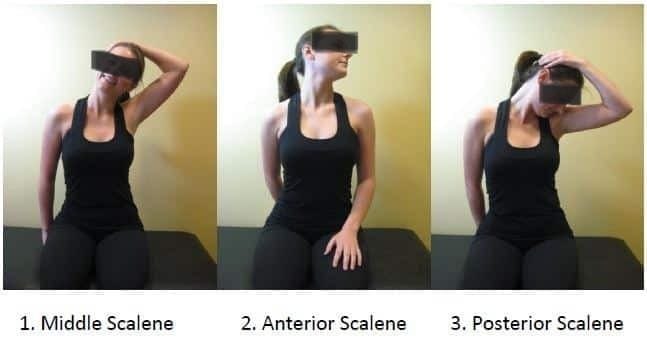
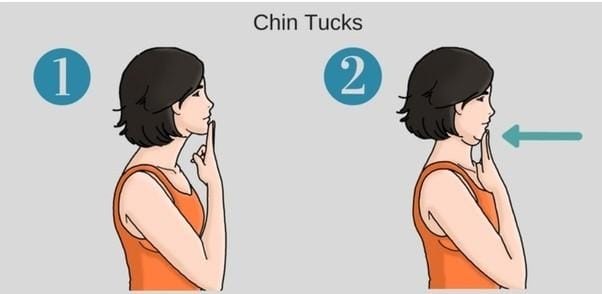
For neurogenic TOS, exercises are given to stretch the neck and shoulder muscles to open the thoracic outlet and improve range of movements. Strengthening the muscles to correct posture can help maintain the improved outcomes.
Anti-inflammatory medicines and muscle relaxants may help reduce pain and swelling. For vascular TOS, thrombolytics and anti-coagulants maybe prescribed to prevent blood clots.
Localised injections of botox or steroids maybe used to treat neurogenic TOS to reduce pain.
SURGERY
Surgery is opted if conservative treatments are ineffective and if symptoms worsen. The procedure is also called thoracic outlet decompression which is done using several different approaches. These approaches involve removing a muscle and a part of the first rib to relieve compression. You also may need surgery to repair damaged blood vessels. [4]