
The Thyroid Gland: Structure, Function, and Disorders
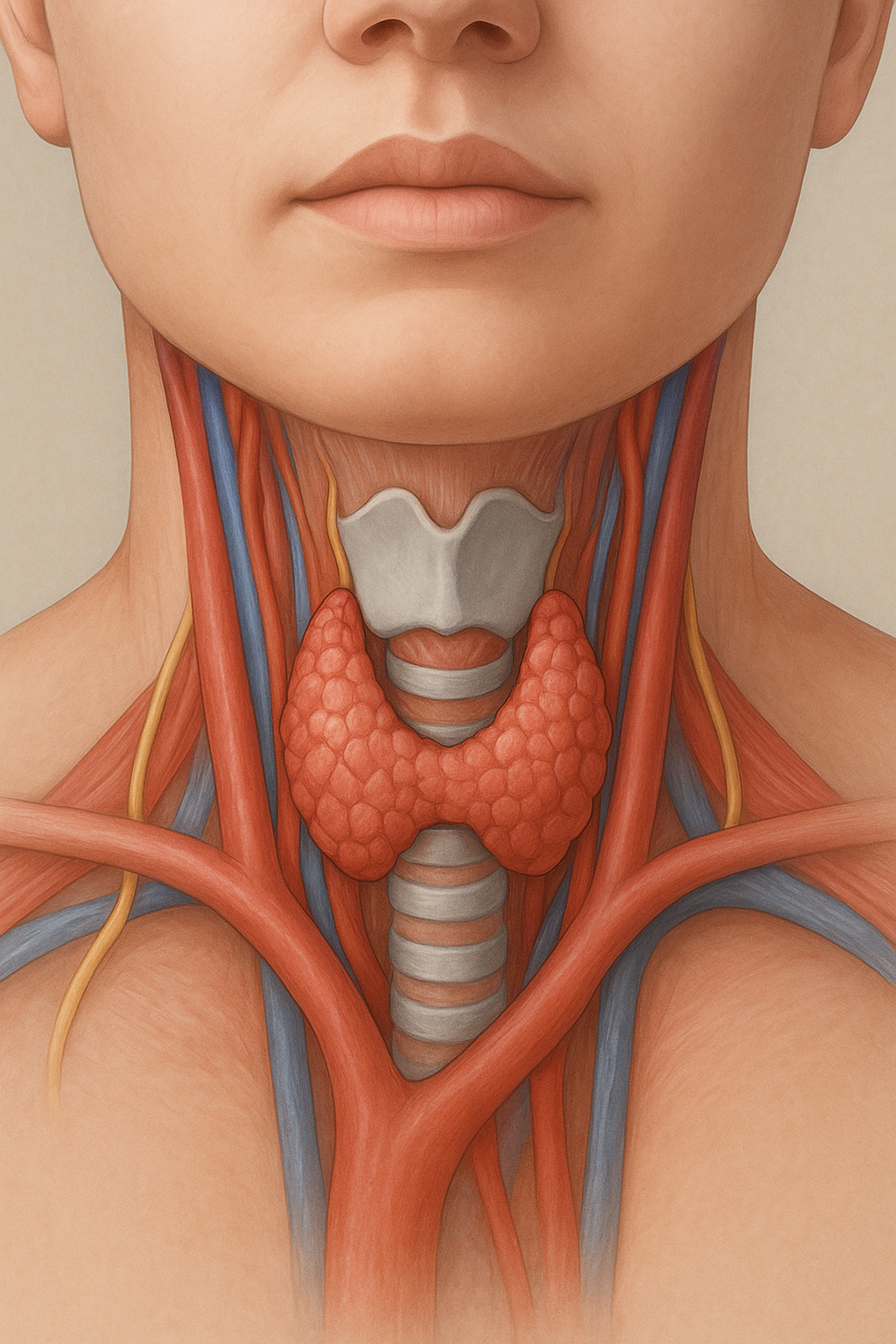
The thyroid gland is a small, butterfly-shaped endocrine organ located at the front of the neck, just below the Adam’s apple. Despite its modest size, the thyroid plays an essential role in regulating metabolism, growth, and development throughout the body. It produces hormones that influence nearly every organ system, from the heart and brain to muscles and skin. Disruptions in thyroid function can cause a wide range of health problems, making it one of the most clinically significant glands in the human body.
Anatomy and Physiology of the Thyroid
The thyroid gland consists of two lobes—right and left—connected by a thin bridge of tissue known as the isthmus. It lies on either side of the trachea and is richly supplied with blood vessels, reflecting its importance in endocrine regulation. The gland is composed primarily of spherical structures called follicles, which are lined with follicular cells. These cells are responsible for synthesizing and secreting the thyroid hormones thyroxine (T4) and triiodothyronine (T3).
Inside each follicle is a protein-rich fluid called colloid, which contains thyroglobulin, a precursor molecule that stores iodine and forms the basis for thyroid hormone synthesis. Iodine, an essential trace element obtained from the diet, is actively transported into the thyroid gland and incorporated into thyroglobulin to produce T3 and T4.
Hormones of the Thyroid
The thyroid primarily secretes T4, which contains four iodine atoms, and smaller amounts of T3, which has three iodine atoms. Although T4 is produced in larger quantities, T3 is the more biologically active form of the hormone. In most tissues, T4 is converted to T3 by enzymes known as deiodinases, ensuring that the body has sufficient active hormone where it is needed.
Thyroid hormones play a vital role in regulating metabolism, body temperature, growth, and development. They influence the rate at which cells use oxygen and produce energy, control protein synthesis, and affect carbohydrate and fat metabolism. In infants and children, thyroid hormones are crucial for brain development and growth; deficiencies during early life can lead to intellectual disabilities and stunted growth.
Regulation of Thyroid Function
Thyroid hormone production is controlled by a feedback loop involving the hypothalamus and the pituitary gland, often referred to as the hypothalamic-pituitary-thyroid (HPT) axis. The hypothalamus secretes thyrotropin-releasing hormone (TRH), which stimulates the pituitary gland to release thyroid-stimulating hormone (TSH). TSH then acts on the thyroid gland to promote the uptake of iodine, the synthesis of thyroglobulin, and the release of T3 and T4 into the bloodstream.
When circulating levels of thyroid hormones are sufficient, they exert negative feedback on both the pituitary and hypothalamus to reduce TRH and TSH secretion, maintaining a stable hormonal balance. Any disruption in this feedback mechanism can result in either overproduction or underproduction of thyroid hormones.
Common Thyroid Disorders
Thyroid disorders are among the most common endocrine problems worldwide, affecting millions of people, particularly women. The most frequent conditions include hypothyroidism, hyperthyroidism, goiter, and thyroid cancer.
1. Hypothyroidism
Hypothyroidism occurs when the thyroid gland fails to produce enough hormones. It may be caused by autoimmune diseases such as Hashimoto’s thyroiditis, iodine deficiency, congenital defects, or surgical removal of the thyroid. Symptoms of hypothyroidism develop gradually and may include fatigue, weight gain, cold intolerance, dry skin, constipation, and depression. In severe cases, untreated hypothyroidism can lead to myxedema, a life-threatening condition characterized by severe metabolic slowing and organ failure.
Diagnosis typically involves measuring serum TSH and free T4 levels. In primary hypothyroidism, TSH is elevated due to low thyroid hormone feedback. Treatment consists of levothyroxine, a synthetic form of T4, which restores normal hormone levels and alleviates symptoms.
2. Hyperthyroidism
Hyperthyroidism refers to excessive production of thyroid hormones, leading to an accelerated metabolism. The most common cause is Graves’ disease, an autoimmune disorder in which antibodies stimulate the TSH receptor, causing continuous hormone release. Other causes include toxic multinodular goiter and thyroid adenomas.
Symptoms of hyperthyroidism include weight loss, heat intolerance, anxiety, palpitations, tremors, and increased appetite. The eyes may become prominent, a condition known as exophthalmos, particularly in Graves’ disease. Diagnosis is confirmed by measuring low TSH levels with elevated T3 and T4.
Treatment options include antithyroid medications (such as methimazole or propylthiouracil), radioactive iodine therapy, or surgical removal of part or all of the thyroid gland. Beta-blockers are often used to manage symptoms like rapid heart rate and tremors.
3. Goiter
A goiter is an abnormal enlargement of the thyroid gland. It can occur in both hypo- and hyperthyroid states or even when thyroid hormone levels are normal (euthyroid goiter). The most common cause worldwide is iodine deficiency, particularly in areas where the mineral is lacking in the diet. In such cases, low iodine intake leads to increased TSH secretion, which stimulates the gland to enlarge in an attempt to trap more iodine.
Goiters can sometimes cause difficulty swallowing or breathing if they become very large. Treatment depends on the underlying cause and may include iodine supplementation, thyroid hormone therapy, or surgery.
4. Thyroid Cancer
Although relatively rare, thyroid cancer is the most common endocrine malignancy. It arises from different types of thyroid cells, leading to subtypes such as papillary, follicular, medullary, and anaplastic carcinoma. Papillary carcinoma is the most common and has an excellent prognosis, while anaplastic carcinoma is aggressive and often fatal.
Thyroid cancer often presents as a painless lump or nodule in the neck. Diagnosis involves imaging studies such as ultrasound and fine-needle aspiration biopsy. Treatment usually includes surgical removal of the thyroid (thyroidectomy), followed by radioactive iodine therapy and lifelong thyroid hormone replacement.
Diagnosis of Thyroid Disorders
Modern diagnostic tools allow clinicians to detect thyroid dysfunction early. Blood tests measuring TSH, free T4, and free T3 are the primary screening methods. In addition, thyroid antibodies can help identify autoimmune thyroid diseases such as Hashimoto’s or Graves’ disease. Imaging techniques like ultrasound, radioactive iodine uptake scans, and CT or MRI are used to evaluate thyroid nodules and structural abnormalities.
The Role of Iodine
Iodine is indispensable for thyroid hormone synthesis. The recommended daily intake for adults is about 150 micrograms. In many regions, iodine is added to table salt to prevent deficiency. Both insufficient and excessive iodine intake can cause thyroid dysfunction, highlighting the need for balanced consumption.
The Thyroid and Lifespan Changes
Thyroid function changes subtly throughout life. In newborns, thyroid hormones are essential for brain development and skeletal growth. During adolescence, they support growth spurts and metabolic regulation. In pregnancy, maternal thyroid hormones are crucial for fetal neural development. In older adults, thyroid hormone levels may naturally decline, sometimes mimicking symptoms of depression or fatigue.
Advances in Research and Treatment
Ongoing research into thyroid function continues to refine understanding and management of thyroid disorders. Molecular testing has improved cancer diagnosis, while personalized medicine and targeted therapies are emerging for advanced thyroid cancers. In addition, scientists are exploring regenerative therapies and the potential use of stem cells to restore thyroid function in cases of irreversible damage.
Conclusion
The thyroid gland, though small, has a profound impact on human health and metabolism. Its hormones regulate vital physiological processes, from growth and energy production to temperature control and brain development. Understanding the intricate balance of the thyroid system and recognizing the signs of dysfunction are essential for maintaining overall well-being. With modern diagnostic techniques and effective treatments, most thyroid disorders can be successfully managed, allowing individuals to lead healthy, productive lives.