
The Crucial Role of Vitamin D in Hair Health, Dandruff, and Psoriasis
Vitamin D, often referred to as the “sunshine vitamin,” plays a vital role in maintaining overall health. While it is widely known for supporting bone strength and immune function, its influence extends far beyond that, particularly in skin and hair health. Research increasingly points to the critical role vitamin D plays in hair growth, managing dandruff, and controlling inflammatory skin conditions like psoriasis. Understanding this connection can empower individuals to take proactive steps toward healthier hair and skin.
Understanding Vitamin D and Its Functions
Vitamin D is a fat-soluble vitamin that the body synthesizes primarily through exposure to sunlight, specifically ultraviolet B (UVB) rays. It is also found in certain foods, such as fatty fish, fortified dairy products, and eggs. Once synthesized or ingested, vitamin D undergoes conversion in the liver and kidneys to its active form, calcitriol, which regulates calcium and phosphorus metabolism essential for bone health.
Beyond bone health, vitamin D functions as a hormone in various biological processes. It helps modulate the immune system, reduce inflammation, and influence cell growth and differentiation. These roles are particularly relevant when it comes to skin and hair, as both involve rapidly dividing cells that respond to hormonal and immune signals.
Vitamin D and Hair Loss
Hair loss is a multifactorial issue influenced by genetics, hormonal changes, stress, nutrition, and immune function. Vitamin D deficiency has been increasingly linked to several forms of hair loss, including androgenetic alopecia (pattern baldness) and alopecia areata, an autoimmune condition that causes patchy hair loss.
Mechanisms Linking Vitamin D to Hair Growth
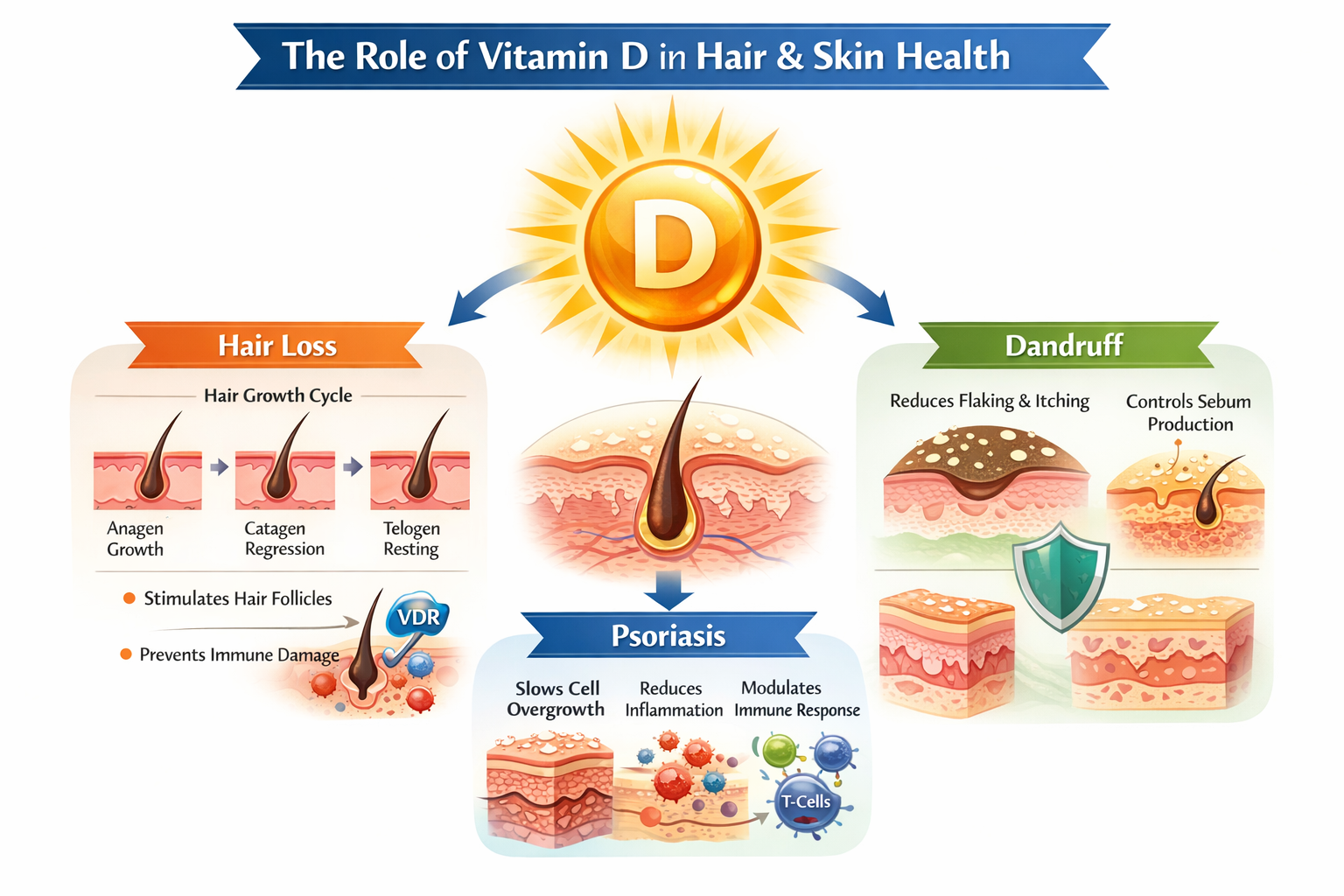
- Hair Follicle Cycling: Hair follicles go through three stages—anagen (growth), catagen (regression), and telogen (resting). Vitamin D plays a crucial role in promoting the transition from telogen to anagen, thereby encouraging active hair growth. Low vitamin D levels can disrupt this cycle, leading to increased hair shedding.
- Vitamin D Receptors (VDR): Hair follicles express vitamin D receptors. These receptors are essential for initiating the growth phase. Studies in animal models have shown that mice lacking VDR experience stunted hair growth, highlighting the direct role of vitamin D signaling in follicle function.
- Immune Modulation: In conditions like alopecia areata, the immune system mistakenly attacks hair follicles. Vitamin D’s immune-regulating properties help reduce inflammation and prevent immune-mediated follicle damage.
Research Evidence
Multiple studies have confirmed that individuals with hair loss often exhibit lower serum vitamin D levels compared to healthy controls. Supplementation in deficient individuals has shown improvements in hair density and regrowth, although results can vary depending on the underlying cause and severity of deficiency.
Vitamin D and Dandruff
Dandruff is a common scalp condition characterized by flaking and itching. While it is often associated with fungal overgrowth (Malassezia species) and seborrheic dermatitis, vitamin D also contributes significantly to scalp health.
How Vitamin D Influences Scalp Health
- Sebum Regulation: Vitamin D helps regulate sebum production. Sebum imbalance can create a favorable environment for fungal proliferation, exacerbating dandruff.
- Skin Barrier Integrity: Adequate vitamin D strengthens the epidermal barrier, preventing excessive dryness or irritation that often accompanies dandruff.
- Anti-Inflammatory Properties: Dandruff involves inflammatory processes in the scalp. Vitamin D reduces pro-inflammatory cytokines, potentially decreasing redness, itching, and flaking.
Clinical Insights
Individuals with chronic dandruff or seborrheic dermatitis often have lower vitamin D levels. Topical vitamin D analogs have also been explored as adjunct treatments, showing potential in reducing scalp inflammation and flakiness.
Vitamin D and Psoriasis
Psoriasis is an autoimmune skin disorder characterized by rapid skin cell turnover, resulting in thick, scaly plaques. Vitamin D has been extensively studied for its therapeutic potential in psoriasis management.
Mechanisms of Action
- Regulating Keratinocyte Proliferation: Psoriasis occurs due to overproduction of keratinocytes, the primary cells in the epidermis. Vitamin D inhibits excessive keratinocyte proliferation, promoting more normal skin turnover.
- Immune Modulation: Psoriasis is driven by immune dysregulation, particularly involving T-cells. Vitamin D modulates T-cell activity, reducing inflammation and plaque formation.
- Barrier Function Improvement: Vitamin D enhances skin barrier integrity, reducing transepidermal water loss and preventing secondary infections.
Therapeutic Use
Topical vitamin D analogs, such as calcipotriol, are widely used in psoriasis treatment. These compounds mimic the action of active vitamin D, helping to normalize skin cell growth and reduce inflammation. Oral vitamin D supplementation may also support overall immune balance, particularly in individuals with documented deficiency.
Signs of Vitamin D Deficiency
Vitamin D deficiency is surprisingly common due to limited sun exposure, dietary inadequacy, and certain medical conditions. Symptoms affecting hair and skin may include:
- Thinning hair or hair shedding
- Dry, flaky scalp
- Slow wound healing
- Increased susceptibility to infections
- Psoriasis flare-ups
Blood tests measuring serum 25-hydroxyvitamin D levels are the standard method for assessing deficiency. Optimal levels generally range from 30 to 50 ng/mL, though this can vary depending on guidelines.
Sources of Vitamin D
Ensuring adequate vitamin D levels can significantly improve hair and skin health. Key sources include:
- Sunlight: 10–30 minutes of midday sun exposure several times per week is often sufficient, though this varies with skin tone, geographic location, and season.
- Dietary Sources: Fatty fish (salmon, mackerel, sardines), egg yolks, fortified dairy products, and mushrooms are natural dietary sources.
- Supplements: Vitamin D3 (cholecalciferol) supplements are commonly recommended for those with low levels. Dosage should be personalized based on deficiency severity and monitored by a healthcare professional.
Lifestyle Tips for Supporting Vitamin D Levels
- Spend short periods outdoors in direct sunlight.
- Incorporate vitamin D-rich foods into daily meals.
- Consider supplementation if dietary intake and sunlight exposure are insufficient.
- Maintain a balanced diet with adequate magnesium and vitamin K2, which help vitamin D metabolism.
Conclusion
Vitamin D is far more than a nutrient for bones—it is a crucial player in maintaining hair and skin health. Its role in hair follicle cycling, immune regulation, and skin cell turnover makes it an essential factor in addressing hair loss, dandruff, and psoriasis. Maintaining optimal vitamin D levels through sunlight, diet, and supplementation can enhance hair density, reduce scalp inflammation, and improve psoriasis symptoms. For those struggling with hair or skin conditions, evaluating vitamin D status can be a pivotal step toward better health.
By understanding the intricate link between vitamin D and dermatological health, individuals can take proactive measures to prevent deficiency and support hair and skin vitality. In the ever-growing landscape of wellness, this humble “sunshine vitamin” continues to prove that small changes in lifestyle and nutrition can yield visible, life-enhancing results.