
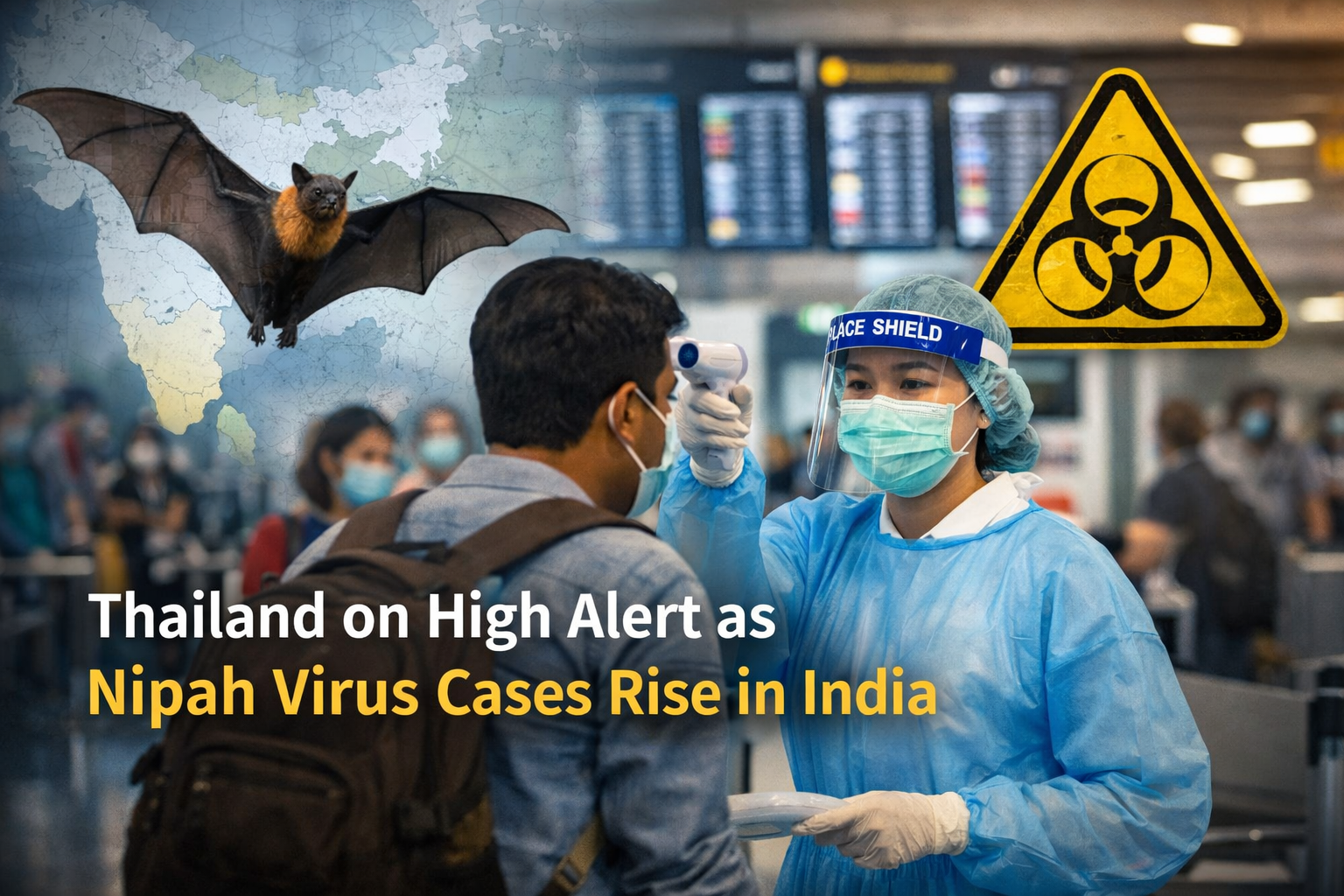
Thailand on High Alert as Nipah Virus Cases Rise in India
Thailand ready to test Nipah virus as India reports new cases
Thailand has intensified its public health preparedness following reports of new Nipah virus cases in India, signaling heightened regional vigilance against one of the world’s most dangerous zoonotic diseases. Although no Nipah virus infections have been confirmed in Thailand, authorities say the country is fully prepared to detect and respond swiftly should a suspected case emerge.
The Department of Medical Sciences in Thailand confirmed it is ready to conduct Nipah virus testing using the Real time RT PCR method, an internationally accepted diagnostic standard known for its high sensitivity and accuracy. This move comes amid growing concern after Indian health authorities reported several confirmed cases in West Bengal, reigniting fears of cross border transmission in South and Southeast Asia.
What is Nipah virus and why it is a global concern
Nipah virus is a zoonotic pathogen, meaning it spreads from animals to humans. It was first identified in 1998 during an outbreak among pig farmers in the village of Nipah in Malaysia, which later gave the virus its name. Since then, Nipah virus outbreaks have occurred sporadically in South and Southeast Asia, most notably in Bangladesh and India.
The virus is carried primarily by fruit bats, also known as flying foxes, which serve as its natural reservoir. Humans can become infected through direct contact with bat saliva, urine, or feces, or by consuming food products contaminated by bats, such as partially eaten fruit or raw date palm sap. Transmission can also occur via intermediate animal hosts including pigs, horses, cats, goats, and sheep.
Human to human transmission is possible and has been documented in several outbreaks, particularly through close contact with bodily fluids like blood or saliva. This ability to spread between people, combined with its high fatality rate, makes Nipah virus a serious public health threat.
Current Nipah virus situation in India
Recent reports from India indicate a rise in confirmed Nipah virus cases in West Bengal, prompting regional health agencies to enhance surveillance. Indian authorities have implemented containment measures including contact tracing, isolation of patients, and public health advisories to limit further spread.
While outbreaks in India have historically remained localized, the risk of international spread remains a concern due to increased travel and regional connectivity. Thailand, which receives millions of visitors from South Asia each year, has responded by stepping up airport screening and disease monitoring systems.
Thailand’s diagnostic readiness and laboratory capacity
Dr. Sarawut Boonsuk, Director General of the Department of Medical Sciences, stated that Thailand’s Public Health Science Research Institute, which serves as the national reference laboratory, is fully equipped to diagnose Nipah virus infections.
The Real time RT PCR testing method allows laboratories to detect Nipah virus genetic material with high precision. According to the department, the test can be performed on a variety of clinical samples including blood, nasal and throat swabs, cerebrospinal fluid, and urine. At least two types of samples are required per patient to ensure accuracy.
One of the key strengths of Thailand’s preparedness is the rapid turnaround time. Test results can be delivered within eight hours of sample receipt, enabling swift public health responses such as patient isolation, contact tracing, and outbreak containment.
Hospitals nationwide have been instructed to send samples from patients with high fever and a history of animal exposure, consumption of potentially contaminated fruit, or recent travel from affected areas to designated testing centers.
Airport screening and revived disease control measures
In addition to laboratory readiness, Thailand has reactivated disease control strategies previously used during the COVID 19 pandemic. Airports across the country, particularly those receiving flights from India, have intensified health screening procedures.
Passengers arriving from high risk countries are screened for fever and symptoms associated with Nipah virus infection. Thai Prime Minister Anutin Charnvirakul emphasized that these measures are precautionary and do not indicate the presence of the virus within Thailand.
Officials have reassured the public that Nipah virus is not an airborne disease. Transmission requires close contact with infected bodily fluids, meaning the general population is not at risk through casual contact or shared public spaces.
Why there is no Nipah virus vaccine or cure yet
One of the most alarming aspects of Nipah virus is the absence of an approved vaccine or specific antiviral treatment. Current medical care for infected patients is supportive, focusing on managing symptoms such as fever, respiratory distress, and neurological complications.
The lack of a vaccine is due in part to the virus’s sporadic outbreak pattern, which makes large scale clinical trials difficult. Research into vaccine candidates is ongoing, supported by organizations such as the World Health Organization and the Coalition for Epidemic Preparedness Innovations.
Because treatment options are limited, prevention remains the most effective strategy for reducing Nipah virus risk.
Public health advice and prevention measures
Thai health authorities are urging the public to remain calm while adopting sensible preventive measures. Key recommendations include avoiding contact with wild animals, particularly fruit bats, and livestock that may have been exposed to bats.
People are advised to wash fruits thoroughly before consumption and to avoid eating fruit that appears partially eaten or damaged. Good hand hygiene is essential, especially after handling animals, raw meat, or animal carcasses.
Healthcare workers are also being reminded to use appropriate personal protective equipment when caring for patients with suspected infections and to follow strict infection control protocols.
Hospital preparedness and national coordination
Dr. Nattapong Wongwiwat, Director General of Medical Science, confirmed that hospitals under the department’s jurisdiction have been instructed to prepare isolation wards, medical supplies, and trained personnel in the event of a Nipah virus case.
Specialist teams from both internal and external agencies have been tasked with developing national clinical and laboratory guidelines. These protocols are intended to ensure a coordinated response across Thailand’s healthcare system, maximizing patient safety and reducing the risk of transmission.
Regional vigilance without public panic
Thai officials have emphasized that while preparedness is essential, there is no need for panic. The government has committed to transparent communication and timely updates should the situation change.
The public is encouraged to continue daily life as normal while following standard hygiene practices such as frequent handwashing, eating freshly cooked food, and avoiding unnecessary physical contact with sick individuals.
Thailand’s proactive stance reflects lessons learned from past outbreaks and highlights the importance of early detection, strong laboratory capacity, and public cooperation in managing emerging infectious diseases.
Conclusion
The resurgence of Nipah virus cases in India has served as a reminder of the ongoing threat posed by zoonotic diseases in an interconnected world. Thailand’s readiness to test, monitor, and respond demonstrates a strong public health infrastructure built on experience and vigilance.
While no Nipah virus cases have been reported in Thailand, continued surveillance, public awareness, and regional cooperation remain crucial. As global health experts warn of increasing spillover events from animals to humans, preparedness rather than panic is the key to protecting public health.
Sources
- Outbreak News Today, Robert Herriman, January 25, 2026
- Bangkok Post, “Covid control measures revived amid Nipah virus scare”, January 25, 2026
- Thailand Department of Medical Sciences official statements
- World Health Organization Nipah virus fact sheets
Disclaimer
This article is for informational and educational purposes only. It does not constitute medical advice, diagnosis, or treatment. Readers should consult qualified healthcare professionals or official public health authorities for guidance related to Nipah virus or any other medical condition. Information is based on publicly available reports at the time of writing and may evolve as new data emerges.