
Symptoms of CONCUSSION
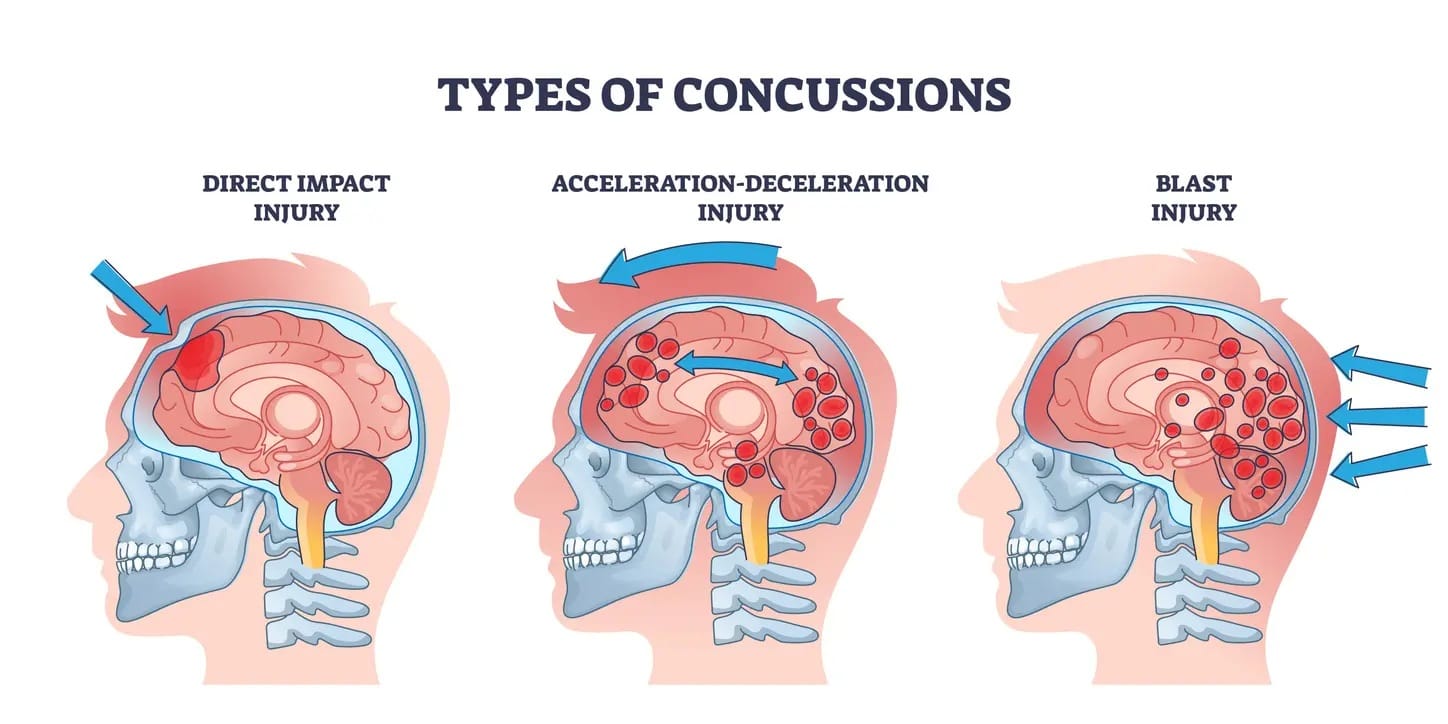
A concussion is a head injury that happens when your brain moves or twists inside your skull. Concussions are a type of traumatic brain injury. Effects are often short term and can include headaches and trouble with concentration, memory, balance, mood and sleep.
A blow or a jolt to the head can cause a concussion or traumatic brain injury (TBI). An injury to another part of the body that transmits force to the head can also result in concussion. The injury may keep the brain from working normally. Symptoms of a concussion may last less than a day or may linger for months, or longer.
Falls are the most common cause of concussions. Concussions also are common among athletes who play a contact sport, such as American football or soccer. Most people recover fully after a concussion.
Experts estimate that between 1 and 3 million people visit the emergency room with a concussion in the U.S. each year. They’re especially common in young athletes. In fact, concussions account for more than half of ER visits for kids ages 5 to 18 every year in the U.S. (https://my.clevelandclinic.org/health/diseases/15038-concussion)
What are the symptoms of concussion?
The symptoms of a concussion can be subtle and may not occur right away. Symptoms can last for days, weeks or even longer.
Common symptoms after a mild traumatic brain injury are headache, confusion and loss of memory, known as amnesia. The amnesia usually involves forgetting the event that caused the concussion.
Physical symptoms of a concussion may include:
- Headache, neck pain
- Ringing in the ears
- Nausea
- Vomiting
- Fatigue or drowsiness
- Blurry vision or double vision
- Confusion or feeling as if in a fog.
- Amnesia surrounding the event.
- Loss of balance or dizziness
Immediately after concussion, your doctor may observe the following symptoms:
- Temporary loss of consciousness, though this doesn't always occur.
- Slurred speech
- Dazed appearance
- Forgetfulness, such as asking the same question over and over.
Delayed response to questions

Late symptoms may include:
- Trouble with concentration and memory
- Irritability and other personality changes
- Sensitivity to light and noise
- Trouble with sleep
- Feeling emotional or depressed
- Changes in taste and smell
Symptoms of concussion in children may include:
- Dazed appearance
- Listlessness and tiring easily.
- Irritability and crankiness
- Loss of balance and unsteady walking
- Excessive crying
- Change in eating or sleeping patterns.
- Lack of interest in favourite toys
- Vomiting
(https://www.mayoclinic.org/diseases-conditions/concussion/symptoms-causes/syc-20355594)
When to visit ER or call 911?
Call 911 or go to the emergency room if you or someone else loses consciousness after a blow to the head or if any of these occur:
- Headache that gets worse and doesn`t go away.
- Weakness numbness or decreased coordination
- Persistent or worsening nausea or vomiting
- Slurred speech
- Feeling very confused
- Feeling very drowsy
- Convulsions or seizures
- Unusual bleeding e.g. nasal bleeding
(https://www.hopkinsmedicine.org/health/conditions-and-diseases/concussion)