
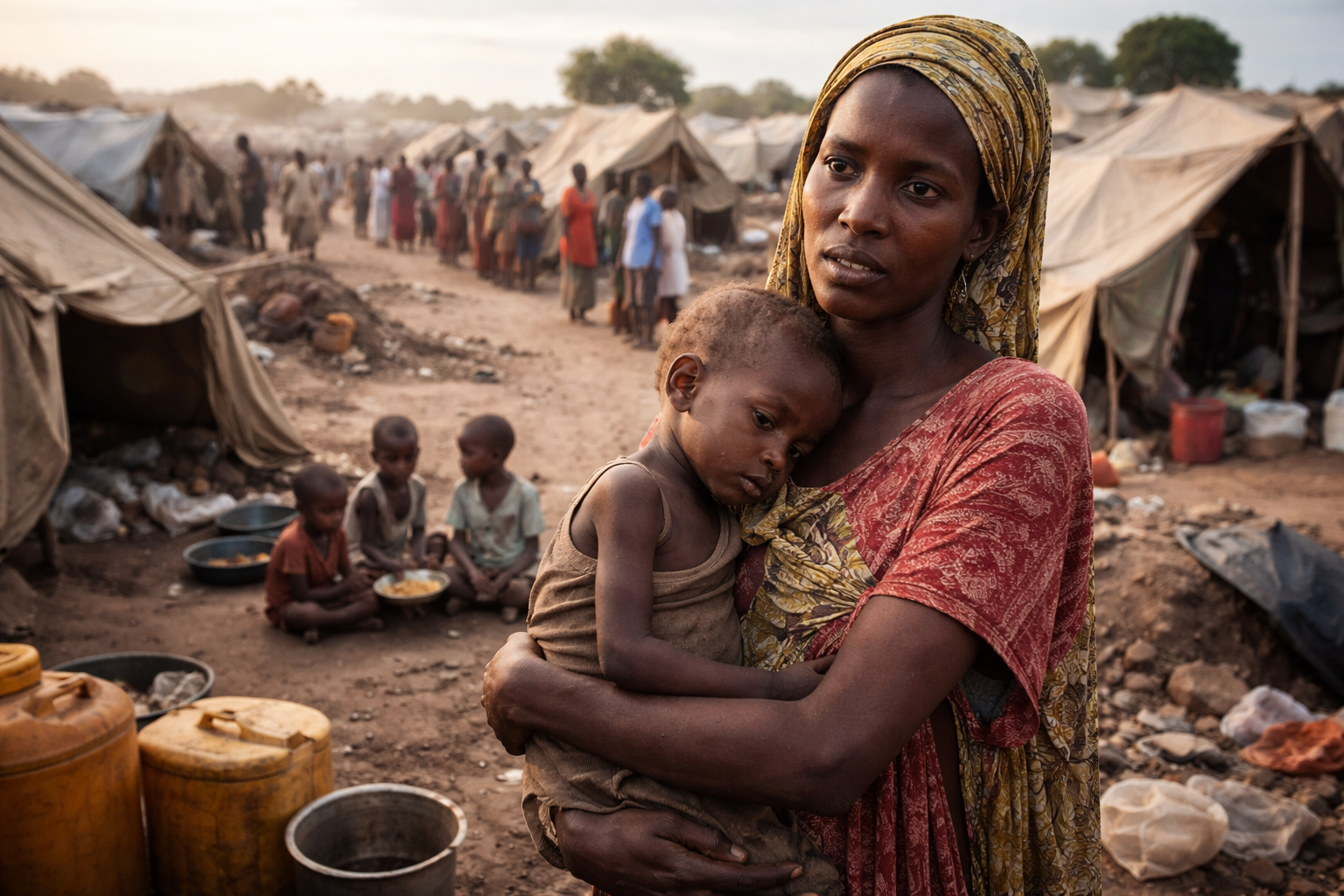
Slashed Foreign Aid Could Cost Millions of Lives by 2030, Global Health Experts Warn
Global foreign aid cuts are no longer an abstract budget debate. According to new research published in The Lancet, ongoing reductions in international development funding could result in an estimated 9.4 million additional deaths worldwide by the year 2030. If aid declines accelerate, the death toll could climb even higher, reaching more than 22 million lives lost.
The findings raise urgent questions about the future of global health, humanitarian assistance, and decades of progress made against infectious diseases, malnutrition, and preventable deaths in low income countries. As wealthy nations redirect funding toward domestic priorities, experts warn that fragile health systems in the world’s poorest regions may be approaching a breaking point.
The Scale of Global Foreign Aid Cuts
Foreign aid plays a critical role in supporting health care systems, food programs, and disease prevention efforts in developing countries. For years, the United States, the United Kingdom, Germany, France, and other high-income nations have been the backbone of international development assistance.
That support is now shrinking.
According to projections from the Organization for Economic Co operation and Development, global aid is expected to fall between 9 percent and 17 percent in 2025 alone. This comes after a 9 percent drop the year before. Sub-Saharan Africa, one of the regions most dependent on foreign assistance, could experience funding cuts of up to 28 percent.
The United States historically provided roughly 30 percent of all global development aid, more than double the contribution of the next largest donor. However, the closure of the U.S. Agency for International Development and the shift toward an “America First” global health strategy have dramatically altered the funding landscape.
European donors have also reduced contributions as they focus on domestic economic pressures, defense spending, and political priorities at home.
What the Lancet Study Found
The study, led by researchers at the Barcelona Institute for Global Health, modeled the long-term impact of continued aid reductions across multiple scenarios. If global development assistance continues to decline by an average of 10.6 percent annually after 2025, researchers estimate an additional 9.4 million deaths by 2030.
Under a more severe scenario, where cuts deepen or remain unchecked, the death toll could reach as high as 22.6 million.
These deaths would not be evenly distributed. The highest burden would fall on low and middle income countries already struggling with limited health infrastructure, food insecurity, and infectious disease outbreaks.
Diseases and Conditions Most at Risk
Foreign aid funding supports a wide range of life-saving interventions. When that funding disappears, the consequences ripple quickly through entire health systems.
HIV, Tuberculosis, and Malaria
Decades of international investment have dramatically reduced deaths from HIV AIDS, tuberculosis, and malaria. Programs funded by foreign aid supply antiretroviral medications, diagnostic testing, mosquito control measures, and treatment for drug resistant infections.
Health experts warn that even brief interruptions in these programs can reverse progress. Patients who lose access to HIV medication may develop drug resistance. Tuberculosis outbreaks can spread rapidly without consistent treatment. Malaria deaths can surge when prevention programs are scaled back.
Maternal and Child Health
Foreign aid also plays a crucial role in maternal and child health services, including prenatal care, vaccinations, skilled birth attendance, and nutrition programs.
Cuts to these services increase the risk of pregnancy-related deaths, infant mortality, and long-term developmental problems in children. In regions already facing food shortages, reduced aid can quickly translate into higher rates of malnutrition and stunting.
Hunger and Food Insecurity
Aid-funded food programs and soup kitchens are already being shut down in some countries. Reduced food rations and limited access to nutritional supplements increase the risk of starvation, especially among children, the elderly, and people with chronic illnesses.
Hunger weakens immune systems, making populations more vulnerable to infectious diseases and reducing their ability to recover from illness.
Fragile Health Systems at Risk of Collapse
Davide Rasella, a researcher involved in the study, emphasized that health care systems in low-income countries operate as interconnected networks. Removing even one component can cause widespread failure.
When clinics lose funding, health workers may go unpaid or leave their jobs. Medicine supply chains break down. Preventive care disappears. Patients delay treatment until conditions become severe or fatal.
According to Rasella, these systems are not easily restarted once they collapse. Rebuilding infrastructure, retraining staff, and restoring trust in health services can take years.
Political Pushback and Policy Debate
Not all policymakers agree with the conclusions of the study. The U.S. State Department has criticized what it describes as outdated thinking around global development, arguing that traditional aid models create dependency and inefficiency.
Officials have stated that the United States will continue to provide foreign aid, but in what they call a more effective and accountable manner. Secretary of State Marco Rubio has publicly rejected the idea that U.S. funding cuts directly cause humanitarian disasters, emphasizing national responsibility and self-sufficiency.
Supporters of aid reform argue that money should be spent more strategically, with greater emphasis on local governance, economic development, and long-term sustainability.
Critics counter that sudden and large scale cuts do not allow time for transition. Instead, they dismantle existing systems faster than alternatives can be built.
Congressional Efforts and Funding Uncertainty
In the United States, Congress is considering legislation that would allocate $9.4 billion for international health programs in 2026. While this amount is more than double what the administration initially requested, it remains below funding levels from previous years, which reached $12.4 billion in both 2024 and 2025.
This uncertainty makes long-term planning difficult for humanitarian organizations, health ministries, and global partnerships. Programs that rely on multi year funding commitments face constant risk of disruption.
Long-Term Consequences Beyond Mortality
The impact of foreign aid cuts extends beyond immediate death counts. Reduced funding can slow economic growth, destabilize regions, and increase migration pressures.
Health crises can undermine education systems, reduce workforce productivity, and strain already limited government resources. In some cases, weakened health systems contribute to political instability and conflict.
Global health experts warn that infectious diseases do not respect borders. Outbreaks that begin in underfunded health systems can spread internationally, increasing risks for all countries.
A Humanitarian and Moral Debate
Dr. Rajiv Shah, president of the Rockefeller Foundation and former head of USAID, described the current situation as the dismantling of a global architecture built over 80 years. He warned that the consequences represent not only a policy failure but a moral one.
For many experts, the debate is not about whether aid systems need improvement. It is about whether the world is willing to accept millions of preventable deaths as a cost of political and budgetary decisions.
What Comes Next
Predicting the future of global foreign aid remains difficult. Funding priorities continue to shift, and geopolitical tensions complicate international cooperation.
However, researchers behind the Lancet study stress that the projected death toll is not inevitable. Restoring or stabilizing aid funding could save millions of lives and preserve hard-won gains against disease and hunger.
They emphasize that timely action matters. Delays in funding restoration mean more systems collapse and more lives are lost.
As Shah noted, moments like this serve as a signal. When action is taken, lives are saved. When it is not, the consequences are measured in human suffering on a massive scale.
Conclusion
The warning from global health researchers is clear. Continued cuts to foreign aid could trigger a humanitarian crisis of historic proportions. While debates over efficiency, dependency, and national priorities are valid, the human cost of abrupt funding reductions cannot be ignored.
Foreign aid has helped build health systems, prevent disease, and reduce poverty for decades. Undoing that progress risks millions of lives by the end of this decade.
The choices made today will shape global health outcomes for years to come.
Sources
The Lancet, Feb. 2, 2026
The Washington Post, Feb. 2, 2026
Disclaimer
This article is for informational and educational purposes only. Statistical data in medical and health-related articles describe population-level trends and do not apply to individual circumstances. Individual health outcomes may vary widely. This content is not intended as medical advice, diagnosis, or treatment. Always consult qualified healthcare professionals or relevant authorities for personalized guidance.