
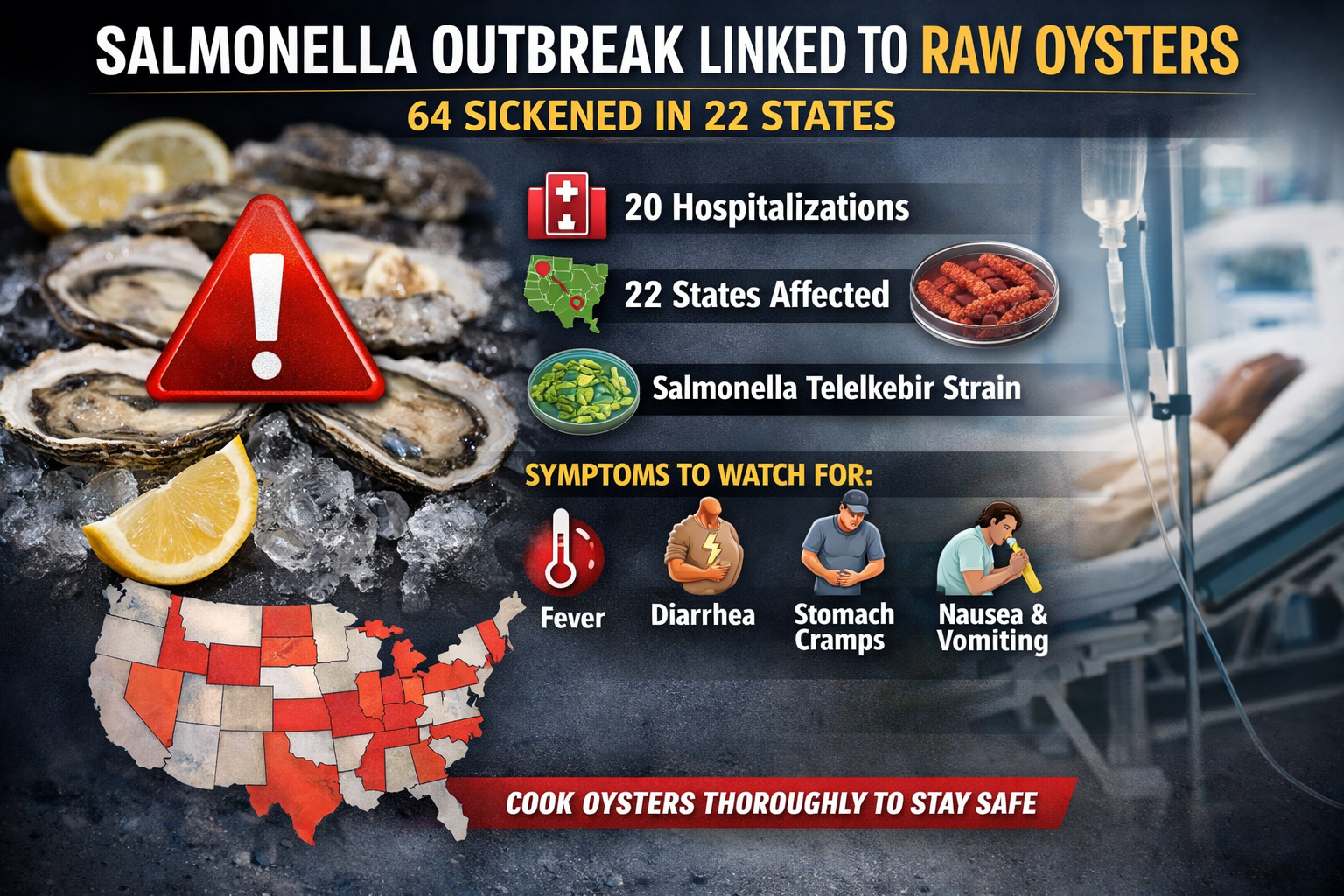
Salmonella Outbreak Linked to Raw Oysters Sickens 64 People in 22 States
Health officials warn of a Salmonella Telelkebir outbreak linked to raw oysters. 64 people across 22 states have fallen ill. Learn safety tips and precautions.
Health authorities are issuing warnings about a Salmonella outbreak connected to raw oysters that has affected 64 people across 22 states in the United States. This outbreak, caused by a rare strain known as Salmonella Telelkebir, has resulted in 20 hospitalizations, though no deaths have been reported. The Centers for Disease Control and Prevention (CDC) are leading the investigation in collaboration with the U.S. Food and Drug Administration (FDA) and state health departments.
Understanding Salmonella Telelkebir
Salmonella is a type of bacteria that can cause foodborne illness, commonly resulting in diarrhea, fever, abdominal cramps, and vomiting. While many strains of Salmonella exist, the Telelkebir strain is particularly rare. Most healthy individuals recover without medical intervention, but vulnerable populations, including young children, older adults, and people with weakened immune systems, may experience severe illness.
The CDC reports that this strain has been detected through PulseNet, a national network for tracking foodborne illness. Genetic testing of the samples from infected patients indicates a high likelihood that all infections stemmed from the same contaminated food source. Importantly, lab testing also revealed no evidence of antibiotic resistance in 59 patients tested, which is a positive sign for treatment options.
Timeline and Spread of the Outbreak
According to CDC data, illnesses associated with this outbreak occurred between June 21 and November 28, 2025. The infections have been reported in 22 states, with Pennsylvania reporting the highest number at 10 cases. New York reported seven cases, while New Jersey and Virginia each reported six. The wide geographic spread suggests that contaminated oysters were distributed across multiple regions.
Interviews with patients revealed that 74 percent of them had eaten raw oysters shortly before developing symptoms. In comparison, only 1.6 percent of the general population typically consumes raw oysters, strongly indicating that oysters are the likely source of this outbreak.
Demographics of Those Affected
The affected individuals range in age from 10 to 76, with a median age of 52. Approximately 65 percent of the patients were male. Among those who reported their race and ethnicity, 85 percent identified as white, 12 percent as Black, and 2 percent as Native Hawaiian or other Pacific Islander. These figures help public health officials understand the demographics impacted by the outbreak, though the bacteria can infect anyone who consumes contaminated seafood.
Health Risks and Symptoms
Salmonella infection can manifest in several ways. Common symptoms include:
- Diarrhea, sometimes severe
- Fever
- Stomach cramps
- Nausea and vomiting
Symptoms usually begin six hours to six days after consuming contaminated food. While most healthy individuals recover within a week, severe cases may require hospitalization due to dehydration or complications. The CDC urges anyone experiencing these symptoms after eating raw or undercooked seafood to seek medical care immediately. Reporting the illness to local health authorities is also essential to help track the outbreak.
Recommendations for Safe Seafood Consumption
Health officials stress that raw oysters can harbor harmful bacteria throughout the year. To reduce the risk of foodborne illness, the CDC and FDA recommend:
- Cooking oysters thoroughly: Cooking seafood to an internal temperature of 145°F (63°C) kills harmful bacteria.
- Avoiding cross-contamination: Keep raw seafood separate from ready-to-eat foods, and clean utensils, cutting boards, and surfaces after handling raw oysters.
- Following proper storage guidelines: Refrigerate oysters at 40°F (4°C) or lower and consume them as soon as possible after purchase.
- Being cautious during peak seasons: Even outside typical “oyster seasons,” contamination is possible, so precautions should always be observed.
Consumers should also stay informed about recalls and public health alerts related to seafood. Regularly checking the FDA and CDC websites can help ensure you are aware of any contaminated products on the market.
Investigative Efforts and Tracking
The CDC is working with the FDA and state health departments to trace the source of the contaminated oysters. The use of PulseNet has allowed scientists to confirm that the genetic fingerprint of the bacteria matches across multiple patients, indicating a single source of contamination.
Investigations into the exact origin of the oysters are ongoing. Factors such as harvesting locations, handling practices, and storage conditions will be examined. Officials note that the reported cases likely underestimate the true extent of the outbreak, as many people recover without medical care, and recent cases may not yet appear in official counts.
Implications for the Seafood Industry
Salmonella outbreaks tied to seafood have significant public health and economic impacts. Restaurants, seafood distributors, and oyster farms may face increased scrutiny and potential financial losses. Public health authorities emphasize that adherence to proper handling, storage, and cooking guidelines is crucial to prevent future outbreaks.
The FDA regularly monitors seafood safety through inspections, sampling, and recalls when necessary. Consumers are encouraged to purchase oysters from reputable sources and verify that seafood has been handled according to safety standards.
Public Health Guidance
The CDC recommends that anyone who has eaten raw oysters recently monitor for symptoms. If any signs of illness appear, individuals should:
- Seek medical attention promptly
- Stay hydrated
- Avoid preparing food for others until fully recovered
Public health communication is key during outbreaks to prevent further spread. By following official guidelines, the risk of illness can be minimized.
Key Takeaways
- A Salmonella Telelkebir outbreak linked to raw oysters has affected 64 people in 22 states.
- Twenty people have been hospitalized, and no deaths have been reported.
- Most cases involved adults with a median age of 52, and 65 percent were male.
- Raw oysters are the likely source, as 74 percent of interviewed patients reported eating them before falling ill.
- Cooking seafood thoroughly and practicing good food hygiene can prevent infection.
- Public health agencies continue to investigate the origin of the contamination.
Sources
- U.S. Centers for Disease Control and Prevention, notice, Dec. 23, 2025
- People, Dec. 26, 2025
Disclaimer
The information provided in this article is for educational purposes only. It does not constitute medical advice, diagnosis, or treatment. Individual circumstances may vary. Always consult a qualified healthcare provider for personal medical concerns.