
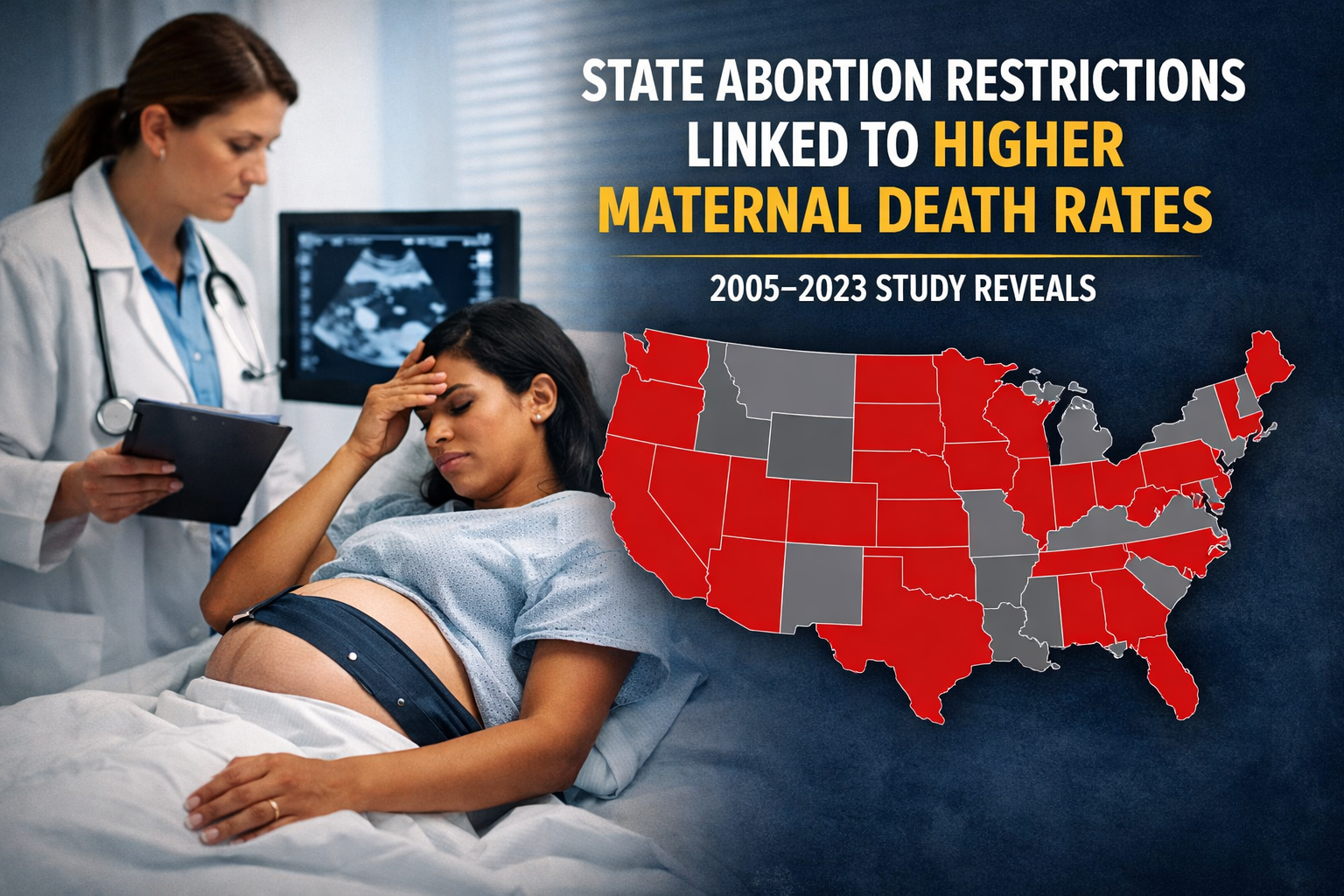
Rising Maternal Mortality Associated With State Abortion Restrictions, Research Shows
Maternal mortality in the United States remains a serious public health challenge. New research presented at the Society for Maternal-Fetal Medicine 2026 Pregnancy Meeting highlights a concerning trend. The study found that an increasing number of state level abortion restrictions is associated with higher rates of maternal deaths between 2005 and 2023. These findings add important evidence to ongoing discussions about reproductive health policy and maternal health outcomes.
Study Overview and Data Analysis
Researchers from Columbia University conducted a comprehensive review of national mortality data using the U.S. Centers for Disease Control and Prevention National Vital Statistics System. The team analyzed 22,380 deaths among pregnant and postpartum individuals ages 15 to 54 over an 18 year period. All deaths occurring during pregnancy or within 42 days after the end of pregnancy were included in the review.
The objective was to evaluate whether the enactment of common state abortion restrictions was associated with changes in maternal mortality rates. Investigators examined 10 of the most common types of abortion laws and compared death rates in each state before and after these restrictions were implemented.
Increase in Abortion Restrictions Over Time
Between 2005 and 2023, the number of abortion restrictions at the state level increased significantly. In 2005, states had an average of 2.7 abortion restrictions. By 2023, that average had risen to 5.3 restrictions per state. Only five states were considered most restrictive in 2005, defined as having five or more abortion restrictions. By 2023, 27 states fell into that category.
This rapid expansion of legislative restrictions occurred during a period when the United States was already experiencing higher maternal mortality rates compared with many other high income countries. Researchers sought to determine whether there was a measurable association between these policy changes and maternal deaths.
Key Findings on Maternal Mortality
The study found that states with five or more abortion restrictions had higher rates of maternal deaths from any cause compared with states that had fewer restrictions. The association extended beyond overall mortality. Higher rates of death related to cardiovascular disease and violence, including homicide and suicide, were also observed in states with more restrictive abortion laws.
Six of the 10 abortion restrictions analyzed were associated with increased maternal mortality. These included:
- Bans on Medicaid funding for abortion
- Affordable Care Act Marketplace insurance coverage bans
- Mandated waiting periods
- Ultrasound requirements
- Second trimester abortion bans
- Biased counseling laws
Each of these policies can create delays, financial barriers, or additional procedural requirements that may limit timely access to care. Delays in receiving medical care during pregnancy can increase the risk of complications, particularly for individuals with underlying health conditions.
Association With Violent Deaths
The research also identified an association between certain abortion restrictions and increased violent deaths among pregnant and postpartum individuals. Four restrictions were linked to higher rates of homicide and suicide. These included Medicaid and ACA coverage bans, waiting periods, and physician only requirements for abortion services.
Violence and mental health challenges are recognized contributors to maternal mortality. Barriers to reproductive healthcare may compound stress, financial hardship, or exposure to unsafe environments. While the study does not prove direct causation, it highlights a significant pattern that warrants further investigation.
Cardiovascular Disease and Maternal Health
Cardiovascular disease remains one of the leading causes of pregnancy related death in the United States. The study found higher cardiovascular mortality rates in states with multiple abortion restrictions. Access to comprehensive reproductive healthcare plays a role in identifying and managing high risk pregnancies, including those complicated by hypertension, heart disease, or other chronic conditions.
Restrictions that limit insurance coverage or delay care may interfere with early detection and treatment of cardiovascular complications. This finding underscores the interconnected nature of reproductive health services and overall maternal wellbeing.
Broader Public Health Implications
The researchers emphasized that reproductive health policy cannot be separated from maternal health outcomes. When states adopt multiple abortion restrictions, the study observed measurable increases in deaths from any cause, cardiovascular disease, and violence among pregnant and postpartum individuals.
Maternal mortality is influenced by clinical care, socioeconomic factors, access to insurance, and social determinants of health. Policies that reduce access to comprehensive reproductive services may unintentionally affect these broader determinants.
It is important to note that the study identifies associations rather than direct causation. However, the consistency of the findings across multiple types of restrictions strengthens concerns that legislative environments can shape health outcomes.
Publication and Professional Context
The oral abstract titled State abortion restrictions and maternal deaths in the United States 2005 to 2023 was published in the February 2026 issue of PREGNANCY, the official peer reviewed medical journal of the Society for Maternal Fetal Medicine. Founded in 1977, SMFM represents more than 6,500 obstetricians with advanced training in high risk and complicated pregnancies. The organization promotes research, education, advocacy, and strategies to reduce disparities in maternal and fetal health.
As debates about reproductive rights continue nationwide, this research provides data driven insight into how abortion policy may intersect with maternal mortality trends. Healthcare professionals, policymakers, and public health leaders may use these findings to inform discussions about maternal health strategies and legislative decisions.
Looking Ahead
Reducing maternal mortality remains a national priority. Improving access to prenatal care, mental health support, cardiovascular screening, and comprehensive reproductive services is critical. Studies such as this one highlight the need for evidence based approaches that consider the full spectrum of factors influencing maternal outcomes.
Further research is needed to better understand the mechanisms linking abortion restrictions and maternal deaths. Long term data and additional analysis may clarify how policy changes affect healthcare delivery systems, insurance access, and patient decision making.
What remains clear is that maternal health is deeply connected to healthcare access and policy environments. As the United States continues to address its maternal mortality crisis, understanding these associations will be essential for developing effective solutions.
Source: Society for Maternal Fetal Medicine News Release, February 12, 2026.