
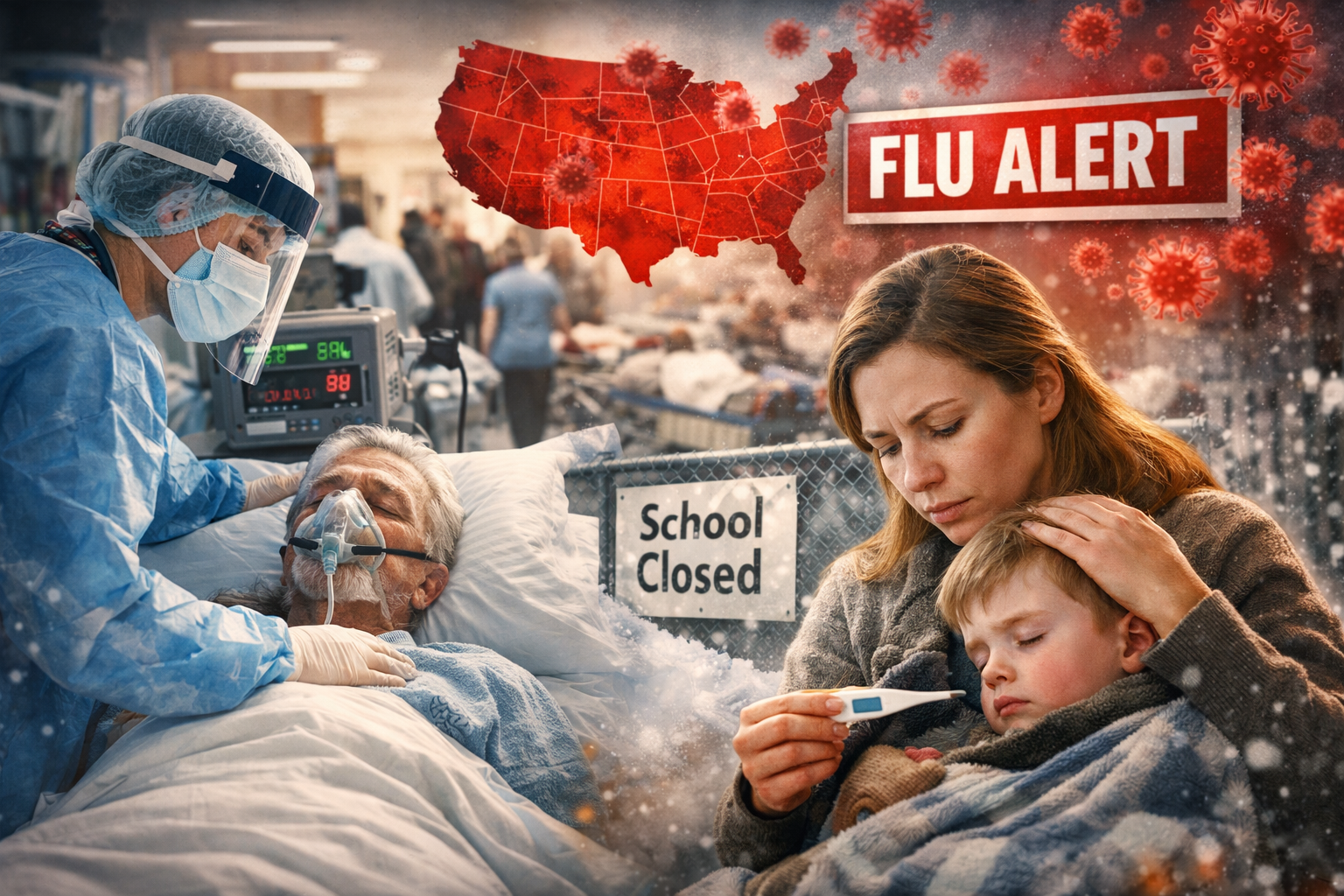
Record Flu Surge Sweeps the United States After the Holidays
A Nationwide Influenza Spike Raises Alarms Among Health Officials
The United States is experiencing one of its most intense flu seasons in decades, as a dramatic surge in influenza cases has followed the recent holiday period. Health authorities are warning that the virus is spreading rapidly across nearly every region of the country, overwhelming hospitals, disrupting schools, and placing vulnerable populations at heightened risk.
According to the latest data from the Centers for Disease Control and Prevention, millions of Americans were infected by late December, with tens of thousands requiring hospitalization. Tragically, thousands of flu-related deaths have already been recorded, including several involving children. The sharp rise in cases has prompted renewed calls for vaccination and preventive measures as experts caution that the peak of the season may not yet be over.
This unprecedented flu wave highlights the evolving nature of influenza viruses and the importance of public health preparedness in a post-pandemic era.
Flu Activity Reaches Widespread and Severe Levels
CDC surveillance reports indicate that flu activity is now classified as high or very high in more than half of U.S. jurisdictions. This marks a significant jump from the previous week and reflects a rapid acceleration of infections nationwide.
At least 7.5 million people have been sickened so far this season. Hospitalizations have surpassed 81,000 cases, straining healthcare systems that are still recovering from recent years of elevated demand. More than 3,100 deaths have been linked to influenza complications, underscoring the seriousness of the outbreak.
Health officials note that the speed and scale of this increase are unusual. While flu seasons typically intensify during winter, the current surge stands out for its early severity and broad geographic reach.
Northeast and Midwest Hit Especially Hard
Certain regions are bearing a disproportionate share of the burden. States in the Northeast and Midwest have reported some of the highest infection rates in the country.
New York State recorded approximately 71,000 flu cases in a single week in December. This represents the highest weekly total since the state began tracking influenza data in 2004. Hospitals across the state have reported crowded emergency departments and increased admissions for respiratory illness.
Massachusetts has also seen a dramatic rise, particularly in the Boston area, where reported flu cases more than doubled in a matter of weeks. Pediatric cases make up a significant portion of new infections, raising concerns among parents and school administrators.
In Minnesota, the outbreak became severe enough that at least one school district transitioned to remote learning shortly before winter break. Similar disruptions have been reported in other parts of the country, as administrators attempt to limit further spread among students and staff.
The Dominance of Influenza A H3N2
One of the most concerning aspects of this flu season is the dominance of a specific virus subtype. Influenza A H3N2 now accounts for nearly 92 percent of all flu samples analyzed by the CDC.
H3N2 is well known among epidemiologists for its association with more severe flu seasons. It tends to cause higher hospitalization rates and increased mortality, particularly among older adults and individuals with chronic health conditions.
Experts explain that this strain has undergone subtle genetic changes. These changes make it more difficult for immune systems to recognize and fight the virus, even among people who have been exposed to similar strains in the past.
Scientists stress that this type of viral evolution is normal, but it presents challenges for both immunity and vaccine design.
Why This Flu Season Feels Worse Than Usual
Several factors are contributing to the intensity of this year’s flu surge.
First, population immunity may be lower than expected. During the COVID-19 pandemic, flu transmission dropped significantly due to masking, social distancing, and reduced travel. While beneficial at the time, this also meant fewer people were exposed to influenza, leading to less natural immunity in subsequent years.
Second, vaccination rates have declined. Only about 130 million flu vaccine doses have been administered so far in the United States, a noticeable drop compared to previous seasons. Health officials worry that vaccine fatigue and misinformation may be discouraging people from getting their annual shot.
Third, increased holiday travel and large gatherings created ideal conditions for viral spread. Airports, family events, and indoor celebrations allowed influenza to move quickly from person to person across state lines.
Together, these factors have created a perfect storm for widespread transmission.
How Effective Is the Flu Vaccine This Year?
There have been concerns about how well this year’s flu vaccine matches the circulating H3N2 strain. While no vaccine can provide complete protection, experts emphasize that the current shot remains an essential defense.
Data from international studies, including research from the United Kingdom, suggest that even when the vaccine is not a perfect match, it significantly reduces the risk of severe illness. Vaccinated individuals are far less likely to require hospitalization or develop life-threatening complications.
Children, in particular, appear to benefit strongly from vaccination, with reduced severity and shorter illness duration. Older adults also see meaningful protection against severe outcomes, even if infection still occurs.
Health experts stress that the goal of vaccination is not just to prevent infection, but to lessen the impact of the disease on individuals and healthcare systems.
Pediatric Flu Deaths Raise Urgent Concerns
Among the most heartbreaking aspects of the current flu season is the number of pediatric deaths. At least eight children have died from flu-related complications so far, according to CDC data.
Children are especially vulnerable to influenza because their immune systems are still developing. In some cases, previously healthy children can become severely ill very quickly.
Doctors urge parents to take flu symptoms seriously and seek medical care if a child experiences high fever, difficulty breathing, persistent vomiting, or extreme fatigue. Early treatment can be lifesaving, particularly for high-risk children.
Vaccination remains the most effective way to protect children from severe flu outcomes.
Hospitals Face Rising Pressure
The surge in flu cases has placed renewed pressure on hospitals and emergency departments. Many facilities are seeing increased admissions for respiratory illness, often involving elderly patients and those with underlying conditions such as asthma, heart disease, or diabetes.
Healthcare workers report longer wait times and crowded wards, especially in regions experiencing peak transmission. Some hospitals have reinstated visitor restrictions or mask recommendations to reduce further spread within facilities.
Public health leaders warn that sustained pressure could affect care delivery if the trend continues through late winter.
Steps You Can Take to Protect Yourself and Others
Health authorities emphasize that individual actions still matter greatly in controlling the spread of influenza.
Key preventive steps include:
- Getting the flu vaccine as soon as possible, even if the season has already started
- Avoiding close contact with people who are sick
- Washing hands frequently with soap and water
- Using alcohol-based hand sanitizer when handwashing is not available
- Cleaning and disinfecting commonly touched surfaces
- Staying home when sick to prevent infecting others
For people at higher risk, including older adults, pregnant individuals, and those with chronic conditions, early antiviral treatment may be recommended. Consulting a healthcare provider promptly after symptom onset can reduce the severity and duration of illness.
What to Expect in the Coming Weeks
Flu seasons typically peak between December and February, but activity can remain elevated into early spring. Experts caution that while some regions may already be near their peak, others could still see rising case numbers.
Public health officials continue to monitor virus trends and encourage communities to remain vigilant. Increased vaccination coverage and responsible behavior could still blunt the impact of the season’s later stages.
The current surge serves as a reminder that influenza is not a minor illness. It remains a serious public health threat capable of causing widespread disruption and loss of life.
Final Thoughts
The post-holiday flu surge of 2026 stands as one of the most significant influenza outbreaks in recent memory. Driven by a dominant and aggressive virus strain, lower vaccination rates, and increased social interaction, the season has already taken a heavy toll across the United States.
Despite these challenges, proven tools remain available. Vaccination, early treatment, and basic hygiene practices can dramatically reduce risk. Health experts urge Americans not to underestimate the flu and to take action now to protect themselves, their families, and their communities.
As winter continues, staying informed and proactive could make the difference between a manageable illness and a serious medical emergency.