
Pulmonary Embolism: cause, symptoms, diagnosis, and treatment
A pulmonary embolism (PE) is a blood clot that develops in a blood vessel in the body (often in the leg). It then travels to a lung artery where it suddenly blocks blood flow.
A blood clot that forms in a blood vessel in one area of the body, breaks off, and travels to another area of the body in the blood is called an embolus. An embolus can lodge itself in a blood vessel. This can block the blood supply to a particular organ. This blockage of a blood vessel by an embolus is called an embolism. (https://www.hopkinsmedicine.org/health/conditions-and-diseases/pulmonary-embolism)
This condition is a medical emergency because, if not treated, it can damage lungs or cause heart failure. About 33% of people with a pulmonary embolism die before they get a diagnosis and treatment.
How common is PE?
Pulmonary embolism is one of the most common heart and blood vessel disease in the world. It ranks third behind heart attack and stroke. In the United States, about 900,000 people a year get a PE.
What are the symptoms of PE?
Some people may not experience symptoms of PE, which most will exhibit:
- Sudden shortness of breath — whether you’ve been active or at rest.
- Fast breathing.
- Unexplained sharp pain in your chest, arm, back, shoulder, neck or jaw. The pain may be similar to symptoms of a heart attack and can get worse when you take a breath.
- Cough with or without bloody mucus.
- Pale clammy or bluish skin.
- Rapid heartbeat or pulse.
- Excessive sweating.
- In some cases, feeling anxious, light headed, faint or passing out.
Wheezing.
What causes PE?
- Blood collecting or “pooling” in a certain part of your body (usually an arm or leg). Blood usually pools after long periods of inactivity, like after surgery, bed rest or a long flight or plane ride.
- Injury to a vein, like from a fracture or surgery (especially in your pelvis, hip, knee or leg).
- Another medical condition, like cardiovascular disease (including congestive heart failure, atrial fibrillation, heart attack or stroke).
- An increase or decrease in your blood’s clotting factors. Elevated clotting factors can occur with some types of cancer or in some people taking hormone replacement therapy or birth control pills. Abnormal or low clotting factors may also happen as a result of blood clotting disorders.
(https://my.clevelandclinic.org/health/diseases/17400-pulmonary-embolism)
What are the types of PE?
- Hemodynamically unstable PE, previously called massive or high-risk PE, is PE that results in hypotension as defined by systolic blood pressure <90 mm Hg or a drop in systolic blood pressure of ≥40 mm Hg from baseline or hypotension that requires vasopressors or inotropes. Patients with a hemodynamically unstable PE are more likely to die from obstructive shock (i.e., severe right ventricular failure).
- Hemodynamically stable PE is a spectrum ranging from small, mildly symptomatic, or asymptomatic PE to PEs that cause mild hypotension that stabilizes in response to fluid therapy or those that present with right ventricular dysfunction. (https://www.ncbi.nlm.nih.gov/books/NBK560551/)
What are the risk factors for PE?
- Genetic conditions that increase the risk of blood clot formation.
- Family history of blood clotting disorders.
- Surgery or injury (especially to the legs) or orthopedic surgery.
- Situations in which mobility is limited, such as extended bed rest, flying or riding long distances, or paralysis.
- Previous history of clots.
- Older age.
- Cancer and cancer therapy.
- Certain medical conditions, such as heart failure, chronic obstructive pulmonary disease (COPD), high blood pressure, stroke, and inflammatory bowel disease.
- Certain medicines, such birth control pills and estrogen replacement therapy.
- During and after pregnancy, including after caesarean section.
- Obesity.
- Enlarged veins in the legs (varicose veins).
- Cigarette smoking. (https://www.hopkinsmedicine.org/health/conditions-and-diseases/pulmonary-embolism)
How is PE diagnosed?
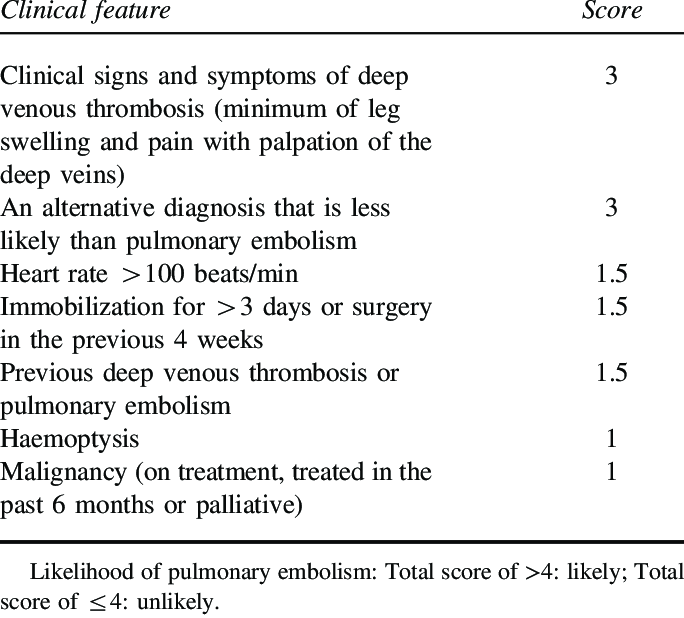
Subjective history and clinical examination often needs to be followed by tests to confirm the diagnosis of PE:
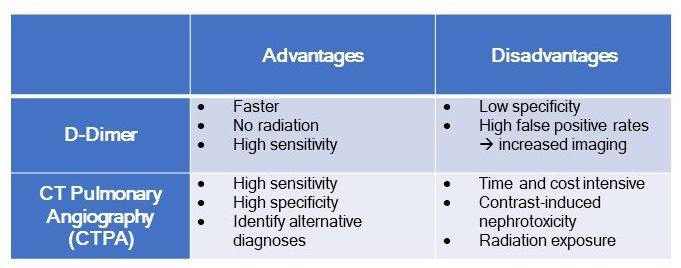
- Blood tests to check clot-dissolving substance D dimer levels, amount of oxygen and carbon dioxide or to see if you have an inherited clotting disorder.
- X-rays can't diagnose a pulmonary embolism and may even appear fine when a pulmonary embolism exists, they can rule out other conditions with similar symptoms.
- Duplex scan or compression ultrasonography, to check for deep vein blood clots. This test can look at veins in the thigh, knee and calf, and sometimes the arms.
- CT pulmonary angiography can find changes such as a pulmonary embolism within the arteries in your lungs.
- To avoid radiation exposure, a V/Q scan may be done.
- Pulmonary angiogram requires a high degree of skill to perform and has potentially serious risks, it's usually done when other tests fail to provide a definite diagnosis.
- Magnetic resonance imaging (MRI) is usually only done in those who are pregnant — to avoid radiation to the baby — and in people whose kidneys may be harmed by dyes used in other tests.
What is the treatment for PE?
Treatment of a pulmonary embolism focuses on keeping the blood clot from getting bigger and preventing new clots from forming. Prompt treatment is essential to prevent serious complications or death.
Treatment can include medicines, surgery and other procedures, and ongoing care.
Medications
- Blood thinners called anticoagulants prevent existing clots from getting bigger and new clots from forming while your body works to break up the clots. Heparin is a frequently used anticoagulant that can be given through a vein or injected under the skin. It acts quickly and is often given along with an oral anticoagulant, such as warfarin (Jantovin), until the oral medicine becomes effective. This can take several days.
- Clot dissolvers or thrombolytics — medicines which can be given through a vein that can dissolve clots quickly. Because these clot-busting medicines can cause sudden and severe bleeding, they usually are reserved for life-threatening situations.
Surgical and other procedures
- Clot removal: A thin, flexible catheter can be threaded through your blood vessels to remove large sized clots.
- Vein filter: For people who can't take anticoagulant drugs or those who get blood clots even with the use of anticoagulants, a filter can be placed via a catheter in the inferior vena cava. The filter can help keep clots from going to your lungs.
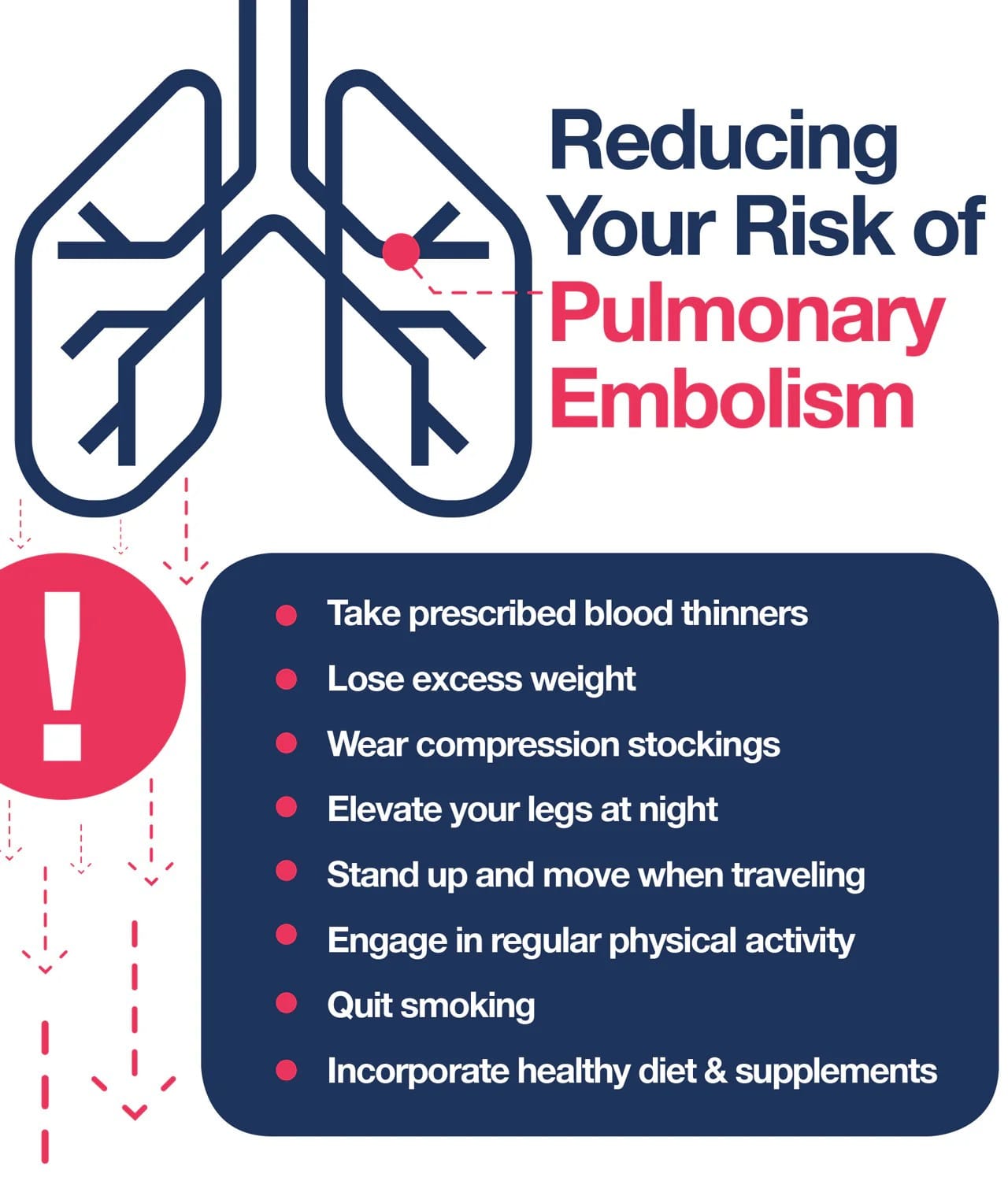
Continuing the treatment such as anti-coagulant medications, being monitored as often as suggested by your health care provider is almost always required once diagnosed with PE. (https://www.mayoclinic.org/diseases-conditions/pulmonary-embolism/diagnosis-treatment/drc-20354653)