
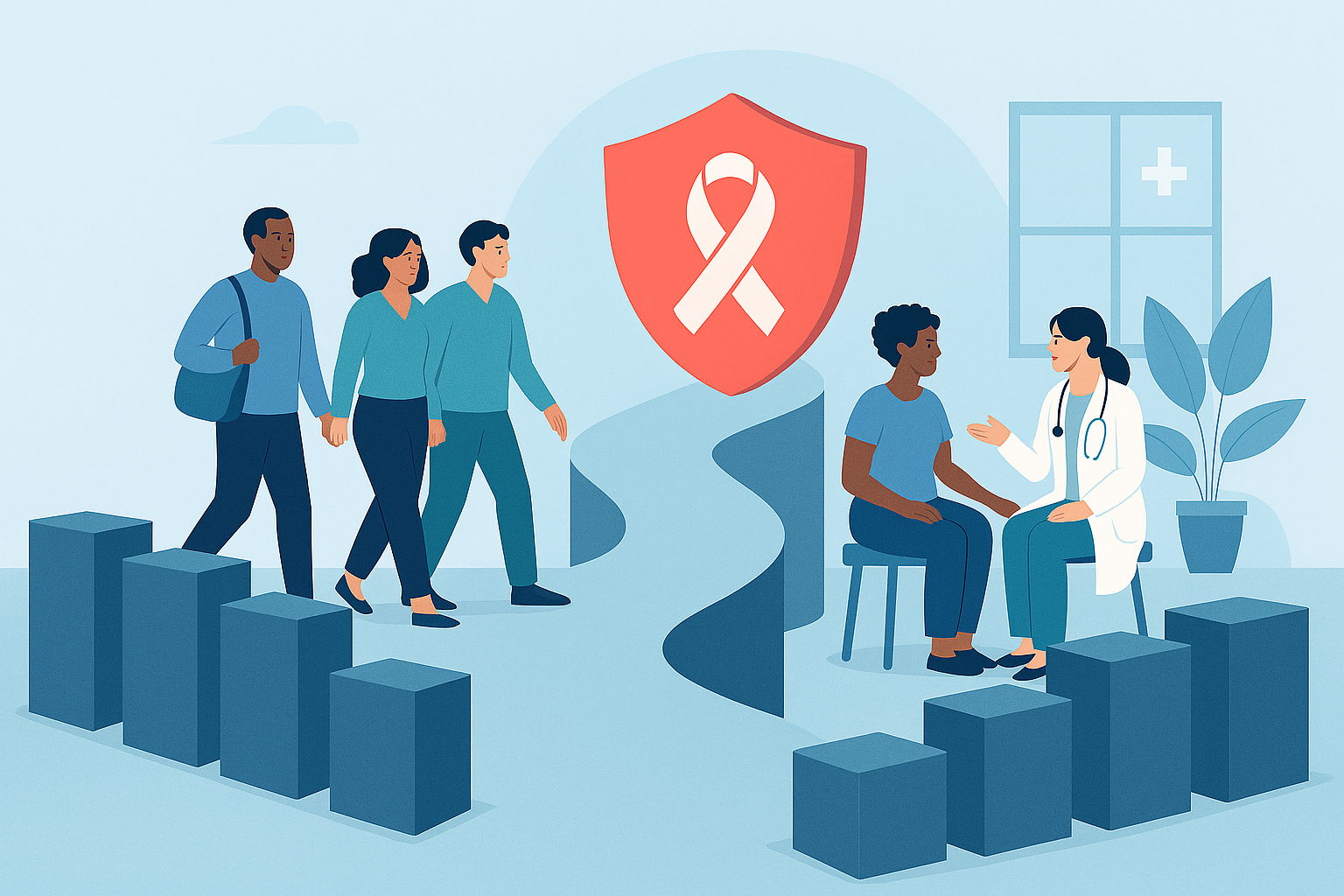
Overcoming Barriers to HIV Prevention: Challenges and Solutions in Accessing PrEP
Introduction
HIV prevention has advanced dramatically over the past decade, yet access to lifesaving tools remains uneven. Pre‑exposure prophylaxis, commonly known as PrEP, is one of the most effective strategies available today to prevent HIV infection. When taken as prescribed, PrEP reduces the risk of acquiring HIV through sexual contact by approximately 99 percent. Despite this extraordinary effectiveness, many individuals who could benefit from PrEP face significant challenges when trying to obtain it.
These barriers are not primarily scientific or medical. Instead, they arise from stigma, gaps in provider knowledge, insurance and billing issues, and systemic inequities within healthcare systems. Recent reporting by HealthDay and KFF Health News highlights how these obstacles disproportionately affect LGBTQ+ individuals, even in regions with well‑developed healthcare infrastructures.
This article explores the real‑world challenges surrounding PrEP access, examines personal patient experiences, and outlines practical strategies for overcoming these barriers. Understanding these issues is essential for improving public health outcomes and ensuring equitable HIV prevention.
What Is PrEP and Why It Matters
PrEP, or pre‑exposure prophylaxis, refers to the use of antiretroviral medications by people who are HIV‑negative to prevent infection. The most widely used PrEP medications include Truvada and Descovy, along with several generic alternatives. These drugs work by preventing the virus from establishing an infection if exposure occurs.
The U.S. Centers for Disease Control and Prevention recommends PrEP for anyone who is sexually active and at increased risk for HIV. This includes individuals who do not consistently use condoms, men who have sex with men, people with partners who are living with HIV, people with multiple sexual partners, and individuals who inject drugs and share needles. Importantly, PrEP is not limited to any one gender identity, sexual orientation, or relationship status.
From a public health perspective, PrEP represents a cornerstone of HIV prevention. Widespread use of PrEP has been associated with declining HIV infection rates in multiple countries and cities. However, the benefits of PrEP can only be fully realized when people are able to access it without unnecessary difficulty.
Medical Stigma as a Persistent Barrier
One of the most significant obstacles to PrEP access is medical stigma. For many LGBTQ+ individuals, healthcare settings have historically been places of discrimination or misunderstanding. These negative experiences can discourage people from seeking preventive care altogether.
Dr. Beth Oller, a board member of GLMA, an organization focused on LGBTQ+ health equity, has observed the impact of stigma firsthand in her medical practice. She reports that many patients avoided routine healthcare for years due to fear of judgment or mistreatment. As a result, opportunities for HIV prevention were missed.
Medical stigma does not always manifest as overt discrimination. It can also appear in subtler forms, such as assumptions about a patient’s sexual behavior, discomfort discussing sexual health, or dismissive attitudes toward concerns about HIV risk. These experiences can make patients feel unsafe or unwelcome, undermining trust and continuity of care.
When stigma prevents individuals from accessing preventive services like PrEP, it contributes to ongoing disparities in HIV outcomes. Addressing stigma therefore requires both cultural competence training and structural reforms within healthcare systems.
Lack of Provider Knowledge About PrEP
Another major barrier to PrEP access is the uneven level of knowledge among healthcare providers. While PrEP has been approved and recommended for years, not all clinicians are familiar with how it works, who should use it, or how to prescribe and monitor it safely.
This gap in knowledge was illustrated by the experience of Matthew Hurley, a resident of the San Francisco Bay Area. After a change in insurance forced him to see a new doctor, Hurley discovered that his physician had never heard of PrEP. Hurley found himself explaining the medication regimen, including daily dosing and quarterly laboratory testing, to his own healthcare provider.
Such situations place an unfair burden on patients to educate clinicians. They also create delays in care and increase the likelihood that patients will abandon efforts to obtain PrEP. In areas with lower concentrations of HIV specialists, these challenges can be particularly pronounced.
Although detailed PrEP prescribing guidelines are available from the CDC, many providers outside of infectious disease or sexual health specialties remain unfamiliar with them. Continuing medical education and integration of PrEP education into primary care training are essential steps toward closing this gap.
Insurance Coverage and Billing Challenges
In theory, PrEP should be financially accessible to most people in the United States. Under the Affordable Care Act, most private insurance plans and Medicaid expansion programs are required to cover PrEP and associated services without cost sharing. These services include laboratory tests, follow‑up visits, and counseling.
In practice, however, insurance coverage is often complicated by billing errors, coding mistakes, and inconsistent policy implementation. Matthew Hurley’s experience illustrates this disconnect. Despite having insurance coverage, he spent months contesting unexpected charges, receiving past‑due notices, and navigating confusing explanations of benefits.
Billing problems can arise when laboratory tests are coded incorrectly, when out‑of‑network laboratories are used, or when insurers fail to process claims in accordance with federal guidelines. For patients, these issues can be stressful and time‑consuming, sometimes leading to interruptions in medication adherence.
To prevent these problems, patients and providers must communicate clearly about insurance requirements. Advocacy organizations such as NASTAD have developed specific PrEP billing and coding guides to help clinicians and healthcare administrators avoid common errors.
Fragmented Sexual and Primary Healthcare
Many individuals on PrEP receive their sexual healthcare from separate providers or clinics rather than their primary care doctors. While specialized clinics may offer expertise and affirmation, this fragmentation can create logistical challenges and impede holistic care.
Hurley expressed frustration with having to coordinate between multiple organizations to address his overall health needs. Ideally, PrEP should be integrated into routine primary care, allowing patients to receive comprehensive, coordinated services in one place.
Fragmentation is often a consequence of stigma, provider knowledge gaps, or institutional discomfort with discussing sexual health. Addressing these issues at the system level can improve patient experience and health outcomes.
Practical Strategies for Overcoming PrEP Obstacles
Despite these challenges, there are several practical steps individuals can take to improve their chances of accessing PrEP smoothly.
Understanding Eligibility
Anyone who is sexually active may be eligible for PrEP under CDC guidelines. Patients should not assume they must meet narrow criteria to qualify. Asking a healthcare provider directly about PrEP and discussing sexual health openly can help clarify eligibility.
Preparing Providers
Patients should not assume that every doctor is familiar with PrEP. Sharing reputable resources, such as state health department guides or CDC recommendations, can help bridge knowledge gaps. Advocacy through information can empower both patients and providers.
Choosing In‑Network Services
To minimize unexpected costs, patients should confirm that their laboratory services are in‑network and that proper billing codes are used. If billing errors occur, patients can appeal charges and provide documentation regarding PrEP coverage requirements.
Exploring Cost Savings
Generic versions of Truvada are widely available and significantly reduce costs. Additionally, many pharmaceutical manufacturers offer patient assistance programs for individuals who qualify based on income or insurance status.
Considering Telehealth Options
Telemedicine has become an increasingly popular avenue for PrEP access. In 2024, approximately 20 percent of PrEP users obtained care through telehealth platforms. Services such as Mistr and Q Care Plus provide remote consultations, home testing kits, and medication delivery. These options can be particularly helpful for individuals in areas with limited access to affirming providers.
Seeking Affirming Care
Directories such as the LGBTQ+ Healthcare Directory allow patients to locate providers who identify as queer‑friendly. Affirming care environments are associated with higher satisfaction, better adherence, and improved health outcomes.
The Broader Public Health Implications
Barriers to PrEP access are not merely individual inconveniences. They represent systemic failures that undermine national HIV prevention goals. When people are unable to obtain effective preventive care, the risk of new HIV infections increases, placing additional strain on healthcare systems and communities.
Improving access to PrEP requires coordinated efforts across policy, education, and clinical practice. This includes protecting preventive care coverage, expanding provider education, reducing stigma, and leveraging technology to reach underserved populations.
Conclusion
PrEP is a powerful tool in the fight against HIV, offering near‑complete protection when used correctly. However, its potential is limited by persistent barriers rooted in stigma, lack of provider awareness, insurance complications, and fragmented care systems.
The experiences highlighted by HealthDay and KFF Health News underscore the need for continued advocacy and reform. By addressing these challenges at both individual and systemic levels, it is possible to expand equitable access to PrEP and move closer to ending the HIV epidemic.
Source
- KFF Health News. “Overcoming Obstacles to HIV Prevention.” January 5, 2026.
Disclaimer
This article is intended for informational and educational purposes only. It does not constitute medical advice, diagnosis, or treatment. Statistical data reflect general trends and may not apply to individual circumstances. Always seek the guidance of a qualified healthcare professional for personalized medical advice and decisions related to HIV prevention and treatment.