
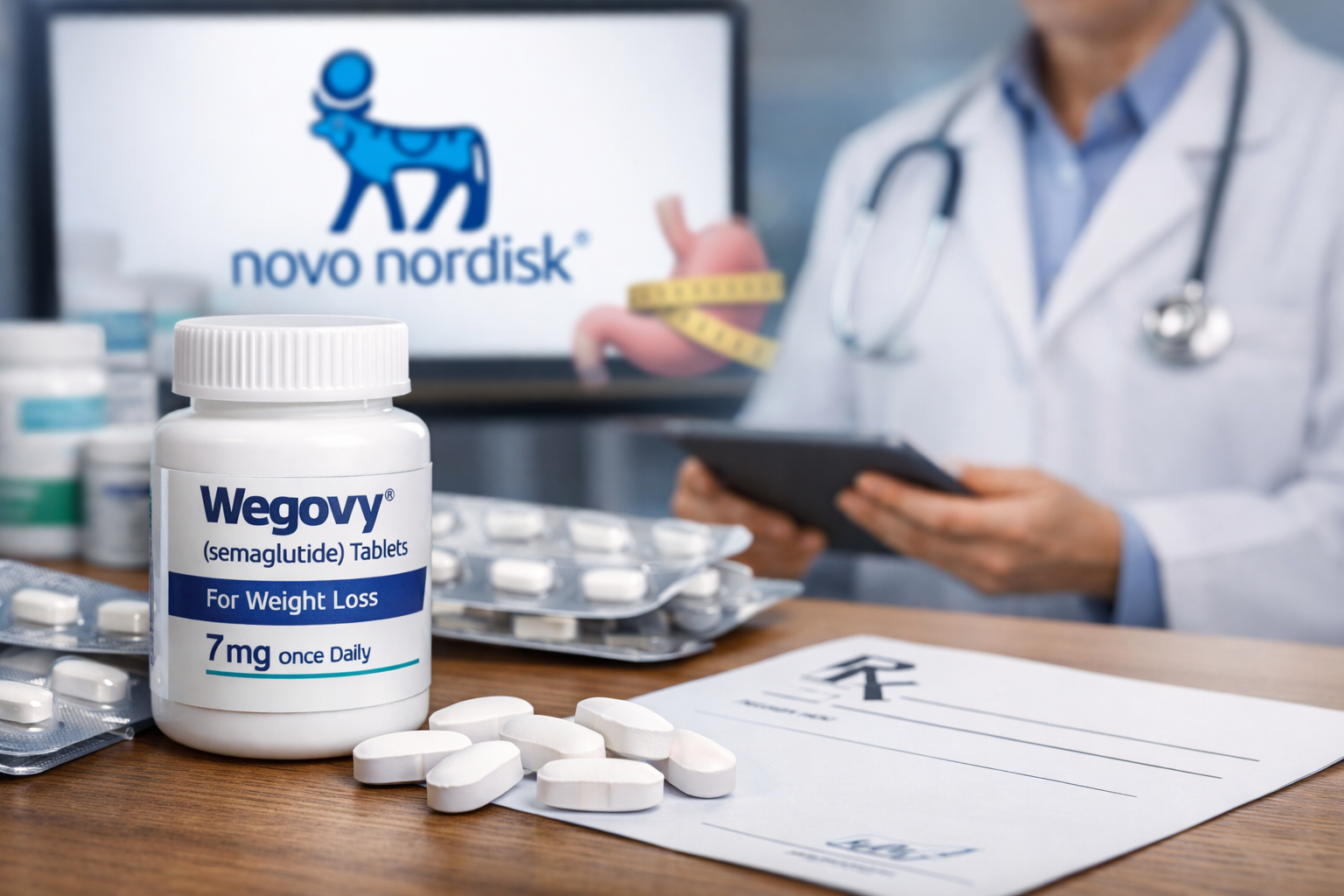
Novo Nordisk Launches First Daily Wegovy Weight Loss Pill in the United States
Novo Nordisk has officially introduced the first daily oral GLP 1 weight loss medication in the United States, marking a major milestone in obesity treatment. The new pill version of Wegovy offers patients a non injectable alternative that delivers similar weight loss benefits to existing GLP 1 injections. The launch is expected to significantly expand access to obesity care while addressing long standing supply challenges associated with injectable drugs.
The medication, which contains semaglutide, was approved by the U.S. Food and Drug Administration in late 2025 and became available nationwide in early January 2026. Doctors can now prescribe the daily pill, and patients can obtain it through retail pharmacies, mail order services, telehealth platforms, and Novo Nordisk’s own direct to consumer program.
This launch represents a strategic shift in how GLP 1 medications are delivered and could reshape the competitive landscape of the weight loss drug market.
What Is the Wegovy Weight Loss Pill
The Wegovy pill is an oral formulation of semaglutide, the same active ingredient used in injectable Wegovy and Ozempic. Semaglutide belongs to a class of drugs known as GLP 1 receptor agonists. These medications work by mimicking a natural hormone that regulates appetite, slows digestion, and helps people feel full longer.
Until now, GLP 1 weight loss therapies have largely required weekly injections. While effective, injections have been a barrier for many individuals who are uncomfortable with needles or who find injections inconvenient. Novo Nordisk developed the oral version to reach patients who want the benefits of GLP 1 therapy without shots.
According to the company, the pill is taken once daily and is designed to deliver consistent levels of semaglutide throughout the day.
FDA Approval and Medical Indications
The FDA approved the Wegovy pill in December 2025 for adults with obesity or overweight individuals who have at least one weight related health condition. The approval also includes an indication for reducing cardiovascular risk in patients with obesity, reflecting growing evidence that weight loss can lower the risk of heart attack and stroke.
This approval follows years of clinical research evaluating the safety and effectiveness of oral semaglutide for weight management. Novo Nordisk stated that the pill meets the same rigorous standards as injectable GLP 1 drugs already on the market.
Medical experts view the approval as an important step toward normalizing obesity treatment as long term medical care rather than short term weight loss.
Weight Loss Results From Clinical Trials
Clinical trial data played a central role in the FDA approval process. In trials lasting 64 weeks, participants taking the highest dose of the Wegovy pill lost an average of about 14 percent of their body weight. Novo Nordisk estimates that weight loss could reach approximately 17 percent with continued treatment over a longer period.
These results are comparable to those seen with injectable Wegovy, which has been considered one of the most effective prescription weight loss medications available.
Company executives described the pill as offering injection like efficacy in an oral form, a claim that has drawn attention from both clinicians and patients.
Pricing and Insurance Coverage
Pricing is a major factor influencing access to weight loss medications, and Novo Nordisk has positioned the Wegovy pill with a tiered pricing model.
For patients paying out of pocket, the starter dose is priced at approximately $150 per month. The highest dose, which delivers the greatest weight loss benefit, is priced at $300 per month and is expected to be available nationwide by the end of the launch week.
Novo Nordisk reports that individuals with employer sponsored insurance coverage may pay as little as $25 per month, depending on their specific health plan.
The company has emphasized affordability as part of its broader strategy to increase adoption and avoid the access limitations seen with injectable GLP 1 drugs.
Nationwide Availability and Distribution
The Wegovy pill is available at more than 70,000 pharmacies across the United States. Major retailers such as CVS and Costco are carrying the medication, along with mail order pharmacies and telehealth providers partnered with Novo Nordisk.
Patients can also obtain the medication through Novo Nordisk’s direct to consumer service, which allows eligible individuals to receive prescriptions and refills without visiting a traditional doctor’s office.
This wide distribution network is designed to ensure consistent availability and reduce delays that previously affected injectable GLP 1 medications.
Addressing Supply Shortages in the GLP 1 Market
Supply shortages have been a persistent issue for injectable GLP 1 drugs over the past two years. High demand for medications such as Wegovy and Ozempic often exceeded manufacturing capacity, leading to intermittent shortages.
During this period, the FDA allowed compounding pharmacies to produce off brand versions of semaglutide, which affected sales for pharmaceutical companies and created variability in quality and access.
Novo Nordisk believes the oral Wegovy pill can help stabilize supply by diversifying production methods and reducing reliance on injectable manufacturing lines.
The pills are produced at a manufacturing facility in Clayton, North Carolina, where the company is investing approximately $4 billion in expansion to support long term demand.
Strategic Competition With Eli Lilly
The launch of the Wegovy pill also has significant implications for competition within the obesity drug market. Eli Lilly has gained market share with its injectable weight loss drug Zepbound and is actively pursuing FDA approval for its own GLP 1 pill.
By being the first to market with an approved oral GLP 1 weight loss medication, Novo Nordisk gains a potential advantage in reaching patients who have avoided injections.
Industry analysts expect competition between Novo Nordisk and Eli Lilly to intensify as both companies expand their obesity treatment portfolios.
Why a Pill Matters for Patients
For many patients, the idea of weekly injections has been a psychological or practical barrier to starting GLP 1 therapy. Company leaders say the pill format could appeal to individuals who did not see themselves managing a chronic condition with injections.
An oral option may also fit more easily into daily routines and reduce stigma associated with injectable medications.
Doctors anticipate that the availability of a pill could encourage earlier intervention for obesity, potentially preventing the progression of related conditions such as type 2 diabetes, heart disease, and sleep apnea.
Broader Impact on Obesity Treatment
The introduction of a daily Wegovy pill reflects a broader shift in how obesity is treated within the healthcare system. Obesity is increasingly recognized as a chronic disease that requires long term management rather than short term lifestyle interventions alone.
GLP 1 medications have already changed clinical expectations for weight loss outcomes. An oral option could further integrate obesity treatment into primary care settings where injections may be less commonly prescribed.
Public health experts suggest that expanded access to effective medications could help address obesity rates at a population level, although long term outcomes will continue to be monitored.
What Patients Should Know Before Starting
Patients considering the Wegovy pill should consult a healthcare provider to determine whether the medication is appropriate for their individual health profile. As with other GLP 1 drugs, side effects may include nausea, vomiting, diarrhea, and gastrointestinal discomfort, particularly during dose escalation.
The medication is not intended for cosmetic weight loss and should be used as part of a comprehensive treatment plan that includes nutrition, physical activity, and medical supervision.
Conclusion
Novo Nordisk’s launch of the first daily oral Wegovy pill represents a major advancement in obesity treatment. By offering injection level weight loss results in a pill format, the company aims to broaden access, improve adherence, and reduce supply challenges that have limited GLP 1 therapies in the past.
With nationwide availability, competitive pricing, and strong clinical trial results, the Wegovy pill is poised to play a significant role in the evolving landscape of weight loss medications in the United States.
As competition increases and innovation continues, patients and providers may soon have more choices than ever in managing obesity as a chronic medical condition.
Sources
The Washington Post, January 5, 2026
Novo Nordisk company statements and FDA approval data
Disclaimer
This article is for informational and educational purposes only and does not constitute medical advice, diagnosis, or treatment. Statistical data reflects general trends and may not apply to individual circumstances. Always consult a qualified healthcare professional for personalized medical guidance regarding weight loss medications or other health decisions.