
Nosebleed Causes, Treatment, and Prevention: Everything You Need to Know
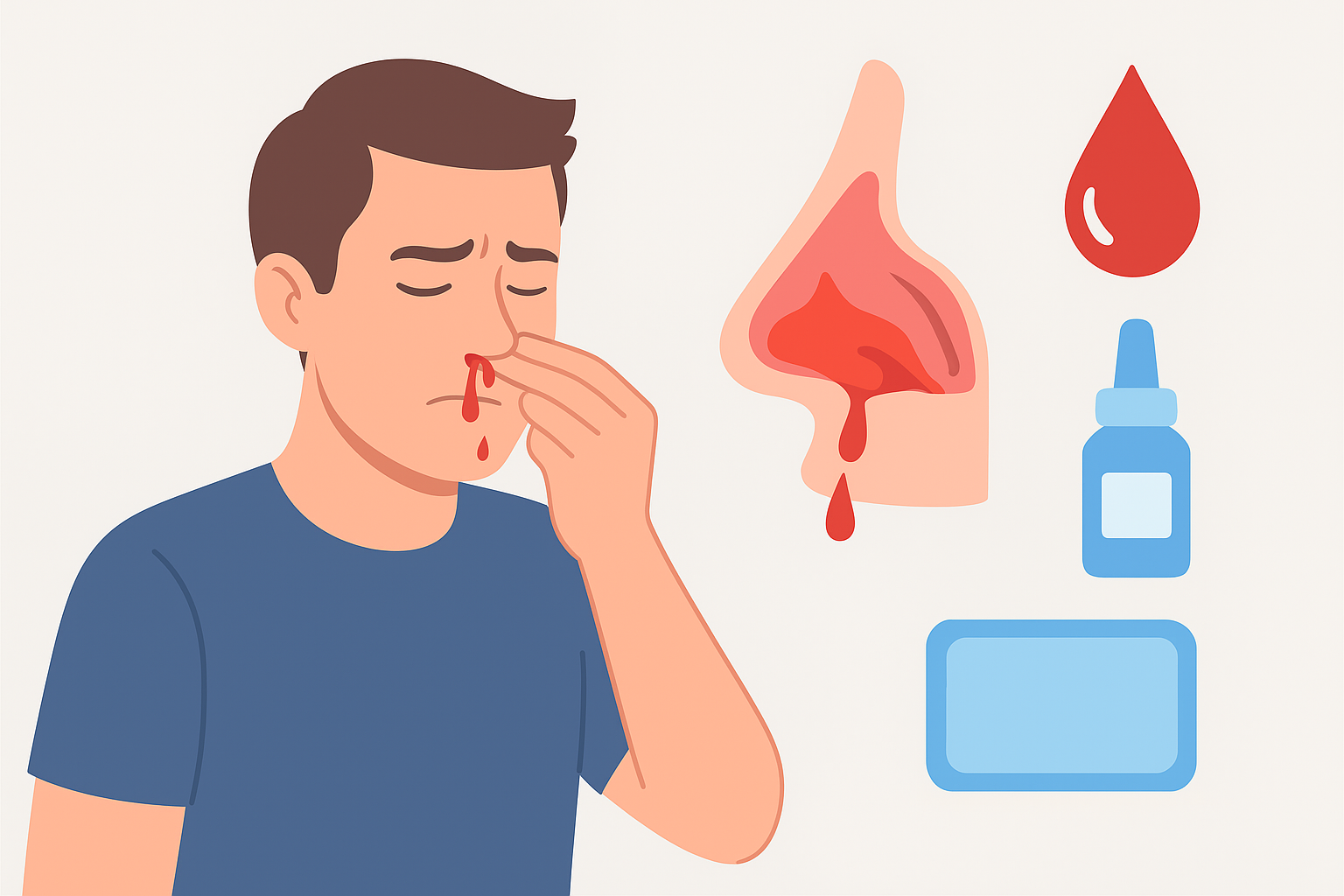
A nosebleed, or epistaxis, occurs when tiny blood vessels inside your nose break and bleed. Though it can look alarming, most nosebleeds are mild and stop on their own. However, frequent or heavy nosebleeds may point to an underlying health problem that needs medical attention.
Common Causes of Nosebleeding
Nosebleeds can result from local factors (inside the nose) or systemic factors (affecting the entire body).
Local Causes of Nosebleeding
These causes are related to issues inside your nasal passages:
- Dry air – Dry indoor heating or hot weather can make nasal tissues crack.
- Nose picking – A very common cause, especially in children.
- Blowing the nose too hard – Can damage fragile blood vessels.
- Nasal injury or trauma – Sports accidents or bumps to the nose.
- Allergies and infections – Sinusitis and allergic rhinitis can irritate nasal membranes.
- Nasal sprays – Overuse of decongestant or steroid sprays can dry and irritate the nose.
- Foreign bodies – Small objects stuck in the nose (common in kids).
- Structural issues – Such as a deviated septum or nasal polyps.
Systemic Causes of Nosebleeding
Sometimes, a nosebleed can be linked to conditions that affect the whole body:
- High blood pressure (hypertension) – Can make bleeding harder to control.
- Clotting disorders – Conditions like hemophilia or low platelet count.
- Medications – Blood thinners like aspirin, warfarin, and clopidogrel.
- Vitamin deficiencies – Especially Vitamin C and K.
- Liver disease or alcohol abuse – Impairs clotting function.
- Hormonal changes – Pregnancy or hormonal fluctuations can make nasal vessels fragile.
- Chemical exposure – Smoke, pollution, and strong fumes can irritate nasal tissues.
How to Stop a Nosebleed at Home
If your nose starts bleeding, follow these steps:
- Sit up straight and lean forward slightly (don’t tilt your head back).
- Pinch the soft part of your nose just below the bridge.
- Hold for 10–15 minutes while breathing through your mouth.
- Apply a cold compress over the bridge of your nose to constrict blood vessels.
- Avoid blowing or picking your nose for several hours afterward.
How to Prevent Nosebleeds Naturally
- Keep your nose moist: Use saline sprays or apply a thin layer of petroleum jelly.
- Use a humidifier: Especially during dry or winter months.
- Stay hydrated: Drink plenty of water to maintain healthy mucous membranes.
- Avoid nasal trauma: Don’t pick or blow your nose too forcefully.
- Limit nasal spray use: Follow doctor’s recommendations.
- Protect your nose: Wear gear during sports or outdoor work.
When to See a Doctor
Seek medical help if you experience any of the following:
- Bleeding lasts more than 20 minutes.
- Difficulty in breathing
- You have frequent or heavy nosebleeds.
- You notice bruising or bleeding elsewhere (gums, skin, etc.).
- You are on blood thinners or have a bleeding disorder.
- The nosebleed follows a head or facial injury.
Final Thoughts
While most nosebleeds are mild and self-limiting, recurrent or severe bleeding may signal an underlying issue like high blood pressure or a bleeding disorder.
With proper hydration, nasal care, and environmental control, you can greatly reduce your risk of nosebleeds.
If nosebleeds persist, don’t ignore them — consult a doctor to find and treat the root cause.