
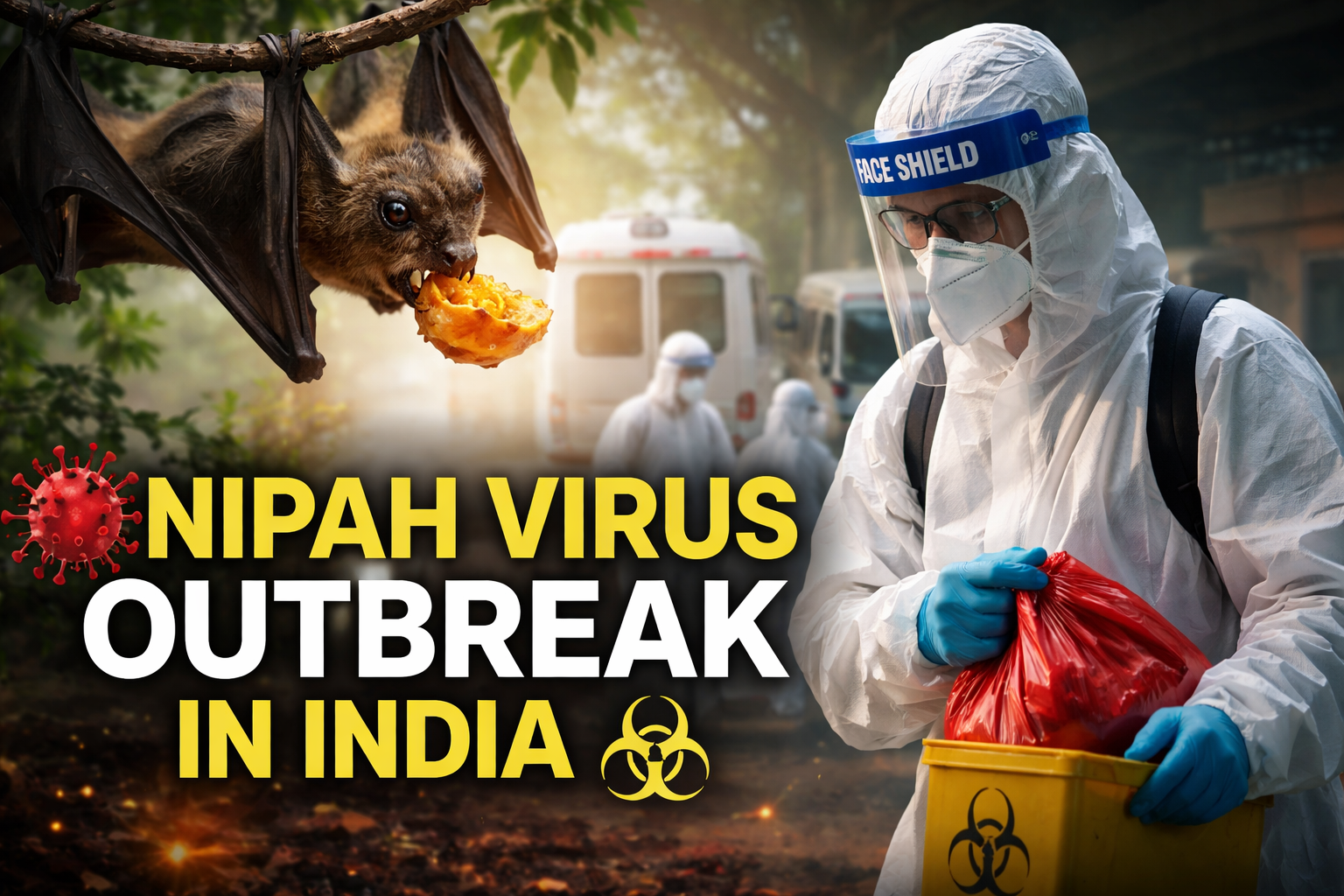
Nipah Virus Outbreak in India 2026: What We Know, Risks, Symptoms, and Why Health Officials Are Alarmed
India is once again facing a serious public health challenge as authorities work to contain a fresh outbreak of the deadly Nipah virus. In January 2026, health officials confirmed multiple cases in West Bengal, triggering emergency containment measures, home quarantines, and heightened disease surveillance across several states. With no approved vaccine or specific antiviral treatment available, the outbreak has raised renewed global concern over the virus’s epidemic potential.
Nipah virus is considered one of the world’s most dangerous zoonotic pathogens due to its high fatality rate and ability to spread from animals to humans and between people. The World Health Organisation has classified it as a priority disease because of its potential to cause severe outbreaks with limited medical countermeasures.
This article explains what Nipah virus is, details the current outbreak in India, outlines symptoms and transmission risks, and explores why experts are warning that future outbreaks could become more frequent.
Overview of the 2026 Nipah Virus Outbreak in India
According to Indian health authorities, five confirmed cases of Nipah virus infection were reported in West Bengal in January 2026. Three new cases were identified among healthcare workers, including a doctor, a nurse, and a hospital staff member, all of whom worked at the same private medical facility near Kolkata. These cases followed two earlier infections involving a male and female nurse who contracted the virus while treating patients.
In response, nearly 100 people identified as close contacts were instructed to quarantine at home. Patients who tested positive were moved into intensive care isolation units, with officials confirming that at least one patient remains in critical condition.
State health departments across India were placed on high alert, with instructions to intensify monitoring for Acute Encephalitis Syndrome, a severe neurological complication associated with Nipah virus infection. Hospitals were also advised to immediately isolate suspected cases and strengthen infection control measures.
What Is Nipah Virus?
Nipah virus is a zoonotic virus that belongs to the Henipavirus genus. It was first identified during an outbreak in Malaysia in 1998 and has since caused sporadic but deadly outbreaks in South and Southeast Asia, particularly in India and Bangladesh.
Fruit bats, especially those belonging to the Pteropus species, are the natural reservoir of the virus. These bats often carry the virus without showing symptoms, allowing it to spread silently in the environment.
Human infections occur when the virus spills over from animals to people, either directly or through contaminated food sources. Once introduced into human populations, the virus can also spread through close personal contact.
How Nipah Virus Spreads
Nipah virus transmission occurs through several pathways:
- Direct contact with infected bats or pigs
- Consumption of fruit or fruit products contaminated with bat saliva or urine
- Exposure to bodily fluids such as saliva, blood, urine, or respiratory secretions of infected individuals
- Close contact in healthcare settings without adequate protective measures
In previous outbreaks in India and Bangladesh, raw date palm sap contaminated by bats was identified as a major source of infection. In healthcare environments, inadequate infection prevention practices have contributed to secondary transmission among medical staff.
Symptoms and Clinical Progression
Nipah virus infection often begins with non specific flu like symptoms, which can make early diagnosis difficult. Common early symptoms include:
- Fever
- Severe headache
- Muscle pain
- Vomiting
- Sore throat
As the disease progresses, patients may develop:
- Dizziness and altered consciousness
- Acute respiratory distress
- Pneumonia
- Seizures
- Encephalitis or brain inflammation
- Coma
The incubation period typically ranges from 4 to 14 days, though cases of up to 45 days have been reported. This long incubation period complicates containment efforts, as infected individuals may not show symptoms immediately.
Fatality Rate and Why Nipah Is So Dangerous
The Nipah virus has one of the highest case fatality rates among infectious diseases. According to the World Health Organisation, fatality rates range between 40 percent and 75 percent, depending on the outbreak and the availability of supportive medical care.
There is currently no licensed vaccine and no specific antiviral treatment approved for Nipah virus infection. Care is largely supportive, focusing on managing complications such as respiratory failure and brain swelling.
Because of its high mortality rate, ability to infect healthcare workers, and potential for human to human transmission, Nipah virus is listed by the WHO as a priority pathogen for research and preparedness.
Why Outbreaks Keep Happening in India
India has experienced multiple Nipah virus outbreaks over the past two decades, particularly in states such as Kerala and West Bengal. Experts believe several factors contribute to recurring outbreaks:
- Increased deforestation and habitat loss pushing bats closer to human settlements
- Agricultural expansion near forested areas
- Consumption of fresh fruit exposed to wildlife
- High population density
- Overburdened healthcare systems
Medical experts have also warned that climate change may be altering bat migration and feeding patterns, increasing the likelihood of viral spillover events.
Government Response and Containment Measures
In response to the 2026 outbreak, Indian authorities implemented several emergency measures:
- Home quarantine orders for close contacts
- Isolation wards in designated hospitals
- Mandatory use of personal protective equipment for healthcare workers
- Enhanced surveillance for neurological and respiratory illnesses
- Public advisories discouraging consumption of partially eaten fruit
Health departments in neighbouring states were also instructed to monitor travellers and report suspected cases immediately.
Global Implications and Pandemic Potential
Although Nipah virus outbreaks have so far been limited in scale, global health experts have long warned about its pandemic potential. The virus meets several criteria of concern, including high mortality, lack of vaccines, and evidence of human to human transmission.
The World Health Organisation and other international bodies continue to support vaccine development and antiviral research. Several experimental vaccines are currently in preclinical or early clinical trial stages, but none are yet approved for widespread use as of 2026.
How Individuals Can Reduce Risk
Public health experts recommend the following precautions, particularly in affected regions:
- Avoid consuming fruits that appear bitten or damaged
- Wash fruits thoroughly before eating
- Avoid contact with bats and sick animals
- Follow infection control guidance in healthcare settings
- Seek immediate medical attention for unexplained fever with neurological symptoms
Public awareness remains a key factor in preventing future outbreaks.
Conclusion
The 2026 Nipah virus outbreak in India serves as a stark reminder of the ongoing threat posed by emerging infectious diseases. While swift action by health authorities has helped limit the spread so far, the absence of a vaccine and the virus’s high fatality rate underline the urgent need for continued surveillance, research, and public education.
As human activity increasingly overlaps with wildlife habitats, experts warn that outbreaks like this may become more frequent. Strengthening healthcare systems, investing in vaccine development, and addressing environmental drivers of disease will be essential to preventing a larger crisis in the future.
Sources
- World Health Organisation (WHO). Nipah virus fact sheet and priority diseases list
- Press Trust of India. January 2026 outbreak reporting
- Indian Ministry of Health and Family Welfare advisories
- Centers for Disease Control and Prevention (CDC). Nipah virus overview
- Manchester Evening News. January 23, 2026 reporting
Disclaimer
This article is for informational and educational purposes only and does not constitute medical advice. Always seek guidance from qualified healthcare professionals or official public health authorities for diagnosis, treatment, or disease prevention. Information is based on publicly available data as of January 2026 and may evolve as new evidence emerges.