
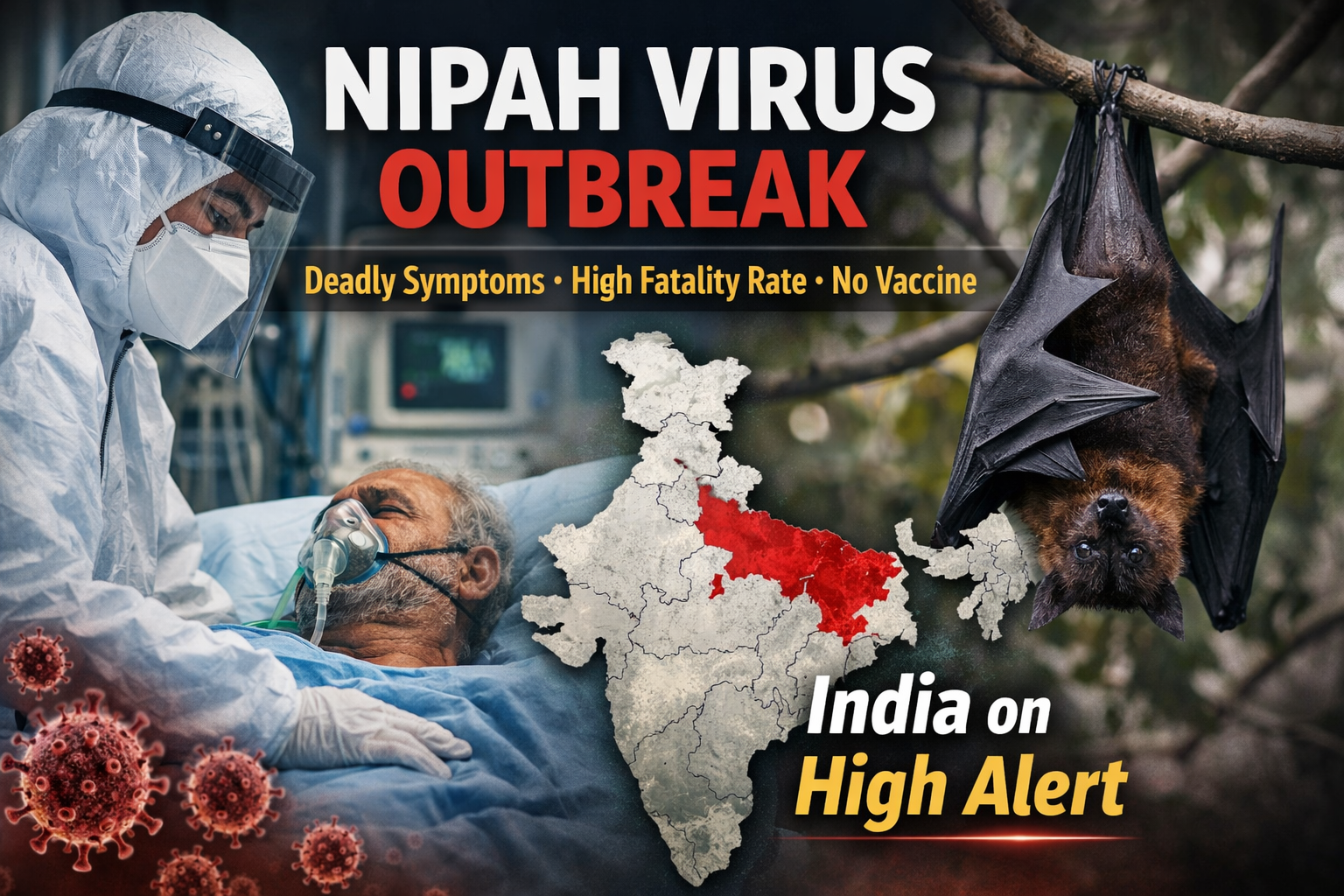
Nipah Virus Explained: Symptoms, Transmission, Fatality Rate, and Why India’s Latest Outbreak Is a Global Concern
The recent Nipah virus outbreak in India, particularly in West Bengal, has once again brought global attention to one of the world’s most dangerous zoonotic diseases. With no approved vaccine or specific antiviral treatment, Nipah virus (NiV) is classified by the World Health Organization (WHO) as a priority pathogen with epidemic potential.
Although human cases are rare, Nipah virus outbreaks are deeply concerning due to their high fatality rate, ability to spread from animals to humans and between people, and the severe neurological complications seen in survivors. As India races to contain the current outbreak through quarantines, contact tracing, and hospital isolation, many people are asking the same questions:
What is Nipah virus? How deadly is it? How does it spread? And should the world be worried?
This in-depth guide explains everything you need to know about the Nipah virus, including symptoms, transmission routes, historical outbreaks, prevention strategies, and why experts consider it a serious pandemic threat.
What Is Nipah Virus?
Nipah virus (NiV) is a zoonotic virus, meaning it can spread from animals to humans. It belongs to the Henipavirus genus and is closely related to the Hendra virus.
The virus was first identified in 1999 during an outbreak of encephalitis and respiratory illness among pig farmers in Malaysia and Singapore. Since then, recurring outbreaks have been reported primarily in South and Southeast Asia, especially in India and Bangladesh.
Why Is Nipah Virus So Dangerous?
Nipah virus is considered extremely dangerous because:
- It has a fatality rate of 40–75%
- There is no vaccine or specific treatment
- It can cause severe brain inflammation (encephalitis)
- Survivors may suffer long-term neurological damage
- It can spread through close human contact
Because of these factors, the WHO lists Nipah virus under its Research and Development Blueprint for pathogens that pose a global health emergency risk.
Nipah Virus Symptoms: Early Signs to Watch Out For
One of the biggest challenges with Nipah virus infection is that early symptoms are non-specific, making detection difficult during the initial stages.
Incubation Period
According to the US Centers for Disease Control and Prevention (CDC), the incubation period typically ranges from 4 to 21 days, though rare cases have shown even longer delays.
Early Symptoms
Most patients initially experience flu-like symptoms, including:
- Fever
- Headache
- Muscle pain
- Fatigue
- Sore throat
These early signs can easily be mistaken for common viral infections.
Respiratory Symptoms
As the illness progresses, some patients develop respiratory issues such as:
- Cough
- Shortness of breath
- Pneumonia
- Acute respiratory distress
The severity and timing of respiratory symptoms vary widely between patients.
Neurological Complications
The most severe and defining feature of Nipah virus infection is encephalitis, or inflammation of the brain. Neurological symptoms may appear days or weeks after initial illness and include:
- Confusion or disorientation
- Altered consciousness
- Seizures
- Coma
Some patients also develop meningitis, further complicating recovery.
How Deadly Is Nipah Virus?
Nipah virus is associated with a very high mortality rate, ranging between 40% and 75%, depending on:
- The viral strain
- Speed of diagnosis
- Quality of supportive medical care
- Whether encephalitis develops
Long-Term Effects in Survivors
Survival does not always mean full recovery. According to health authorities, survivors may experience:
- Persistent seizures
- Cognitive impairment
- Personality changes
- Motor function difficulties
In rare cases, encephalitis can recur months or even years later, possibly due to viral reactivation.
How Does Nipah Virus Spread?
Nipah virus spreads through multiple transmission pathways, making containment difficult during outbreaks.
1. Bat-to-Human Transmission
Fruit bats of the Pteropus species are the natural reservoir of the virus. Humans can become infected by:
- Eating fruit contaminated with bat saliva or urine
- Consuming raw date palm sap contaminated by bats
- Direct contact with infected bats
2. Animal-to-Human Transmission
Domestic animals can act as intermediate hosts. In past outbreaks:
- Pigs played a major role in Malaysia
- Infected animals transmitted the virus to farmers and handlers
Handling sick animals or slaughtering infected livestock increases risk.
3. Human-to-Human Transmission
Human-to-human spread has been well documented, especially:
- Among family members
- In healthcare settings
- Through contact with bodily fluids
Caregivers and healthcare workers are particularly vulnerable without strict infection control measures.
Where Have Nipah Virus Outbreaks Occurred?
Malaysia and Singapore (1999)
- First known outbreak
- Linked to pig farms
- Over 100 deaths
- Massive pig culling operations
Bangladesh (Since 2001)
- Near-annual outbreaks
- Strongly linked to raw date palm sap
- High human-to-human transmission
India
- West Bengal: Repeated outbreaks in eastern districts
- Kerala: First outbreak in 2018, followed by sporadic cases
Philippines
- Nipah or Nipah-like virus detected
- Linked to horse exposure
Although fruit bats carrying Nipah antibodies exist across Asia and parts of Africa, confirmed human outbreaks remain geographically limited, according to WHO.
Is There Any Treatment or Vaccine for Nipah Virus?
No Approved Vaccine
There is currently no licensed vaccine available to prevent Nipah virus infection.
No Specific Antiviral Treatment
Treatment is limited to supportive care, which may include:
- Intensive care monitoring
- Ventilator support
- Seizure management
- Treatment of secondary infections
Experimental treatments and vaccines are under research, but none are yet approved for widespread use.
How to Reduce the Risk of Nipah Virus Infection
With no vaccine available, prevention is critical.
Preventing Bat-to-Human Transmission
- Avoid raw date palm sap
- Wash and peel fruits thoroughly
- Discard fruit with bite marks
- Avoid areas where bats roost
Preventing Animal-to-Human Transmission
- Wear gloves and protective clothing when handling animals
- Isolate sick livestock
- Protect animal feed from bat contamination
Preventing Human-to-Human Transmission
- Avoid close contact with infected individuals
- Practice frequent handwashing
- Use personal protective equipment (PPE) in healthcare settings
Public awareness and early detection are essential to stopping outbreaks before they escalate.
Why Nipah Virus Is Considered a Pandemic Threat
Nipah virus is often cited by experts as a model pandemic pathogen because it combines:
- High mortality
- Zoonotic spillover
- Human-to-human transmission
- Lack of vaccines or treatments
The 2011 film Contagion drew inspiration from Nipah-like viruses to depict how a real-world pandemic could unfold, highlighting how quickly zoonotic diseases can spread in a globalized world.
Conclusion
The latest Nipah virus outbreak in India serves as a sobering reminder that emerging infectious diseases remain one of the greatest global health threats. While cases are currently limited, the virus’s high fatality rate, severe neurological complications, and lack of medical countermeasures make it a pathogen that demands constant vigilance.
Strengthening surveillance, supporting vaccine research, and educating communities about prevention are critical steps to reducing the risk of future outbreaks. Nipah virus may be rare, but its consequences are anything but minor.
Sources
- World Health Organization (WHO) – Nipah Virus Fact Sheets and Research & Development Blueprint
- US Centers for Disease Control and Prevention (CDC) – Nipah Virus (NiV) Information
- UK Health Security Agency – Emerging Infection Updates
- The Independent – Reporting on the January 2026 Nipah Virus Outbreak in India
- PATH (Global Health Non-Profit) – Zoonotic Disease Research
Disclaimer
This article is for informational and educational purposes only and does not constitute medical advice. Information is based on publicly available data and reporting at the time of writing. For diagnosis, treatment, or prevention of Nipah virus or any medical condition, consult qualified healthcare professionals or official public health authorities.