
New Monkey Species With Orange Lips Discovered Hiding in DR Congo Forest
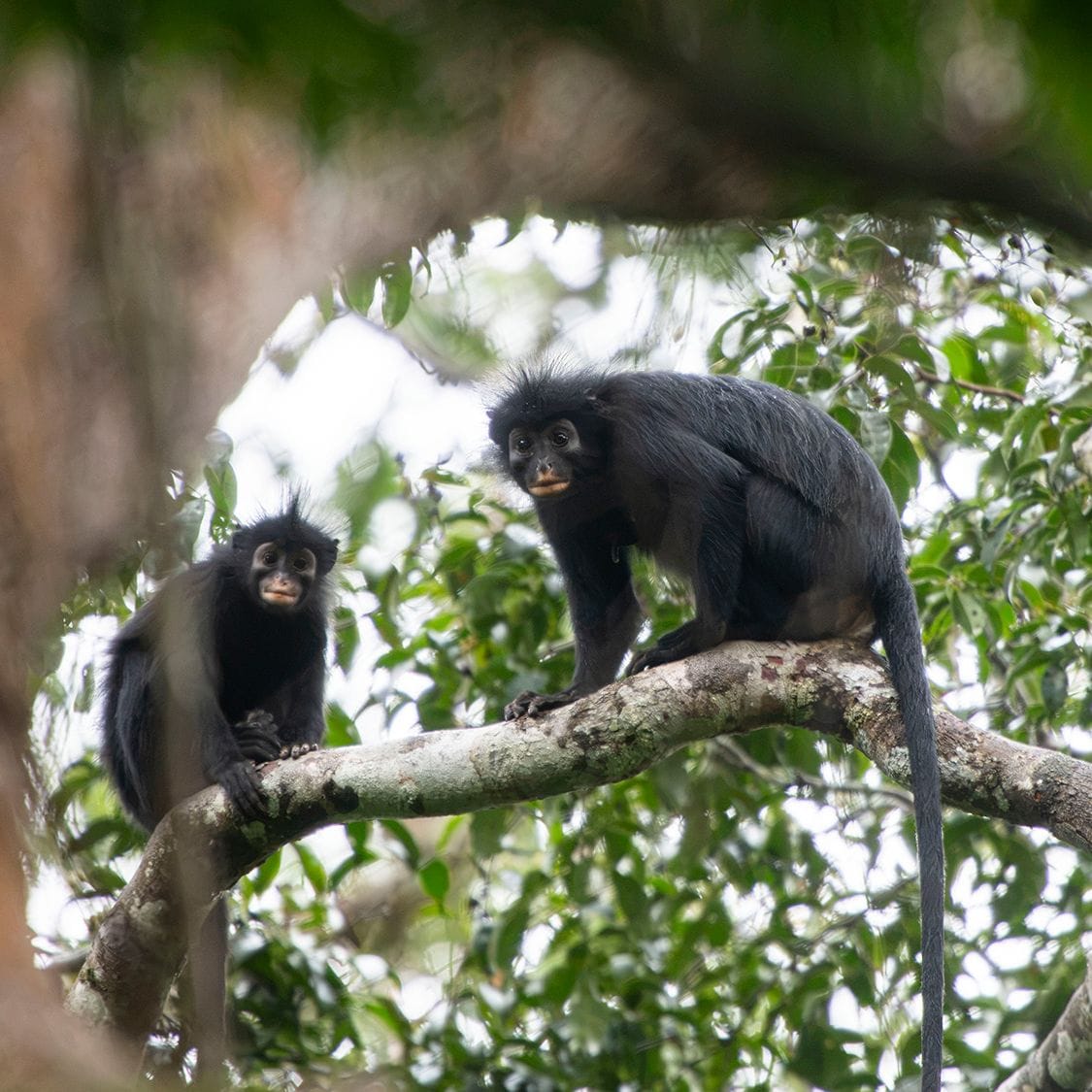
A mysterious monkey with striking pinkish-orange lips and a dark black face has officially been recognized as a new species by scientists. The unusual primate was discovered in the dense forests of the Democratic Republic of Congo (DR Congo), where it had remained hidden among the high tree canopies for years.
The newly identified monkey, known locally as “Likweli,” was found in Lomami National Park, located in the central eastern region of DR Congo. Researchers confirmed that the animal represents a distinct species after conducting extensive fieldwork, genetic analysis, photography, and audio recordings.
The discovery is considered highly significant because it represents only the fifth African monkey species identified by scientists in the last 75 years.
According to researchers, the monkey’s most recognizable feature is its unusual facial appearance. It has thick black fur, a dark face, and bright pinkish-orange lips that make it stand out among other primates.
A Hidden Monkey Revealed After Years of Searching
The story of this discovery began in 2008 when conservation workers in Lomami National Park noticed a strange-looking monkey moving through the forest canopy. At the time, they managed to capture only one unclear photograph of the animal.
A decade later, another sighting encouraged scientists to investigate further. An international research team began searching for the mysterious primate to determine whether it was truly a new species.
The search was led in part by Junior Amboko, a PhD student at Florida Atlantic University. The research team used several methods, including recording monkey calls, collecting photographs, interviewing local communities, and analyzing genetic information.
After years of investigation, scientists confirmed that the animal was previously unknown to science.
The findings were published in the scientific journal PLoS One.
Amboko described seeing the animal up close for the first time as an unforgettable experience, saying it was an incredible feeling to look into the face of a creature that very few people had ever seen.
Local Communities Already Knew About the Likweli Monkey
Although scientists recently confirmed the species, local communities living near the forest had known about the monkey for generations.
The animal is commonly called Likweli by people in the region. Researchers interviewed residents from 52 nearby villages during their investigation. Surprisingly, only people from eight villages reported having seen the monkey.
This suggests that the species is extremely secretive and has a very limited range.
Scientists explained that the monkeys spend much of their time high in the forest canopy, making them difficult to observe. Their behavior also contributes to their mysterious reputation because they often remain hidden even when researchers are nearby.
Researchers noted that the monkeys are often heard before they are seen because of their powerful and distinctive calls.
The Science Behind the New Species
The newly classified monkey belongs to the colobus group, a family of African monkeys known for their unique characteristics.
Unlike many other monkeys, colobus monkeys do not have thumbs. Instead, they have adapted to life in the treetops, where they feed mainly on leaves, fruits, and other plant material.
Scientists believe these monkeys play an important role in forest ecosystems. As herbivores living high in the canopy, they help process plant material and may contribute to seed movement and forest regeneration.
The research team gave the monkey the scientific name Colobus congoensis, recognizing the biological diversity found in DR Congo.
Researchers believe the bright facial markings of the Likweli monkey may serve an important purpose. The orange lips could help individuals recognize each other or may play a role in attracting mates.
However, scientists say more research is needed to understand exactly why the monkey evolved such unusual coloring.
A Rare Species Facing Conservation Challenges
The discovery of Colobus congoensis comes with concerns about its survival.
Researchers believe the monkey population is small and restricted to a specific area of forest where it can find suitable food and shelter. Like many wildlife species in Central Africa, it faces threats from habitat loss and hunting.
The animals are hunted for bushmeat in some areas, creating additional pressure on their populations.
Scientists hope that officially recognizing the Likweli monkey as a separate species will strengthen conservation efforts and encourage greater protection for its habitat.
Understanding the number of remaining individuals will be one of the next priorities for researchers. They plan to conduct detailed surveys to estimate the population size and learn more about the monkey’s behavior, diet, and social structure.
Why New Species Discoveries Matter
Finding a new species is not just about adding another animal to scientific records. Discoveries like this reveal how much remains unknown about Earth’s biodiversity.
Tropical forests, especially those in Central Africa, contain thousands of species that scientists are still working to document. Many animals live in remote environments where they are rarely observed by humans.
The discovery of the orange-lipped monkey highlights the importance of protecting these ecosystems. Forest conservation helps preserve not only well-known animals such as elephants and gorillas but also rare species that may have existed unnoticed for centuries.
Scientists believe that continued exploration and research are essential to understanding and protecting the planet’s remaining wildlife.
The Likweli monkey serves as another reminder that even in a world filled with modern technology, nature still holds remarkable secrets waiting to be discovered.
Source
BBC News Science coverage The scientific findings were published in the journal PLoS One.
Disclaimer
The information in this article is written for educational and informational purposes. Scientific discoveries may develop as researchers continue studying newly identified species. Details about population numbers, behavior, and conservation status may change as further research becomes available.