
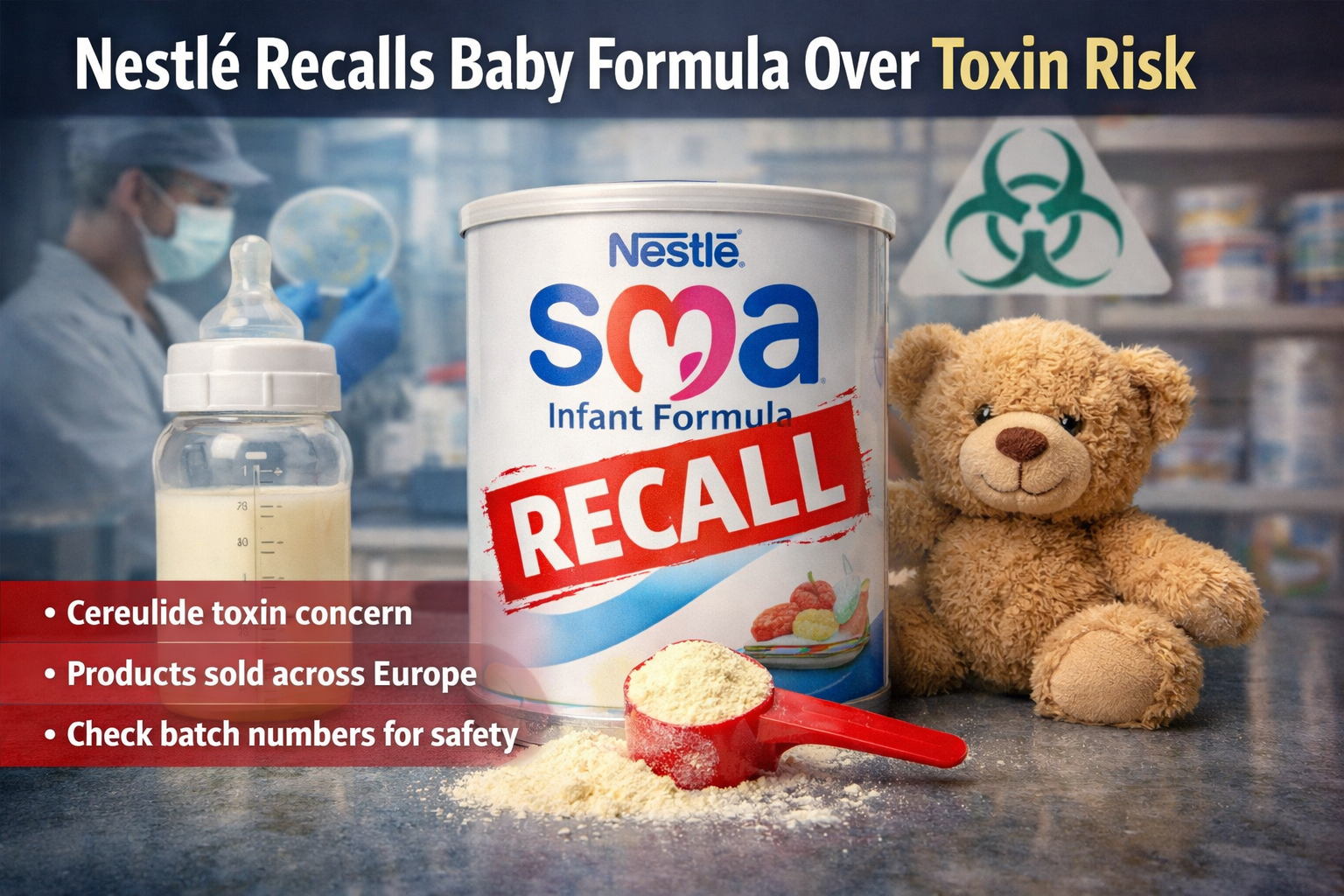
Nestlé Issues Global Baby Formula Recall Over Potential Toxin Risk
Introduction
Nestlé has announced a worldwide recall of certain baby formula products after identifying a potential risk linked to a foodborne toxin. The recall affects specific batches of infant and follow-on formulas sold under several brand names across Europe and other regions. While no confirmed illnesses have been reported, the company says it acted out of caution to protect infant health.
For parents and caregivers, baby formula safety is a top priority. Even a small risk can cause understandable concern, especially when it involves toxins that cannot be destroyed through normal preparation methods. This article explains what prompted the recall, what cereulide is, which products are affected, what parents should do next, and how health authorities are responding.
This guide is designed to be informative, clear, and practical, helping families make informed decisions during a product recall involving infant nutrition.
Why Nestlé Recalled Certain Baby Formula Products
The recall was issued after Nestlé identified the possible presence of cereulide, a toxin associated with food poisoning. Cereulide is produced by specific strains of the bacterium Bacillus cereus. While the bacterium itself is commonly found in the environment, the toxin it can produce is especially concerning because it is heat-stable.
This means that boiling water, reheating, or standard formula preparation does not neutralize the toxin. Because infants have developing digestive and immune systems, they are more vulnerable to the effects of foodborne toxins than adults.
Nestlé stated that no cases of illness linked to the affected formula have been confirmed so far. However, the company chose to issue a recall to minimize any potential risk to infants. Nestlé emphasized that baby safety is its highest priority and apologized for any stress or inconvenience caused to families.
What Is Cereulide and Why Is It Dangerous for Infants
Cereulide is a toxin that can cause symptoms such as vomiting, nausea, and abdominal cramps. In severe cases, particularly in vulnerable populations like infants, food poisoning can lead to dehydration and may require medical attention.
Key characteristics of cereulide include:
- It is resistant to heat and cannot be destroyed by cooking or boiling.
- It can remain active even if bacteria are no longer present.
- Symptoms can appear quickly after ingestion.
Health authorities warn that infants exposed to cereulide may not be able to communicate discomfort clearly, which makes early detection more challenging. This is why food safety agencies take any potential exposure very seriously, even in the absence of confirmed cases.
Which Baby Formula Products Are Affected
The recall applies only to specific batches, not all Nestlé baby formula products. Affected products were sold globally and marketed under different brand names depending on the country.
Brand names linked to the recall include:
- SMA infant formula and follow-on formula
- Guigoz and Nidal in France
- Beba and Alfamino in Germany
The affected products were distributed in several European countries, including France, Germany, Austria, Denmark, Italy, and Sweden. Nestlé confirmed that all other baby formula products, including batches not listed in the recall, are safe for use.
Parents should note that packaging and branding may differ by region, even when the underlying product is the same.
How to Check If Your Formula Is Part of the Recall
Parents and caregivers are encouraged to check batch numbers carefully before using any formula products.
For powdered formula, the batch code is typically printed on the base of the container. For ready-to-feed formulas, the code may appear on the side or top of the packaging.
Nestlé has published batch number information on its official websites, including its UK site. Government food safety agencies such as food.gov.uk also provide updated recall details.
If a product matches the affected batch numbers, it should not be fed to infants under any circumstances.
What Parents and Caregivers Should Do Now
If you have purchased a recalled baby formula product, follow these steps:
- Stop using the product immediately.
- Do not attempt to boil, reheat, or otherwise treat the formula to make it safe.
- Store the product securely away from children.
- Follow Nestlé’s instructions for returns or refunds.
- Contact your retailer or Nestlé customer support for reimbursement information.
Parents who believe their child may have consumed the affected formula and are concerned about possible symptoms should contact a healthcare provider promptly.
In the United Kingdom, parents can also contact NHS 111 for free medical advice at any time. Other countries may offer similar health advice hotlines through public health agencies.
Response From Food Safety Authorities
The UK Food Standards Agency emphasized that recalled products must not be used. Officials confirmed that cereulide cannot be destroyed during formula preparation and reiterated the importance of removing all affected products from circulation.
Health authorities across Europe are working with Nestlé to ensure recalled formula is removed from store shelves and warehouses. This includes monitoring retailers and distributors to confirm compliance.
Officials reassured the public that precautionary recalls are a sign that food safety systems are functioning as intended. Acting early reduces the chance of harm and limits exposure.
Supplier Issues and Quality Control
Nestlé reported that the issue was linked to an ingredient sourced from one of its suppliers. While details about the supplier were not publicly disclosed, the company stated it is reviewing supplier quality and safety processes.
Large food manufacturers rely on extensive supplier networks, and recalls often prompt industry-wide reviews of sourcing, testing, and monitoring practices. Experts note that ingredient-level testing plays a critical role in preventing contamination before products reach consumers.
Nestlé confirmed that it is cooperating fully with regulatory agencies and taking corrective action to prevent similar issues in the future.
Is Baby Formula Still Safe Overall
Despite the recall, health experts stress that baby formula remains a safe and essential source of nutrition for infants who are not breastfed or who require supplementation.
Recalls are relatively rare compared to the vast number of formula products safely consumed every day. When recalls do occur, they are often precautionary and limited to specific batches.
Parents are encouraged not to panic but to stay informed, check batch numbers carefully, and follow guidance from manufacturers and health authorities.
How This Recall Affects Consumer Trust
Product recalls, especially those involving infant nutrition, can impact consumer confidence. Transparency and quick action are critical in maintaining trust.
Nestlé’s decision to announce a global recall, even without confirmed illnesses, reflects a risk-avoidance approach that many health experts support. Clear communication, accessible batch information, and refund options help reduce confusion and stress for families.
For parents, this situation highlights the importance of staying aware of food safety alerts and registering for recall notifications when available.
Final Thoughts
The Nestlé baby formula recall serves as a reminder of how seriously food safety risks are treated, particularly when it comes to infants. While the presence of cereulide has not been confirmed in babies, the potential risk justified swift action by the manufacturer and regulators.
Parents and caregivers should check their formula products carefully, follow official guidance, and seek medical advice if they have concerns. Staying informed and cautious helps ensure infants remain safe and healthy.
Sources
- BBC News, January 7, 2026
- UK Food Standards Agency statements
Disclaimer
This article is for informational purposes only and does not provide medical advice, diagnosis, or treatment. Health information reflects general trends and may not apply to individual circumstances. Always consult a qualified healthcare professional for personalized medical guidance, especially regarding infant nutrition and potential exposure to foodborne toxins.