
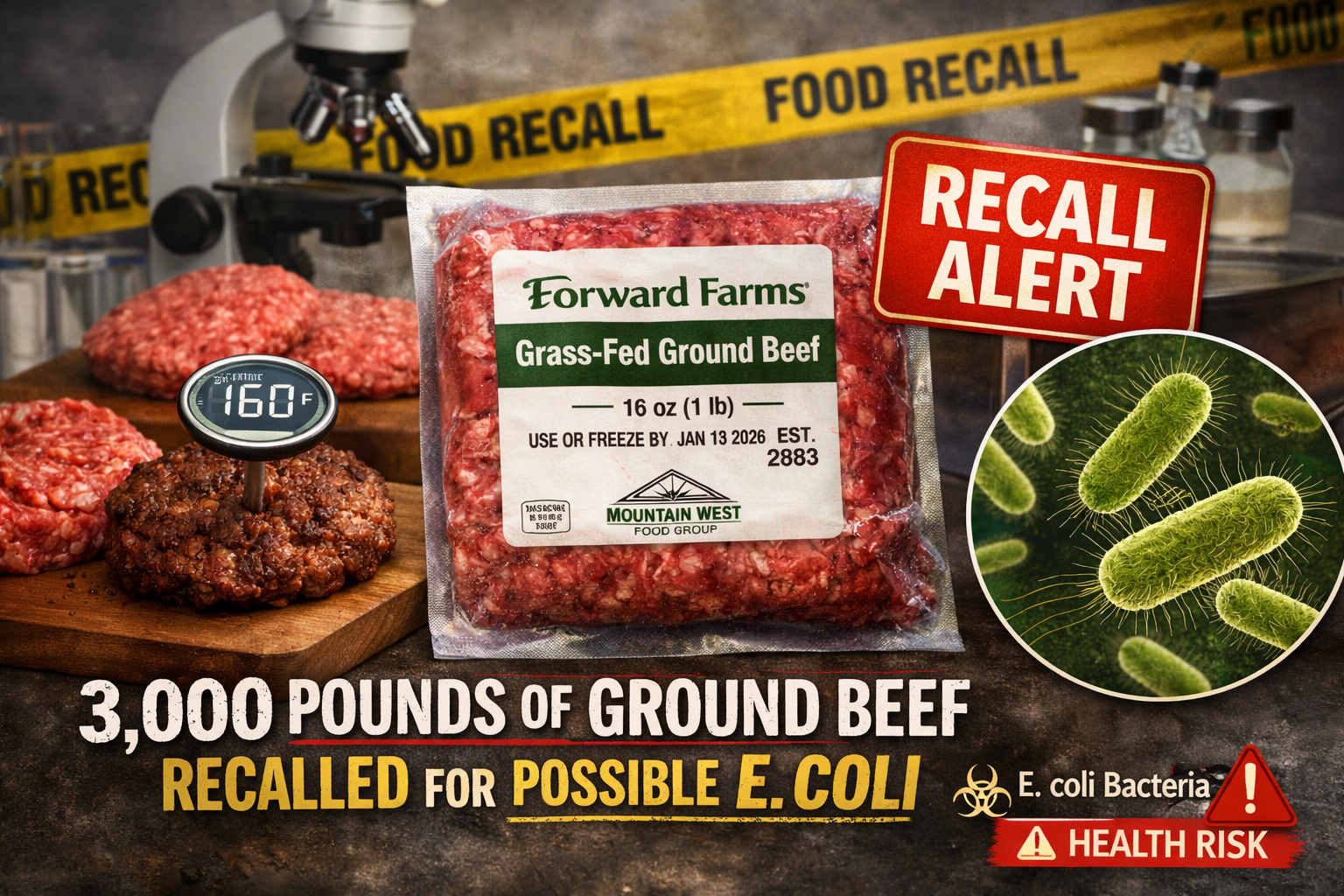
Nearly 3,000 Pounds of Ground Beef Recalled Over Possible E. coli Contamination
Food safety officials have announced a recall involving nearly 3,000 pounds of raw ground beef due to possible contamination with E. coli O26. The recall affects grass fed ground beef products distributed across six U.S. states and is raising renewed concerns about food safety, proper meat handling, and the risks associated with undercooked beef.
The U.S. Department of Agriculture Food Safety and Inspection Service, commonly known as FSIS, issued the recall after routine testing detected the presence of E. coli O26, a potentially dangerous strain of bacteria. While no illnesses have been confirmed so far, consumers are urged to take immediate action if they purchased the affected product.
This article explains what products are included in the recall, why E. coli O26 is dangerous, what symptoms to watch for, and how consumers can protect themselves and their families.
Details of the Ground Beef Recall
According to FSIS, the recalled product is grass fed ground beef produced by Mountain West Food Group, LLC, a company based in Heyburn, Idaho. The beef was processed on December 16, 2025, and packaged for retail sale.
Product information consumers should check
The recalled ground beef was sold in the following form:
- Product name: Forward Farms Grass Fed Ground Beef
- Package size: 16 ounce vacuum sealed packages
- Use or freeze by date: January 13, 2026
- Establishment number: EST. 2083
The beef was shipped to distributors in California, Colorado, Idaho, Montana, Pennsylvania, and Washington. It was intended for retail sale in those states, meaning it may still be in consumer refrigerators or freezers.
FSIS officials emphasized that consumers who purchased the product should not eat it under any circumstances. The beef should be thrown away or returned to the place of purchase for a refund.
How the Contamination Was Discovered
The recall was initiated after routine food safety testing conducted by FSIS identified possible contamination with E. coli O26. Routine testing is a standard part of federal food safety oversight and often helps detect issues before illnesses are reported.
At this time, no confirmed cases of illness have been linked to the recalled beef. However, health officials caution that symptoms of E. coli infection can take several days to appear, and some cases may go unreported.
This proactive recall is intended to reduce the risk of exposure and prevent potential outbreaks.
What Is E. coli O26?
E. coli O26 is part of a group of bacteria known as Shiga toxin producing E. coli, often abbreviated as STEC. These bacteria can produce toxins that damage the lining of the intestines and, in severe cases, other organs.
While many strains of E. coli live harmlessly in the human gut, Shiga toxin producing strains can cause serious illness.
How E. coli O26 spreads
E. coli contamination often occurs when meat comes into contact with bacteria during processing. Ground beef is particularly vulnerable because bacteria on the surface of meat can become mixed throughout the product during grinding.
If ground beef is not cooked to a high enough temperature, the bacteria may survive and cause infection.
Symptoms of E. coli Infection
Symptoms of E. coli O26 infection usually begin within two to four days after exposure, though they can appear sooner or later in some cases.
Common symptoms include:
- Diarrhea, which may be bloody
- Abdominal cramps
- Nausea and vomiting
- Fatigue
- Mild fever in some cases
Most people recover within about a week without medical treatment. However, some infections can become severe, especially in vulnerable populations.
Risk of Hemolytic Uremic Syndrome
In rare but serious cases, E. coli O26 infection can lead to hemolytic uremic syndrome, often referred to as HUS. This condition affects the blood and kidneys and can be life threatening.
Who is most at risk
HUS is more likely to occur in:
- Young children
- Older adults
- People with weakened immune systems
Warning signs of HUS include:
- Pale skin
- Easy bruising
- Decreased or no urine output
- Extreme fatigue
Anyone experiencing these symptoms should seek emergency medical care immediately.
What Consumers Should Do Now
FSIS has issued clear guidance for consumers who may have purchased the recalled beef.
Immediate steps to take
- Check your refrigerator and freezer for Forward Farms Grass Fed Ground Beef
- Match the use or freeze by date and establishment number
- Do not taste or cook the beef
- Throw it away or return it to the store
Even if the beef looks and smells normal, it may still be contaminated. Cooking it does not guarantee safety if cross contamination has already occurred in your kitchen.
Safe Cooking and Food Handling Tips
While this recall highlights a specific product, food safety experts emphasize that proper handling and cooking of ground beef is essential at all times.
Cooking ground beef safely
FSIS reminds consumers to always cook ground beef to an internal temperature of 160 degrees Fahrenheit. The only reliable way to confirm this temperature is by using a food thermometer.
Color alone is not a reliable indicator of doneness, as beef can turn brown before it reaches a safe temperature.
Preventing cross contamination
To reduce the risk of foodborne illness:
- Wash hands thoroughly before and after handling raw meat
- Use separate cutting boards for raw meat and other foods
- Clean utensils, countertops, and surfaces with hot soapy water
- Store raw meat separately from ready to eat foods
These simple steps can significantly reduce the risk of bacterial spread in the kitchen.
What to Do If You Feel Sick
Anyone who believes they may have eaten the recalled beef and is experiencing symptoms should contact a healthcare provider. Be sure to mention possible exposure to E. coli.
While many cases resolve on their own, medical guidance is important, especially for children, older adults, and individuals with chronic health conditions.
Contact Information for Questions
Consumers with questions about the recall can contact Mountain West Food Group directly:
- Phone: 208 679 3765
- Email: info@mountainwestfoodgroup.com
Food safety questions can also be directed to the USDA Meat and Poultry Hotline at 888 674 6854.
Why Food Recalls Matter
Food recalls play a critical role in protecting public health. They help remove potentially dangerous products from circulation before widespread illness occurs.
This recall also serves as a reminder that even products marketed as natural or grass fed are not immune to contamination risks. Proper processing, storage, and preparation remain essential regardless of how food is produced.
Final Thoughts
The recall of nearly 3,000 pounds of grass fed ground beef underscores the importance of food safety vigilance at every level, from production to the home kitchen. While no illnesses have been confirmed so far, consumers should take the recall seriously and follow all guidance provided by FSIS.
Checking product labels, practicing safe food handling, and staying informed about recalls can help protect you and your family from preventable foodborne illnesses.
Source
U.S. Department of Agriculture Food Safety and Inspection Service, Recall Notice, December 27, 2025
Disclaimer
This article is for informational purposes only and does not provide medical advice, diagnosis, or treatment. Health information reflects general trends and may not apply to individual circumstances. Always consult a qualified healthcare professional for personalized medical guidance.