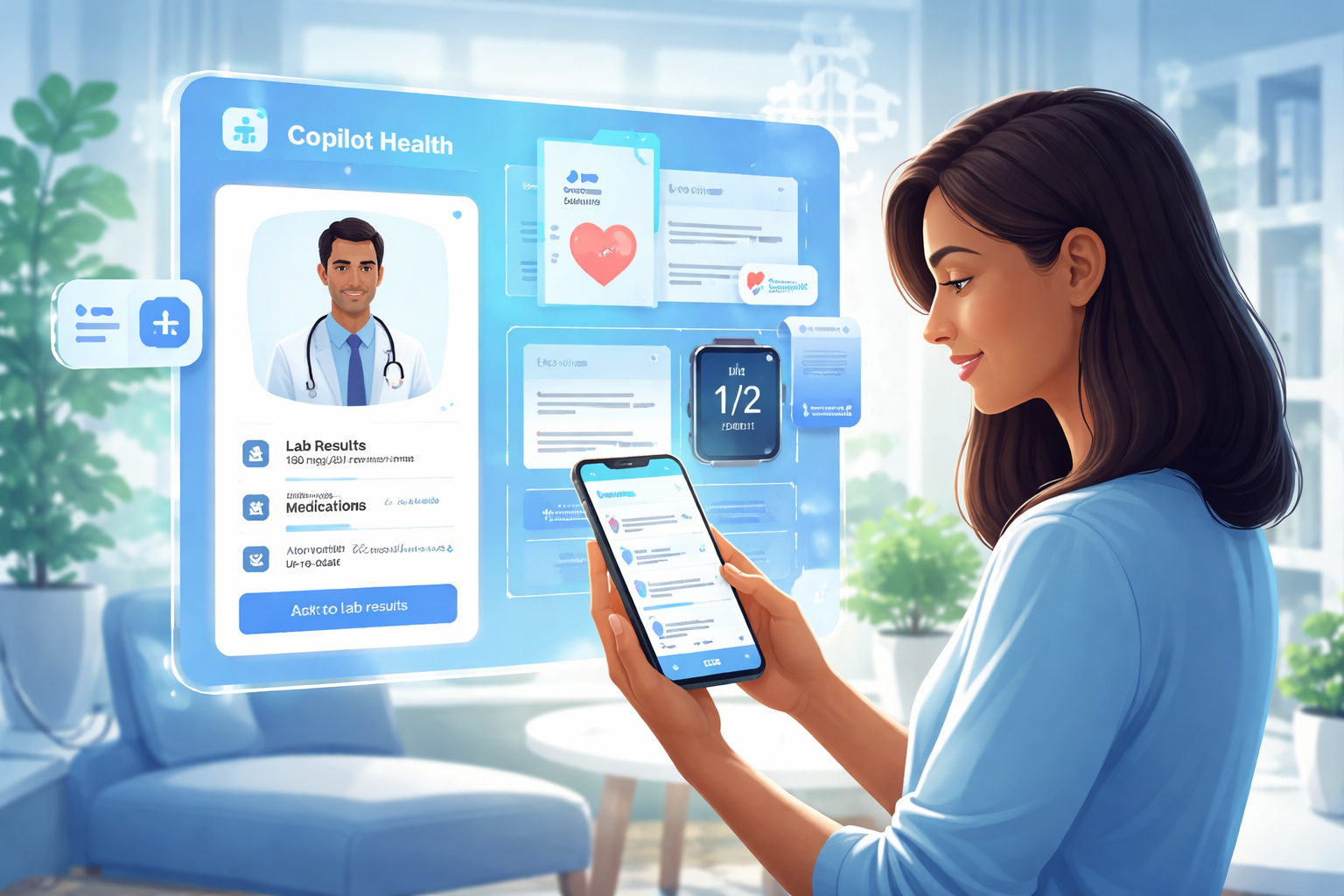
Artificial intelligence (AI) continues to reshape many industries, and healthcare is quickly becoming one of the most important areas of innovation. Recently, Microsoft announced a new AI-powered feature designed to help people better understand and manage their health information. The tool, called Copilot Health, works inside the company’s Copilot app and aims to provide personalized health insights based on user data.
This new development highlights how technology companies are expanding into digital health tools that can support everyday healthcare decisions. By combining artificial intelligence with medical records and wearable device data, the feature may make it easier for individuals to monitor their well-being and understand their medical information.
In this article, we explore what Copilot Health is, how it works, what data it uses, and why this launch could be an important step in the future of AI in healthcare.
Copilot Health is a new artificial intelligence feature integrated into the Copilot app developed by Microsoft. The tool is designed to help users review their medical information and receive personalized health guidance.
If a user chooses to share their health data, the system can analyze several types of information, including:
Using this information, the AI assistant can provide explanations, answer health-related questions, and help users better understand their personal health data.
For individuals who prefer not to share their medical records, the chatbot can still provide general health information and educational content.
The Copilot Health feature appears as a dedicated section inside the Copilot mobile app. Once activated, users can connect their health information sources and ask questions about their medical data.
For example, users might ask the AI assistant to explain lab results, summarize doctor notes, or provide insights about medication schedules. The AI then processes the information and generates personalized responses tailored to the user's health profile.
According to the company, the system can connect to health records from more than 50,000 hospitals and healthcare providers across the United States. This wide connectivity allows the tool to gather comprehensive health information for users who choose to link their records.
However, before accessing these records, users must complete identity verification through Clear, which helps ensure the information is accessed securely.
The health records themselves are retrieved using HealthEx, a platform that follows federal standards for secure medical data sharing.
Handling medical records requires extremely strong privacy protections. Because of this, the developers of Copilot Health have emphasized data security as a core part of the system.
According to the company, several safeguards are built into the feature:
These protections are intended to give users control over how their personal health data is used.
The company also stated that it is taking a cautious and careful approach to launching the feature because of the sensitive nature of medical records.
One of the potential benefits of AI health assistants is helping people manage long term medical conditions.
Individuals living with chronic diseases often track many different pieces of information, including medication schedules, lab results, and lifestyle habits. Copilot Health aims to organize this information in a way that is easier to understand.
For example, the tool may help users:
These features may make it easier for patients to stay informed about their health between doctor visits.
To improve accuracy and safety, the AI system was developed with input from healthcare professionals. According to the company, more than 230 physicians participated in reviewing and testing the technology.
Medical collaboration is an important step in AI healthcare development because health information must be interpreted carefully. AI systems that analyze medical data must provide accurate explanations while avoiding misleading conclusions.
Healthcare experts helped review the system’s responses and safety measures before the feature was introduced.
Copilot Health will first launch in the United States through a phased rollout. This gradual approach allows the company to test the feature, monitor performance, and improve the system before expanding availability.
At the moment, there is no confirmed release date for other countries.
The company also noted that the health feature may eventually become a paid service, although pricing details have not yet been announced.
The launch of Copilot Health is part of a broader effort by Microsoft to compete in the rapidly growing artificial intelligence market.
AI chat assistants are becoming increasingly popular for answering everyday questions, and health related topics are among the most common questions people ask.
However, the Copilot platform faces strong competition from other major AI systems such as:
By introducing a health focused feature, the company hopes to attract more users to its Copilot ecosystem.
Artificial intelligence is already being used in several healthcare areas, including medical imaging, drug research, hospital administration, and virtual health assistants.
AI powered systems can process large amounts of information quickly, which may help doctors and patients make better informed decisions.
However, experts also stress that AI tools should support healthcare professionals rather than replace them. Medical decisions often require human judgment, experience, and patient-specific considerations.
As AI technology continues to evolve, tools like Copilot Health could play a larger role in helping individuals access and understand their personal health data.
The introduction of Copilot Health represents another step toward integrating artificial intelligence into everyday healthcare management. By combining AI analysis with medical records and wearable device data, the tool aims to provide personalized insights that may help people better understand their health.
While the technology shows promise, privacy, accuracy, and responsible use will remain important factors as AI health tools continue to develop. As more companies explore digital health innovations, the coming years may bring significant changes to how people interact with their health information.

Most Accurate Healthcare AI designed for everything from admin workflows to clinical decision support.