
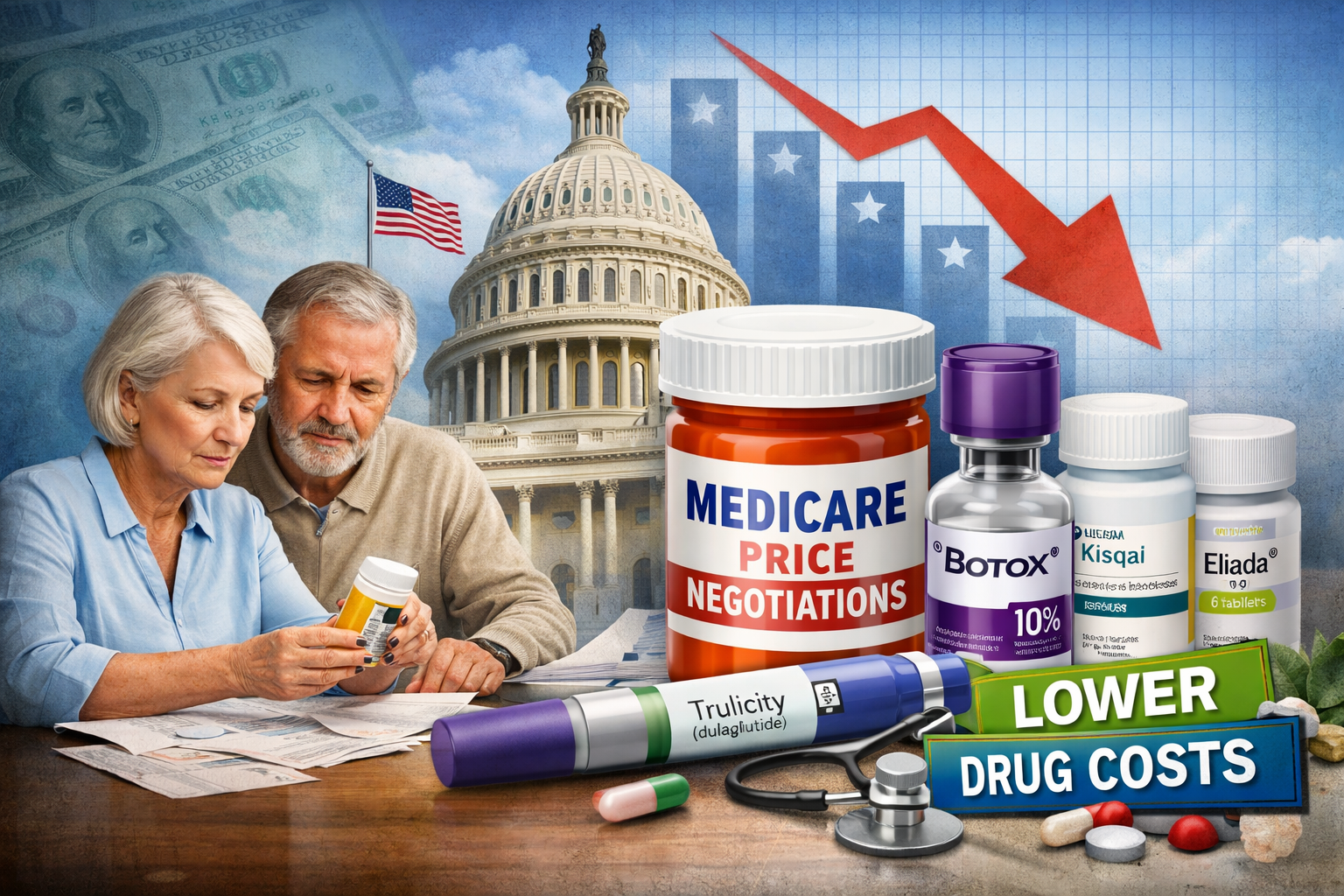
Medicare to Negotiate Lower Prices for Botox and 14 Other High-Cost Prescription Drugs
Prescription drug prices remain one of the most pressing healthcare concerns for older Americans. For millions of Medicare beneficiaries, the cost of life saving and life improving medications can strain fixed incomes and force difficult choices. A new round of federal drug price negotiations may bring meaningful relief.
In January 2026, federal officials announced that Medicare will negotiate lower prices for 15 major prescription medications, including Botox and the diabetes drug Trulicity. These negotiations are part of the Inflation Reduction Act of 2022 and are designed to reduce costs for some of the most expensive drugs covered under Medicare.
This move could reshape how prescription drugs are priced in the United States and significantly lower out of pocket costs for seniors beginning in 2028.
What Is Medicare Drug Price Negotiation
Medicare drug price negotiation allows the federal government to directly negotiate with pharmaceutical manufacturers over the cost of certain high spending medications. Historically, Medicare was prohibited from negotiating drug prices directly, unlike other government programs and private insurers.
The Inflation Reduction Act changed that structure. It authorized Medicare to begin negotiating prices for a limited number of drugs that account for the highest spending under Medicare Part B and Part D.
The first round of negotiated prices took effect in 2026. The newly announced list represents the next phase of the program and targets medications with a combined Medicare spending total of approximately 27 billion dollars.
When Will the New Prices Take Effect
Although the drugs have been announced in 2026, the negotiated prices will not take effect immediately. The new prices are scheduled to begin in 2028.
Drug manufacturers have until February 28, 2026, to decide whether they will participate in the negotiation process. While participation is technically optional, refusing to negotiate would likely result in the drug being removed from Medicare coverage. Given Medicare’s size as one of the largest pharmaceutical markets in the world, opting out is considered highly unlikely.
According to reporting from NBC News, no drug manufacturer has walked away from previous negotiation rounds.
Medicare Part B vs Part D Explained
To understand why these negotiations matter, it helps to know how Medicare covers prescription drugs.
Medicare Part B covers medications that are typically administered in a clinical setting. This includes intravenous chemotherapy drugs, injectable medications, and some physician administered treatments.
Medicare Part D covers most outpatient prescription medications that beneficiaries pick up at a pharmacy.
The 15 drugs selected for negotiation span both Part B and Part D, meaning the changes could affect costs at hospitals, clinics, and local pharmacies.
Full List of Drugs Selected for Negotiation
The medications chosen represent a wide range of serious and chronic health conditions. They were selected based on total Medicare spending and utilization.
Cancer Treatments
Several high cost cancer therapies are included due to their widespread use and expense.
- Erleada for prostate cancer
- Kisqali for breast cancer
- Verzenio for breast cancer
- Lenvima for multiple cancer types
These medications have transformed cancer treatment but often come with monthly costs reaching thousands of dollars.
Autoimmune and Inflammatory Conditions
Autoimmune diseases require long term treatment and biologic medications are among the most expensive drugs on the market.
- Cimzia for Crohn’s disease
- Cosentyx for psoriasis
- Entyvio for Crohn’s disease and ulcerative colitis
- Orencia for rheumatoid arthritis
- Xeljanz and Xeljanz XR for autoimmune conditions
Lower negotiated prices could significantly reduce costs for patients who rely on these therapies for years or even decades.
Chronic Conditions and Specialty Drugs
Several medications for chronic diseases and mental health conditions are also included.
- Anoro Ellipta for chronic obstructive pulmonary disease
- Biktarvy for HIV
- Trulicity for type 2 diabetes
- Rexulti for major depressive disorder, schizophrenia, and agitation related to Alzheimer’s disease
- Xolair for asthma and allergic conditions
These drugs represent some of the highest spending categories within Medicare due to long term use and large patient populations.
Why Botox Is Included in Medicare Negotiations
Botox is widely known for cosmetic use, but Medicare only covers Botox for medical purposes. Its inclusion in the negotiation program is strictly related to approved therapeutic uses.
Medicare covers Botox for conditions such as:
- Chronic migraines
- Overactive bladder
- Muscle spasms and spasticity
- Certain neurological disorders
For patients receiving Botox injections every few months, the cost can add up quickly. Negotiated pricing could substantially lower expenses for these beneficiaries.
Impact on Medicare Beneficiaries
For seniors and people with disabilities, lower drug prices could have far reaching effects.
Reduced medication costs may lead to better adherence, meaning patients are more likely to take medications as prescribed. This can improve health outcomes and reduce hospitalizations.
Lower prices may also reduce the likelihood that patients skip doses, delay refills, or abandon prescriptions entirely due to cost concerns.
In addition, reduced drug spending helps stabilize the Medicare program itself, potentially limiting premium increases and taxpayer burden over time.
Pharmaceutical Industry Response
The pharmaceutical industry has strongly opposed Medicare price negotiations in the past, arguing that reduced revenue could limit innovation and research investment.
However, participation in the program remains high. Given Medicare’s scale, most manufacturers consider continued coverage essential.
The negotiation process includes provisions that consider research costs, development timelines, and therapeutic value, which aims to balance affordability with innovation.
Additional Drug Price Changes on the Horizon
In addition to the newly announced drugs, the federal government plans to renegotiate the price of Tradjenta, a diabetes medication included in an earlier negotiation round.
This announcement follows recent news that negotiated lower prices for Ozempic and Wegovy are scheduled to take effect in 2027.
Together, these efforts signal a broader shift toward federal involvement in prescription drug pricing.
What This Means for the Future of Healthcare Costs
Medicare drug price negotiation represents one of the most significant changes to US healthcare policy in decades. While the program currently affects a limited number of drugs, future rounds are expected to expand the list.
If successful, the model could influence private insurers and employer sponsored plans, further driving down drug prices across the healthcare system.
For patients, caregivers, and healthcare providers, staying informed about these changes is essential when planning treatment and managing healthcare expenses.
Key Takeaways
- Medicare will negotiate prices for 15 high cost prescription drugs beginning in 2028
- The list includes treatments for cancer, autoimmune diseases, diabetes, HIV, COPD, and neurological conditions
- Botox is included for medical uses, not cosmetic procedures
- Negotiations are part of the Inflation Reduction Act of 2022
- Lower prices may improve medication adherence and reduce financial strain for seniors
As the negotiation process unfolds, beneficiaries should review their Medicare plans annually and speak with healthcare providers about cost saving options.
Sources
NBC News, January 27, 2025
Centers for Medicare and Medicaid Services
Disclaimer
This article is for informational and educational purposes only. It does not provide medical advice, diagnosis, or treatment. Statistical and policy information reflects general trends and may not apply to individual circumstances. Always consult a qualified healthcare provider or Medicare representative for personalized medical or coverage decisions.