
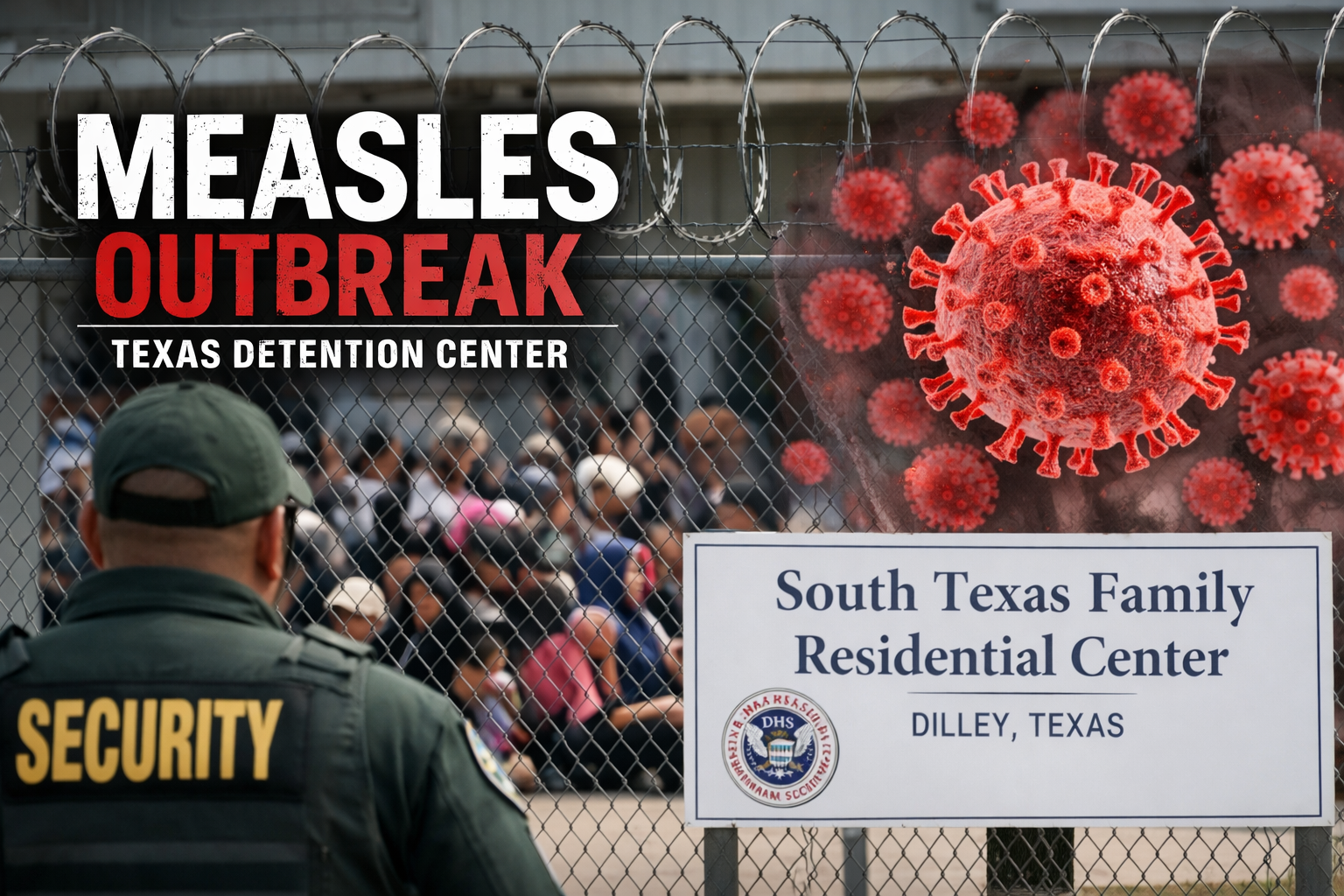
Measles Cases Detected at Texas Immigrant Detention Center Raise Public Health Concerns
Two confirmed measles cases at a large immigrant detention facility in Texas have sparked renewed concern among public health experts, lawmakers, and immigration advocates. The outbreak highlights ongoing vulnerabilities in congregate living environments and raises questions about vaccination access, disease prevention, and transparency inside detention centers across the United States.
According to federal officials, the cases were identified at the South Texas Family Residential Center in Dilley, Texas. The facility houses approximately 1,100 adults and children and is one of the largest immigrant family detention centers in the country. While officials say containment measures are underway, advocates warn that crowded conditions could allow measles to spread rapidly.
What Happened at the Dilley Detention Center
On January 31, 2026, two detainees at the Dilley facility tested positive for measles. The center is located roughly 70 miles south of San Antonio and primarily holds migrant families awaiting immigration proceedings. Following confirmation of the cases, federal authorities reported that individuals who may have been exposed were isolated, and internal movement within the facility was restricted.
Tricia McLaughlin, assistant secretary at the U.S. Department of Homeland Security, stated that medical staff are actively monitoring detainees and taking steps to prevent further transmission. She also emphasized that detainees are receiving appropriate medical care.
However, officials have not disclosed how the infections originated, whether the individuals were vaccinated, or how many people inside the facility have immunity against measles. The lack of detailed information has fueled concern among public health professionals and elected officials.
Why Measles Is Especially Dangerous in Detention Settings
Measles is one of the most contagious viral diseases known. The virus spreads through respiratory droplets and can remain airborne in enclosed spaces for up to two hours after an infected person coughs or sneezes. About nine out of ten unvaccinated individuals exposed to measles will become infected.
Dr. Jeanne Marrazzo, CEO of the Infectious Diseases Society of America, warned that detention facilities provide ideal conditions for measles transmission. Shared sleeping areas, limited ventilation, and close contact among residents make it difficult to prevent outbreaks once the virus is introduced.
Another challenge is that people infected with measles can spread the virus several days before symptoms appear. This means containment efforts may begin only after exposure has already occurred.
Vaccination Questions and Reported Gaps in Communication
Immigration advocates and legal representatives have raised alarms about how detainees were informed following the outbreak. Eric Lee, an immigration attorney representing a family held at the Dilley facility, told reporters that families were placed on lockdown without explanation. According to his account, detainees were not asked about their vaccination history and were not offered measles vaccines after the cases were identified.
These claims have intensified scrutiny of health protocols inside immigration detention centers. While federal officials maintain that vaccines are available and that there were no interruptions in medical services, advocates argue that access and communication remain inconsistent.
Immigration authorities recently signed a contract worth up to $616,000 to continue providing vaccine services through mid June 2026. Officials insist that vaccine access has been maintained throughout contractor transitions, but outside observers continue to call for independent oversight.
A Broader National Measles Resurgence
The Texas detention center cases are part of a larger national trend. Measles was declared eliminated in the United States in 2000 due to widespread vaccination. However, declining vaccination rates in recent years have led to a resurgence.
As of early 2026, more than 580 measles cases and 17 hospitalizations have been reported nationwide, according to the U.S. Centers for Disease Control and Prevention. In 2025, the country recorded over 2,260 cases across 44 states, more than 200 hospitalizations, and three deaths.
Detention centers are not the only locations affected. Similar measles infections have been reported at immigration facilities in Arizona, further underscoring the vulnerability of these environments.
Health Risks Associated With Measles
Measles is often mistaken as a mild childhood illness, but it can cause severe complications. Common symptoms include high fever, cough, runny nose, red eyes, and a widespread rash. In serious cases, measles can lead to pneumonia, encephalitis, long-term immune system damage, and death.
Young children, pregnant individuals, and people with weakened immune systems face the highest risk of complications. In crowded settings like detention centers, delayed diagnosis and limited isolation options can worsen outcomes.
Lawmakers and Advocates Demand Accountability
U.S. Representative Joaquin Castro of Texas has called for answers after visiting the Dilley facility and learning about the measles cases. He and other lawmakers are seeking clarity on vaccination policies, outbreak response protocols, and detainee communication.
Public health experts argue that outbreaks in detention centers are not just an internal issue but a broader community concern. Staff members, contractors, and transferred detainees can inadvertently carry infections beyond facility walls, increasing the risk of wider spread.
Advocates continue to urge federal agencies to implement stronger vaccination screening, improve transparency, and prioritize preventive care in all immigration facilities.
Why This Matters Beyond Immigration Policy
The measles cases at the Texas detention center illustrate how infectious diseases can exploit gaps in healthcare systems, particularly in high-density environments. The situation highlights the importance of vaccination, early detection, and clear communication in protecting both detained populations and the public at large.
As measles cases continue to rise nationwide, health experts stress that prevention remains the most effective strategy. Ensuring consistent access to vaccines and medical care in all settings, including detention facilities, is critical to preventing future outbreaks.
Sources
The Washington Post, February 3, 2026
U.S. Centers for Disease Control and Prevention
Disclaimer
This article is for informational purposes only and is not intended as medical advice, diagnosis, or treatment. Statistical data reflects general trends and may not apply to individual situations. Always consult a qualified healthcare professional for personalized medical guidance.