Lung Cancer: Types, Symptoms, Causes, and Treatment”
Lung cancer happens when cells in the lung change (or mutate). Unlike normal cells, cancer cells grow uncontrollably and cluster together to form a tumor, destroying healthy lung tissue around them. Symptoms usually do not appear until cancer cells spread to other parts of the body and prevent other organs from functioning properly. At this point, it is harder to treat lung cancer.
As per the American lung association, lung cancer is the leading cause of cancer deaths in the U.S. [1]
What are the types of lung cancer?
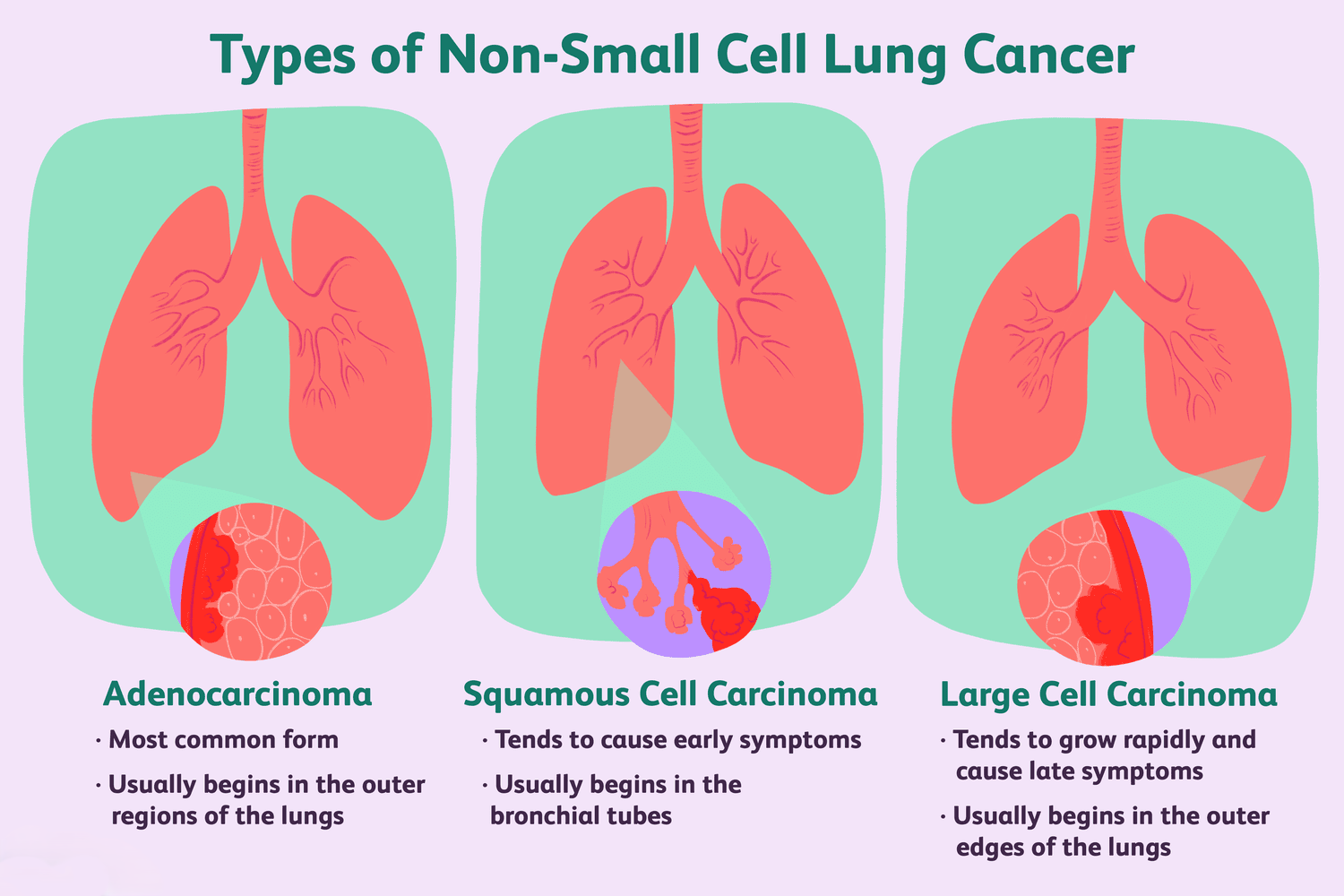
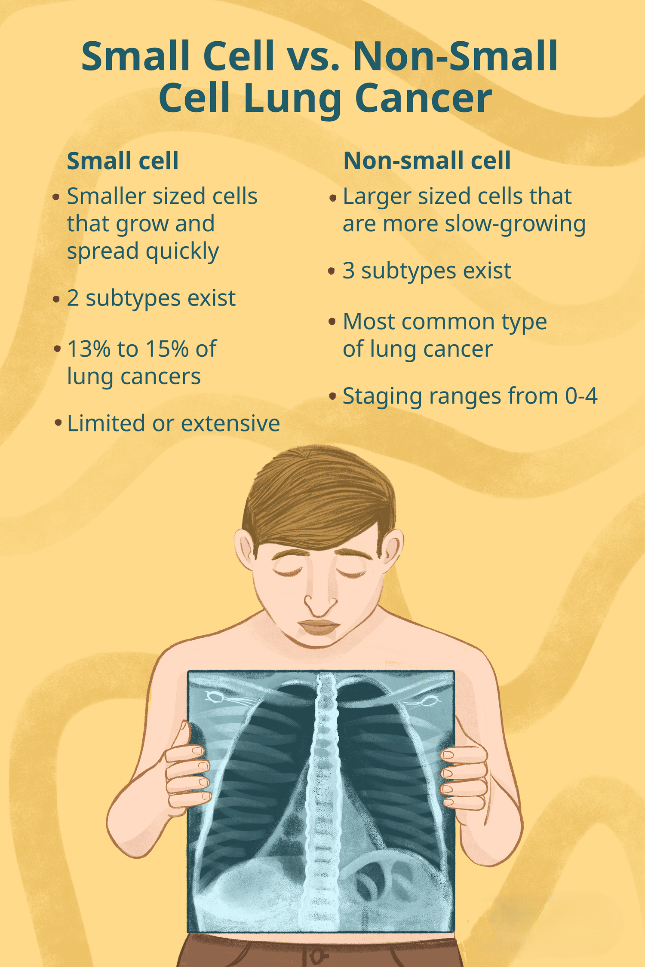
- Non-small cell lung cancer (NSCLC): Accounts for over 80% of lung cancer cases. Common types include adenocarcinoma and squamous cell carcinoma. Adenosquamous carcinoma and sarcomatoid carcinoma are two less common types of NSCLC.
- Small cell lung cancer (SCLC): Grows more quickly and is harder to treat than NSCLC. It’s often found as a relatively small lung tumor that’s already spread to other parts of your body. Specific types of SCLC include small cell carcinoma (also called oat cell carcinoma) and combined small cell carcinoma.
- Other types of cancer can start in or around your lungs, including lymphomas (cancer in your lymph nodes), sarcomas (cancer in your bones or soft tissue), and pleural mesothelioma (cancer in the lining of your lungs). These are treated differently and usually aren’t referred to as lung cancer. [2]
What are the symptoms of lung cancer?
Respiratory symptoms of lung cancer include:
- Chronic cough: People with lung cancer often have a cough that won’t go away. A cough that lasts for at least eight weeks is considered chronic.
- Frequent respiratory infections: Lung tumors can block the airway, causing frequent infections such as bronchitis and pneumonia.
- Coughing up blood: Even if it’s just a small amount, coughing up blood or bloody mucus is a reason to call your doctor.
- Shortness of breath: Lung cancer can cause the airway passages to narrow, which leads to difficulty breathing.
- Hoarseness: Chronic coughing or a tumor that interferes with the vocal cords can cause people with lung cancer to have a raspy voice.
Chest pain: Lung cancer pain is due to a tumor causing tightness in the chest or pressing on nerves. You may feel pain in your chest, especially when breathing deeply, coughing, or laughing.
Generalised symptoms of lung cancer include:
- Loss of appetite and body weight
- Bone pain or fractures
- Headaches
- Lumps in the neck or collarbone area
- Weakness or numbness in the limbs
- Swelling in the face, neck, or arms
- Jaundice
- Blood clots [3]
What are the causes of lung cancer?
- Smoking: About 90% of lung cancer cases are a result of smoking. Tobacco smoke contains many harmful chemicals that are known to cause lung cancer. Being a past-smoker or exposure to second-hand smoke may reduce the risk of getting cancer; however does not completely eliminate it.
- Radon: Second-leading cause of lung cancer. Radon is a colourless, odourless radioactive gas that exists naturally in soil. It comes up through the soil and enters buildings through small gaps and cracks. One out of every 15 homes in the U.S. is subject to radon exposure. Exposure to radon combined with cigarette smoking significantly increases your lung cancer risk.
- Particle pollution: Refers to a mix of very tiny solid and liquid particles that are in the air we breathe. Evidence shows that particle pollution coming from exhaust smoke increases the risk of lung cancer.
- Genetic: Having a history of lung cancer in the family increases the risk of getting it. [4]
Hazardous chemicals: Working with materials such as asbestos, uranium, arsenic, cadmium, chromium, nickel, and some petroleum products increases the risk of getting lung cancer.
How is lung cancer diagnosed?
Your healthcare provider will take your health history, ask about your symptoms, and perform a physical examination. |The following tests can help to confirm the diagnosis of lung cancer:
- Blood tests: To check how your organs and other parts of your body are working.
- Imaging: Chest X-rays and CT scans give your provider images that can show changes in your lungs. PET/CT scans are usually done to evaluate a concerning finding on a CT scan or after a cancer diagnosis to determine whether cancer has spread.
- Biopsy: Samples of tissue or fluid (biopsy) can be collected using a needle (needle biopsy) and studied under a microscope to look for cancer cells and determine what kind of cancer it is. Samples can also be tested for genetic changes (mutations) that might affect your treatment.
- Bronchoscopy, thoracoscopy, or video-assisted thoracic surgery (VATS) can be done to look at parts of your lungs and take tissue samples.
- Thoracentesis is a procedure done to take a sample of the fluid around your lungs for testing.
- Endobronchial ultrasound or endoscopic esophageal ultrasound can be done to look at and biopsy lymph nodes.
- Mediastinoscopy or mediastinotomy can be done to look at and take samples from the area between your lungs (mediastinum).
- Molecular tests help to test gene mutations that special drugs can target as part of your treatment plan. Genes that might have changes that can be targeted in NSCLC include KRAS, EGFR, ALK, ROS1, BRAF, RET, MET, HER2, or NTRK. [2]
How is lung cancer treated?
For localized tumors, surgery is usually a preferred option. If the cancer has spread to other parts of the body, treatment might start with medicines and radiation.
- Surgical options include
- Wedge resection, which is the removal of a small section of lung that contains the cancer, along with a margin of healthy tissue.
- Segmental resection is the removal of a larger portion of the lung, but not an entire lobe.
- Lobectomy involves the removal of the entire lobe of one lung.
- Pneumonectomy to remove an entire lung.
- Radiation therapy treats cancer with powerful energy beams coming from X-rays, protons or other sources. For lung cancers that have spread to other areas of the body, radiation therapy may help relieve symptoms. Stereotactic body radiotherapy is an intense radiation treatment that aims beams of radiation from many angles at the cancer.
- Chemotherapy with either oral or intravenous route can be given in a series of treatments over a period of weeks or months. Chemotherapy is often used after surgery to kill any cancer cells that may remain. It can be used alone or combined with radiation therapy. Chemotherapy also may be used before surgery to shrink cancers and make them easier to remove.
- Immunotherapy for cancer is a treatment with medicine that boosts the immune system to kill cancer cells or the germs that caused it.
Targeted therapy for cancer is a treatment that uses medicines that attack specific chemicals in the cancer cells. By blocking these chemicals, targeted treatments can cause cancer cells to die. For lung cancer, targeted therapy may be used for people with cancer that spreads or comes back after treatment.
Palliative care is aimed to improve quality of life for you and your family. To achieve this, a multidisciplinary team of different healthcare professionals work together with you to help relieve pain and other symptoms. [5]