
Life Expectancy Rises and Death Rates Fall in the United States: What New Federal Data Reveals
Recent national health data offers encouraging news for the United States. After several challenging years shaped by the COVID-19 pandemic, new figures show that Americans are living longer and dying at lower rates. According to data published in January by the National Center for Health Statistics and reported by HealthDay via Drugs.com, life expectancy increased from 2023 to 2024 while age-adjusted death rates declined across the population. At the same time, drug overdose deaths saw a significant and historic decrease.
These findings point to meaningful improvements in public health and signal progress in areas that have deeply affected families and communities nationwide. Understanding what these numbers mean, why they matter, and how they may shape future health outcomes is essential for policymakers, healthcare providers, and the general public.
Life Expectancy in the U.S. Increased in 2024
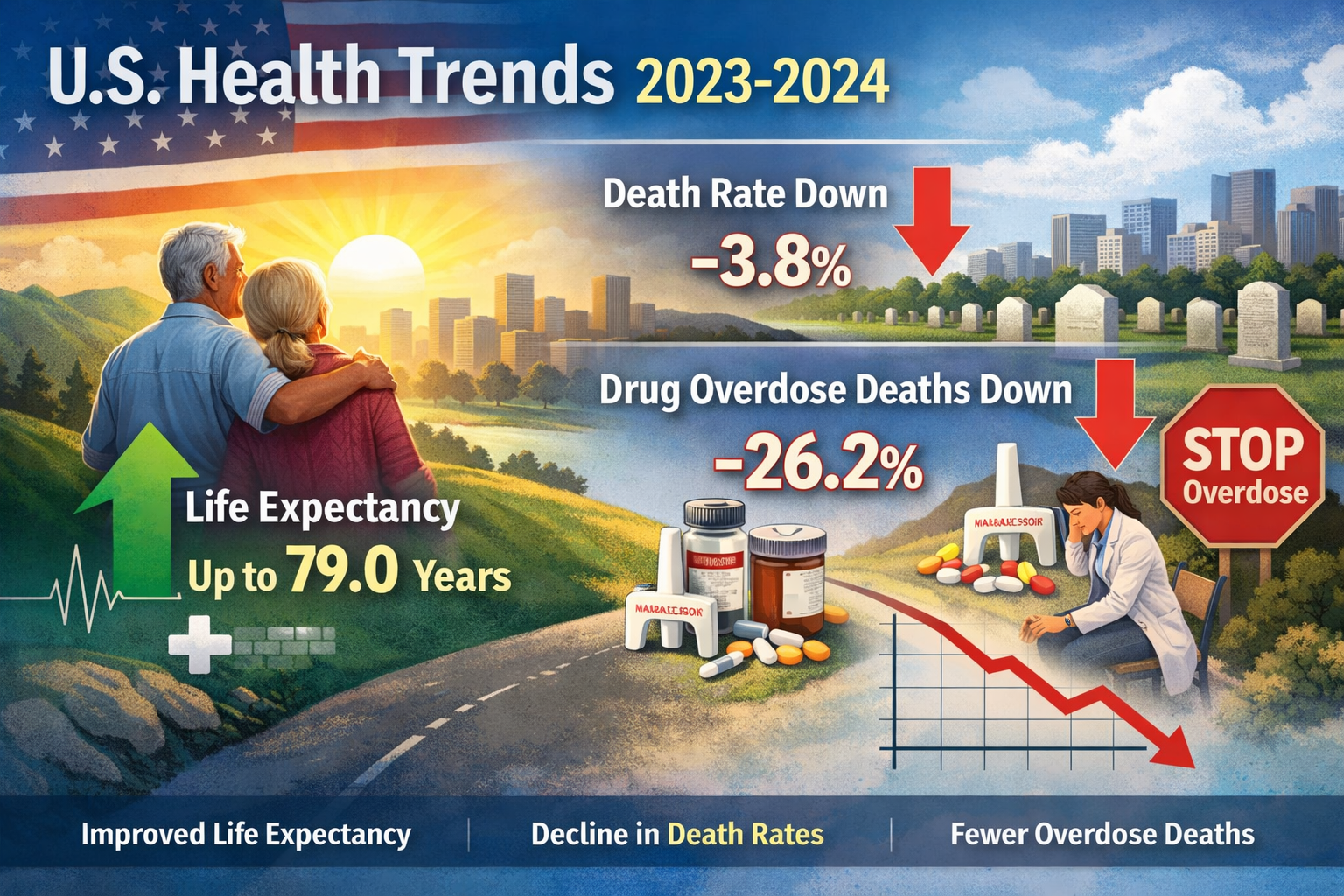
One of the most notable findings from the new data is the rise in life expectancy for the U.S. population. Researchers led by Dr. Jiaquan Xu of the National Center for Health Statistics analyzed mortality data from the National Vital Statistics System. Their analysis found that life expectancy at birth reached 79.0 years in 2024, an increase of 0.6 years compared with 2023.
This increase represents a meaningful shift following declines seen earlier in the decade. During the height of the COVID-19 pandemic, life expectancy dropped sharply due to high mortality rates, particularly among older adults and individuals with underlying health conditions. The rebound seen in 2024 suggests that the nation is continuing to recover from those losses.
Life expectancy is a key indicator of a population’s overall health. It reflects not only mortality rates but also broader factors such as access to healthcare, disease prevention, socioeconomic conditions, and public health infrastructure. An increase of more than half a year in a single period is considered significant in population health terms.
Age-Adjusted Death Rates Declined Nationwide
In addition to longer life expectancy, the data shows a clear decline in overall mortality. From 2023 to 2024, the age-adjusted death rate decreased by 3.8 percent, falling from 750.5 deaths per 100,000 people to 722.1 deaths per 100,000.
Age-adjusted death rates are especially important because they account for changes in the age distribution of the population. As the U.S. population continues to age, raw death counts can increase even when health outcomes improve. Age adjustment allows for a more accurate comparison over time.
This decline suggests that fewer Americans died from leading causes of death in 2024 compared with the previous year. While the data brief does not detail all contributing causes, improvements likely reflect reduced deaths from infectious diseases, better chronic disease management, and improved emergency and preventive care.
A Historic Decline in Drug Overdose Deaths
Perhaps the most striking finding from the January reports is the sharp decrease in drug overdose deaths. A separate analysis by Matthew F. Garnett and Arialdi M. Miniño, also from the National Center for Health Statistics, examined overdose mortality trends using the same national database.
Their findings show that between 2023 and 2024, the age-adjusted drug overdose death rate dropped by 26.2 percent, declining from 31.3 deaths per 100,000 people to 23.1 deaths per 100,000. This represents the largest percentage decrease observed between 2014 and 2024.
The authors note that this decline continues a downward trend that began in 2022. After years of rising overdose deaths driven largely by opioids such as fentanyl, the reversal marks a major public health milestone.
Declines Across All Age Groups and Demographics
The reduction in drug overdose deaths was not limited to a single demographic group. According to the data, overdose death rates decreased across all age groups from 2023 to 2024. The largest declines were observed among younger age groups, which historically have been heavily affected by substance use disorders.
Additionally, overdose death rates fell across all racial and Hispanic origin groups. The most substantial decreases were seen among Black, non-Hispanic individuals, a population that had experienced disproportionate increases in overdose deaths in recent years.
These broad-based declines suggest that prevention and intervention efforts are reaching more communities and may be helping to reduce longstanding health disparities.
What Is Driving These Improvements?
While the data briefs focus on outcomes rather than causes, several factors may be contributing to the positive trends observed in 2024.
Expanded Access to Addiction Treatment
Over the past few years, access to medications for opioid use disorder, such as buprenorphine and methadone, has expanded. Regulatory changes have made it easier for healthcare providers to prescribe these treatments, increasing availability for patients in need.
Increased Naloxone Availability
Naloxone, a medication that reverses opioid overdoses, has become more widely available through pharmacies, community programs, and over-the-counter access. Increased distribution has played a critical role in preventing fatal overdoses.
Public Health and Harm Reduction Efforts
Federal, state, and local public health agencies have invested in harm reduction strategies, including syringe services programs, education initiatives, and outreach to high-risk populations. These efforts may be contributing to fewer overdose deaths.
Recovery From Pandemic-Related Disruptions
The decline in overall death rates and increase in life expectancy may also reflect recovery from pandemic-related disruptions to healthcare. During COVID-19 surges, many individuals delayed routine care or chronic disease management. Improved access and utilization in recent years may be improving outcomes.
Why These Trends Matter for the Future
The improvements seen in 2024 provide cautious optimism, but experts emphasize that continued effort is needed to sustain progress. Drug overdose deaths, while declining, remain a leading cause of death in the United States, particularly among working-age adults.
Similarly, life expectancy in the U.S. still lags behind many other high-income countries. Addressing underlying factors such as chronic disease, mental health, socioeconomic inequality, and access to care will be critical for long-term improvement.
The data also highlights the importance of evidence-based public health policies. Investments in prevention, treatment, and health equity appear to be producing measurable benefits, reinforcing the value of sustained funding and community-based interventions.
Understanding the Limits of Population Data
While national statistics offer valuable insight into health trends, they do not reflect individual risk or outcomes. Factors such as genetics, lifestyle, environment, and access to healthcare can vary widely from person to person.
Experts caution against interpreting population-level improvements as guarantees of individual health. Instead, these trends should be viewed as indicators of broader progress and areas where continued attention is needed.
Conclusion
The latest data from the National Center for Health Statistics paints a hopeful picture for U.S. public health. From 2023 to 2024, Americans experienced longer life expectancy, lower overall death rates, and a dramatic reduction in drug overdose deaths. These changes represent meaningful progress after years of heightened mortality and public health strain.
While challenges remain, particularly in addressing substance use and health disparities, the findings demonstrate that targeted public health strategies and expanded access to care can make a real difference. Continued monitoring, research, and investment will be essential to build on these gains and ensure healthier outcomes for future generations.
Source
National Center for Health Statistics Data Briefs by Jiaquan Xu, M.D., Matthew F. Garnett, M.P.H., and Arialdi M. Miniño, M.P.H.
Disclaimer
Statistical data in medical articles reflect general population trends and do not apply to individual circumstances. Health outcomes can vary significantly based on personal factors. Always consult a qualified healthcare professional for personalized medical advice and healthcare decisions.