
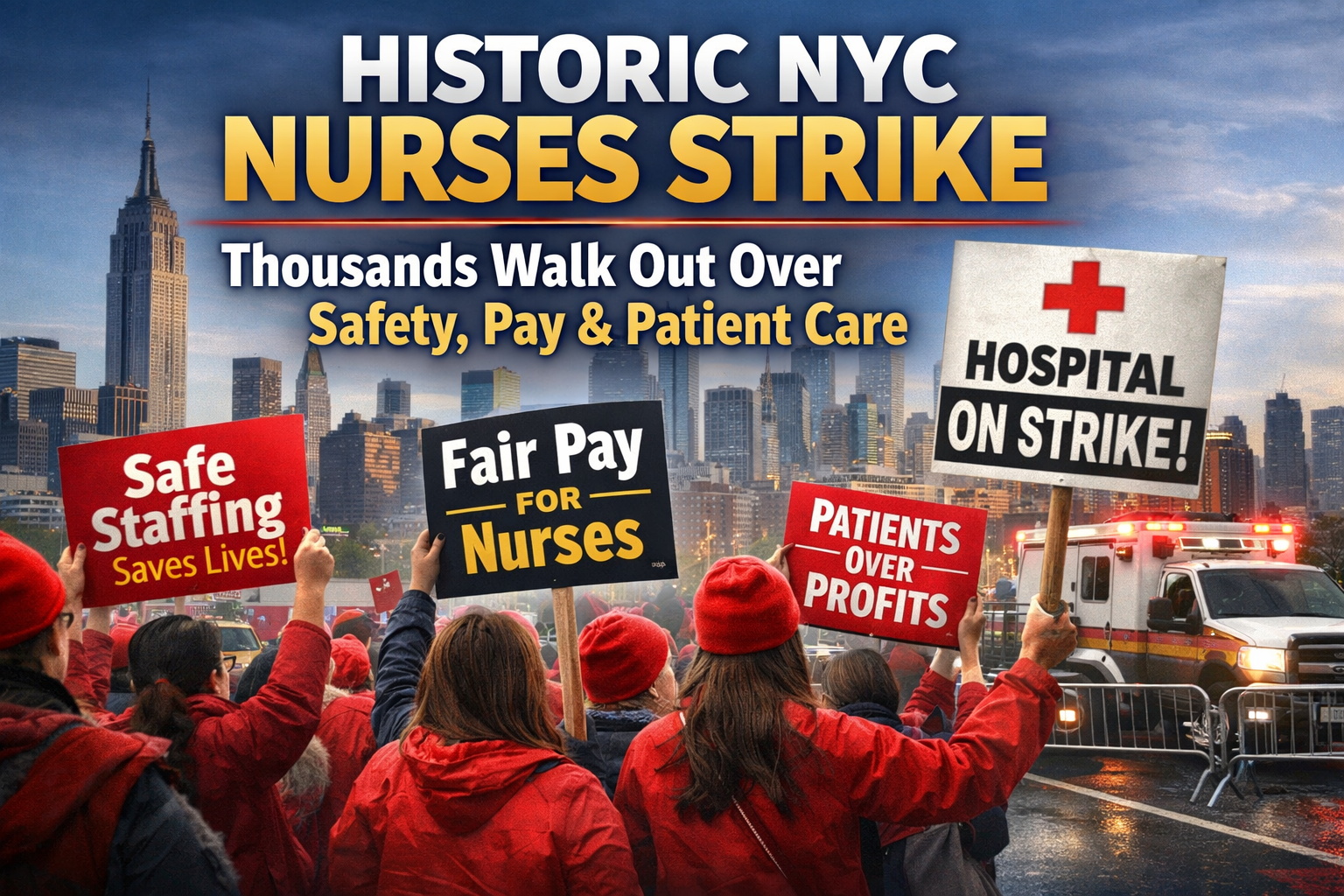
Largest Nurses Strike in New York City History Shines Spotlight on Safety and Pay
In January 2026, New York City witnessed a defining moment in modern healthcare labor history. Thousands of nurses across multiple major hospital systems walked off the job, launching the largest nurses strike the city has ever seen. The unprecedented action highlights growing tensions between frontline healthcare workers and hospital management over pay, staffing, safety, and respect.
The strike has drawn national attention not only because of its scale but also because it underscores systemic challenges facing hospitals, nurses, and patients alike. As healthcare systems continue to recover from years of strain, the outcome of this labor dispute could shape the future of nursing contracts, patient care standards, and hospital operations across the country.
This article breaks down what led to the strike, which hospitals are affected, what nurses and hospital leaders are saying, and what the potential short and long term impacts could be.
Overview of the NYC Nurses Strike
On Monday, January 13, 2026, thousands of nurses represented by the New York State Nurses Association walked off their jobs after contract negotiations with hospital management stalled. The strike affects five major hospitals in New York City:
- Mount Sinai Hospital
- Mount Sinai Morningside
- Mount Sinai West
- Montefiore Medical Center
- NewYork-Presbyterian Hospital at Columbia University Irving Medical Center
According to union leaders, this coordinated walkout represents the largest nurses strike in the city’s history. The action follows weeks of unsuccessful negotiations and growing frustration among nurses who say their concerns about patient safety and workplace protections have been ignored.
Why Nurses Decided to Strike
At the center of the strike are unresolved contract disputes between the hospitals and the New York State Nurses Association. Nurses argue that hospital executives have failed to address critical issues that directly affect both staff well-being and patient care.
Key Issues Raised by Nurses
Union leaders and frontline nurses cite several core concerns:
Unsafe staffing levels
Nurses report chronic understaffing that leads to increased workloads, burnout, and compromised patient safety. Many argue that nurse to patient ratios have not kept pace with growing patient demand.
Patient safety concerns
According to the union, insufficient staffing increases the risk of medical errors, delayed care, and poorer health outcomes.
Workplace violence
Nurses say they face rising incidents of verbal and physical abuse at work and want stronger protections, security measures, and clear protocols.
Pay and benefits
While hospitals report offering wage increases, nurses argue that compensation has not kept up with inflation, rising living costs in New York City, or the demands of the job. The union has also accused some hospitals of refusing to continue healthcare benefits for striking nurses.
Nancy Hagans, president of the New York State Nurses Association, stated that hospital management has refused to address what she described as the most important issues facing nurses and patients.
Hospital Responses and Management Perspective
Hospital leaders maintain that they are prepared to continue operating safely during the strike and argue that union demands are excessive.
Mount Sinai Health System
Mount Sinai officials said they have implemented staffing contingency plans to ensure patient care continues. The system attributed the strike to what it called extreme economic demands from the union.
Montefiore Medical Center
Montefiore issued a statement saying that union leaders are demanding $3.6 billion in contract terms, including wage increases approaching 40 percent. Hospital representatives also raised concerns about proposed language that would limit disciplinary action in certain safety situations.
Montefiore emphasized that it has already proposed maintaining existing healthcare benefits and has implemented security upgrades such as wearable panic badges and enhanced on site security.
NewYork-Presbyterian Hospital
NewYork-Presbyterian stated that it has offered significant wage increases and improved benefits and remains focused on maintaining patient care during the strike.
Government Response and Political Support
The strike quickly drew attention from city and state leaders.
Mayor Zohran Mamdani
New York City Mayor Zohran Mamdani joined nurses on the picket line outside NewYork-Presbyterian Hospital at Columbia University Irving Medical Center. He voiced strong support for the nurses, stating that they deserve dignity, respect, and fair treatment for the essential work they do.
Governor Kathy Hochul
New York Governor Kathy Hochul signed an executive order requiring state health officials to be present at affected hospitals during the strike. The goal is to ensure that patient care standards are upheld throughout the labor action.
Governor Hochul urged both hospital management and union leaders to return to the negotiating table and reach a resolution as quickly as possible.
Impact on Patients and Healthcare Services
One of the biggest concerns surrounding any healthcare strike is its effect on patients. Hospital systems say they have contingency plans in place, often involving temporary staff and restructured care models.
Short Term Effects
In the immediate term, hospitals may experience:
- Longer wait times for non emergency procedures
- Delayed elective surgeries
- Increased reliance on temporary or travel nurses
- Higher stress levels for remaining staff
Emergency departments and critical care units are expected to remain operational, although patient flow may be slower.
Long Term Implications
If the strike continues, it could have lasting effects on:
- Hospital finances due to increased staffing costs
- Nurse retention and recruitment
- Public trust in healthcare institutions
- Future labor negotiations across the healthcare industry
Healthcare experts note that prolonged staffing instability can impact continuity of care, which is essential for patients with complex or chronic conditions.
How This Strike Compares to Past Actions
The last major nurses strike in New York City occurred in 2023, when approximately 7,000 nurses walked out at Montefiore Bronx and Mount Sinai Hospital. While significant, that action was smaller in scope than the current strike.
What makes the 2026 strike notable is the number of hospitals involved and the broader public and political attention it has received. The scale of the walkout suggests growing dissatisfaction among healthcare workers nationwide.
Broader Context: A National Nursing Crisis
The NYC nurses strike is not happening in isolation. Across the United States, hospitals are grappling with a nursing shortage driven by burnout, retirements, and increased demand for healthcare services.
Factors Contributing to the Crisis
- Aging population with complex medical needs
- Lingering effects of the COVID-19 pandemic
- Rising workplace violence in healthcare settings
- Cost of living pressures in major cities
- Emotional and physical toll of bedside nursing
Labor experts say strikes like this reflect deeper structural problems that cannot be solved through short term staffing fixes alone.
What Happens Next
Negotiations between the New York State Nurses Association and hospital leadership are expected to continue. The outcome will likely influence future labor agreements not only in New York but also in other major metropolitan healthcare systems.
Possible outcomes include:
- Revised wage and benefit packages
- New staffing ratio commitments
- Enhanced workplace safety measures
- Increased oversight or legislative involvement
Both sides face pressure to reach a compromise that protects patient care while addressing nurse concerns.
Why This Matters Beyond New York City
Healthcare labor disputes often set precedents. A resolution that prioritizes staffing safety and fair compensation could encourage similar efforts nationwide. Conversely, a prolonged standoff could deepen staffing shortages and fuel further unrest.
For patients, the strike serves as a reminder that quality care depends heavily on the well-being of healthcare workers. For policymakers, it highlights the need for systemic solutions that balance financial sustainability with safe care standards.
Conclusion
The largest nurses strike in New York City history marks a pivotal moment for healthcare in the city and beyond. At its core, the dispute is about more than wages. It reflects fundamental questions about patient safety, workplace dignity, and the future of nursing as a profession.
As negotiations continue, all eyes remain on New York City. The outcome will shape not only the lives of thousands of nurses but also the care experiences of countless patients who rely on these hospitals every day.
Sources
- The Wall Street Journal, January 12, 2026
Disclaimer
This article is for informational purposes only. It summarizes publicly reported news and does not provide medical, legal, or labor advice. Healthcare policies, labor agreements, and individual circumstances can vary. Readers should seek professional guidance for specific healthcare or employment decisions.